
Pallet shredders
End-of-life wooden pallets are bulky and can be difficult to store, handle and transport. Shredding significantly reduces their volume while preparing the wood for further material recovery or energy use.
CASTULIK offers industrial wooden pallet shredders designed to process damaged, disposable and discarded pallets, wooden packaging and other bulky wood waste. With the right shredding technology, pallets containing nails and other common metal components can also be processed, with the metal subsequently separated from the shredded material.
We design each solution according to the dimensions and type of pallets, required throughput, feeding method and, most importantly, the required output size and how the processed wood will be used afterwards.

Wooden pallet shredding – the problem and the solution
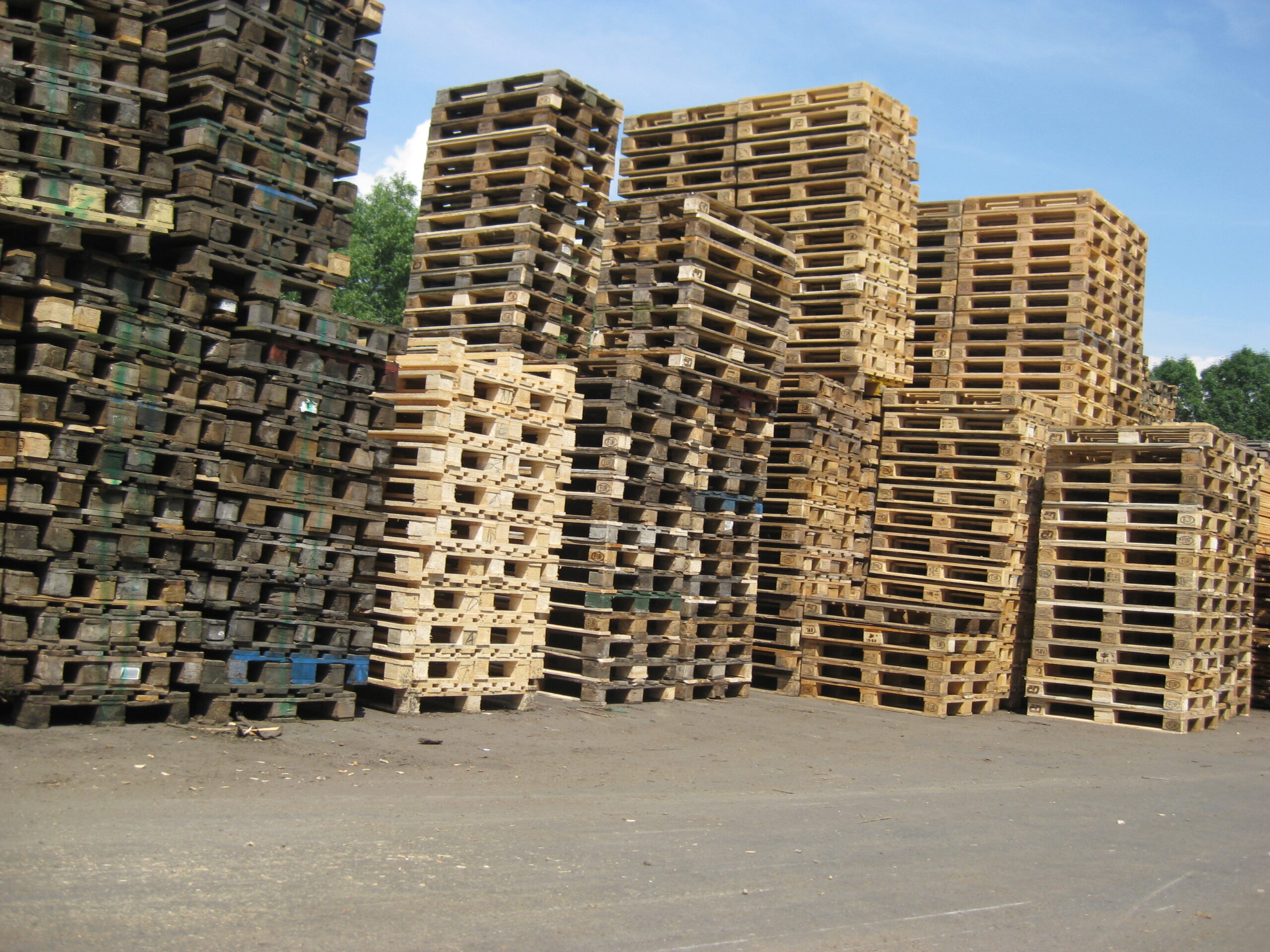
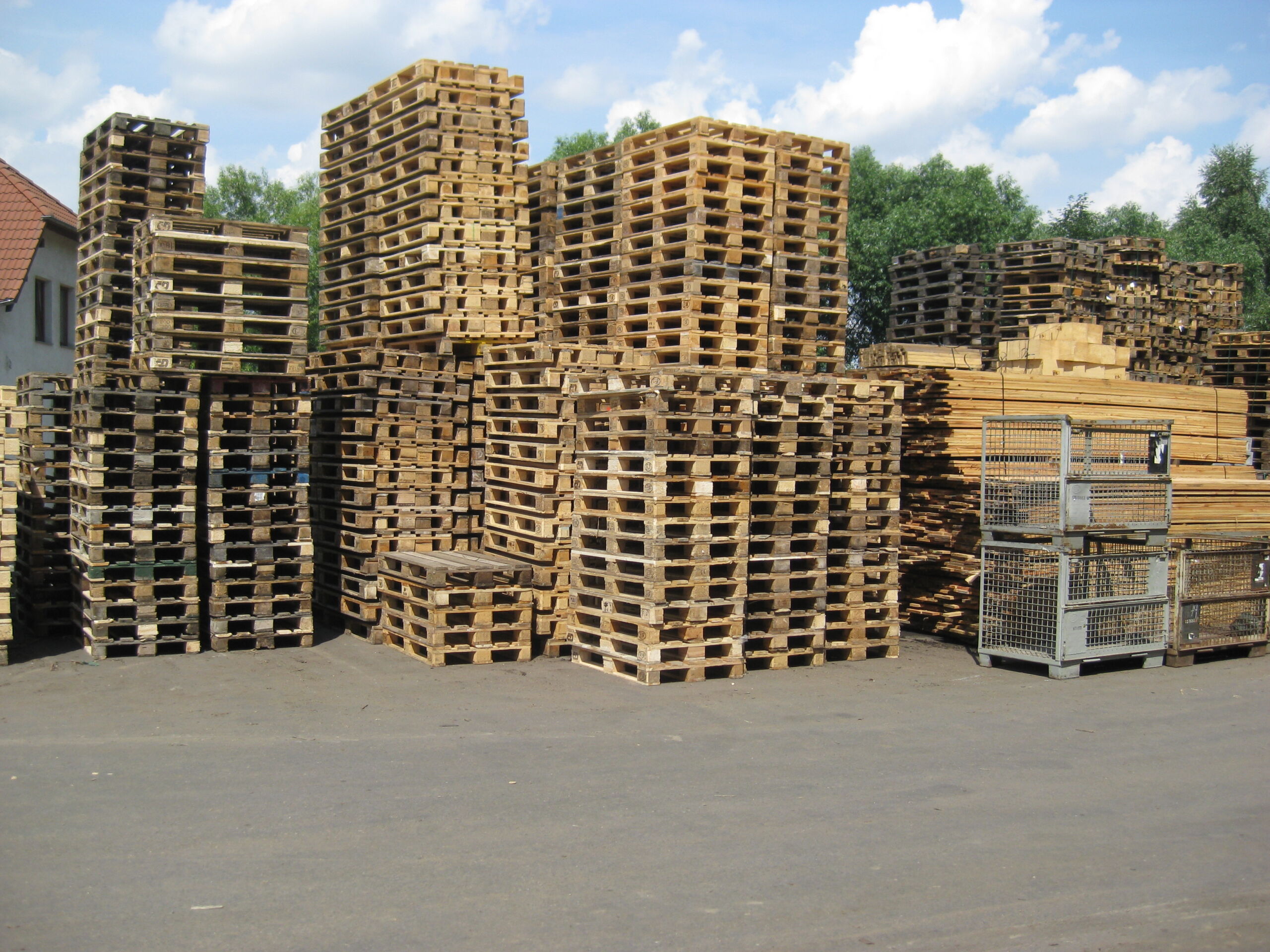
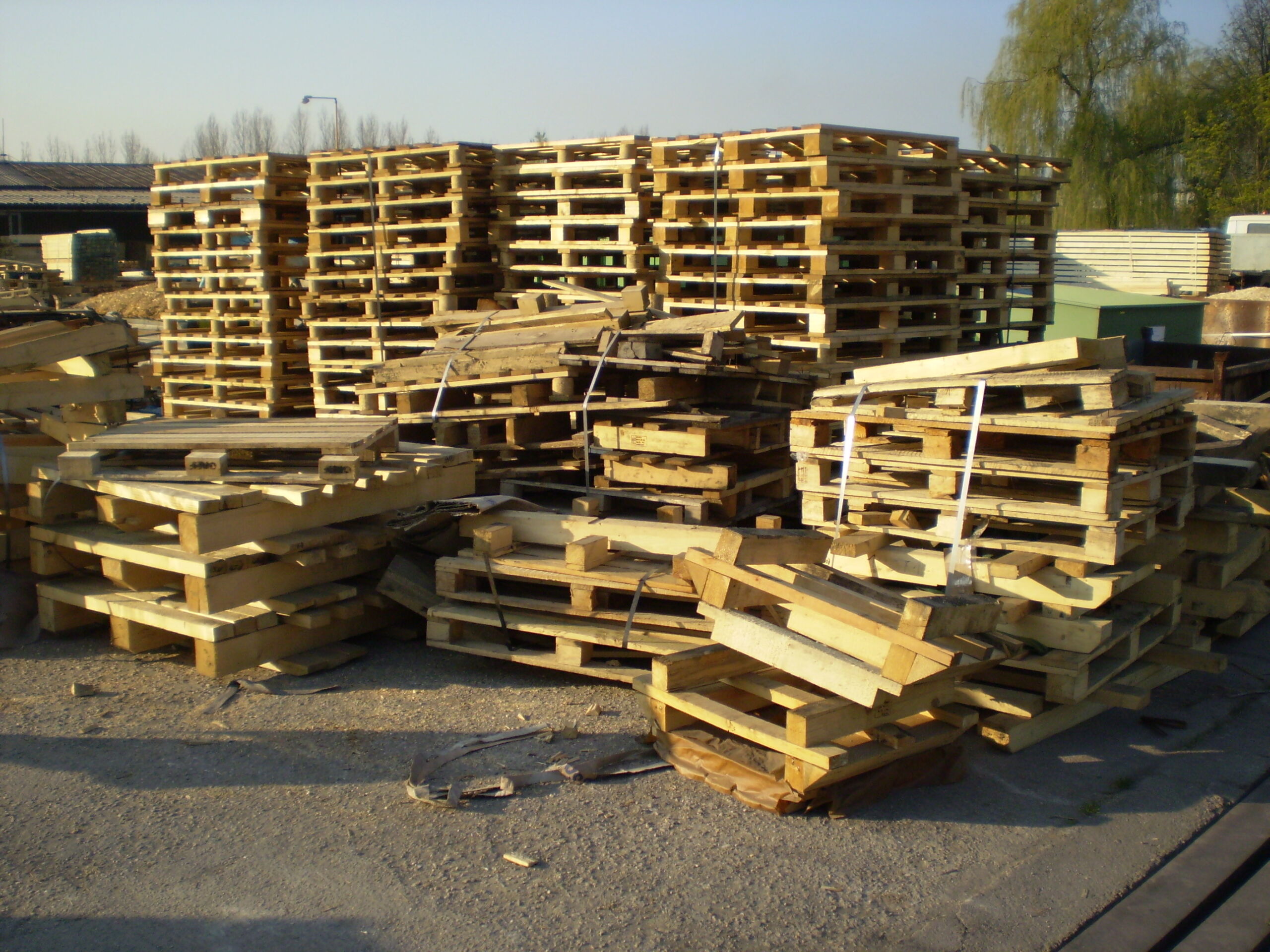
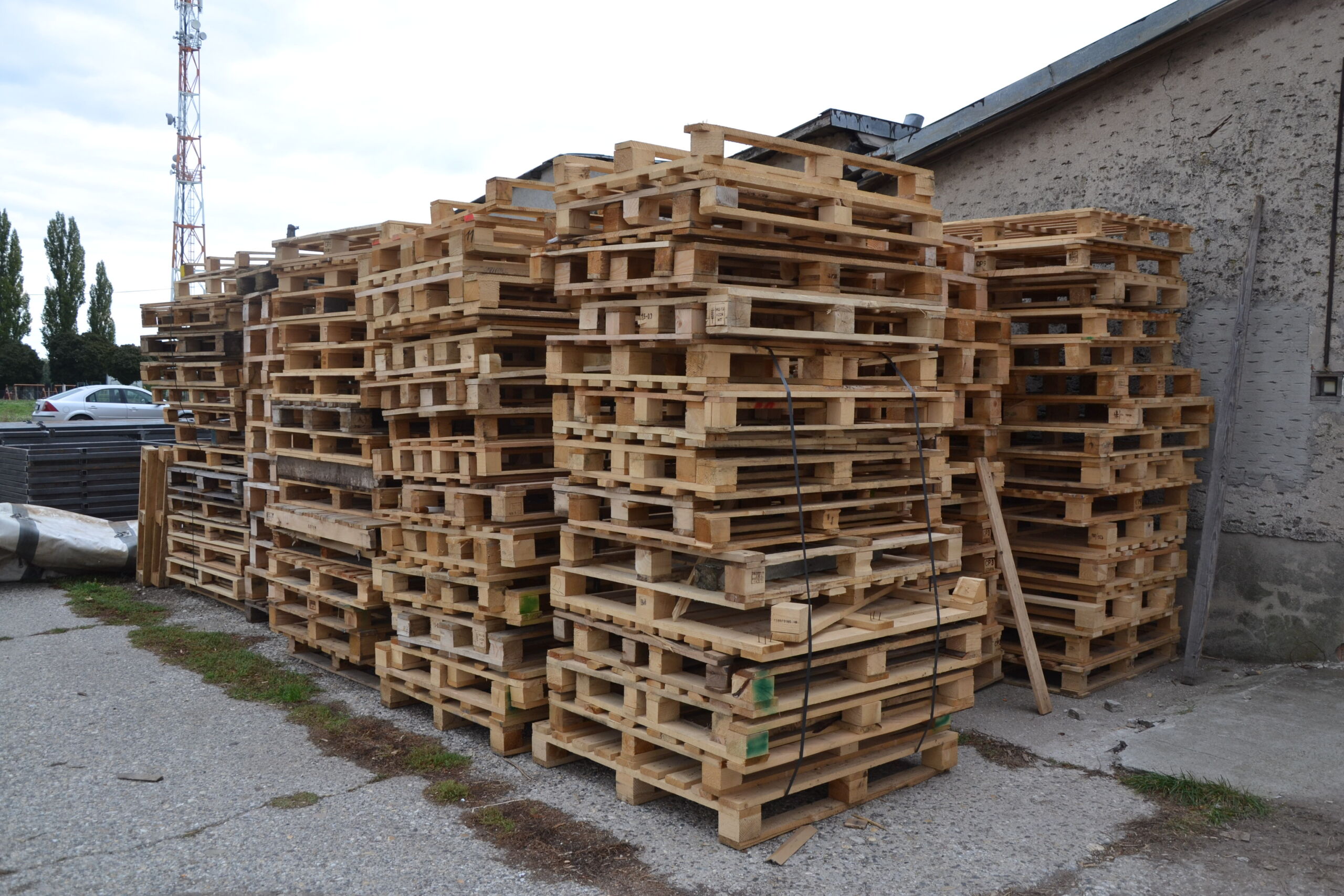
Discarded and damaged wooden pallets are a typical example of bulky, low-density waste. In their original form, they take up a considerable amount of space, are awkward to handle and are inefficient to store and transport. This becomes a particular problem at sites where waste pallets are generated regularly and in large quantities.
The solution is to shred the pallets directly at the point where the waste is generated. A shredder breaks down the pallet structure and converts it into a much more compact, free-flowing material. This reduces storage requirements, simplifies handling and allows the material to be transported or fed into downstream processing equipment more efficiently.
Shredding also transforms a discarded pallet into a raw material ready for further processing. Depending on the quality of the wood and the required output size, the shredded wood can then be sorted, separated from metal contaminants and prepared for further material or energy recovery.
The appropriate shredding technology therefore depends on more than just pallet dimensions. The quantity of material, required throughput and, above all, what needs to happen to the shredded wood next are equally important.


What types of pallets and wood waste can be shredded?
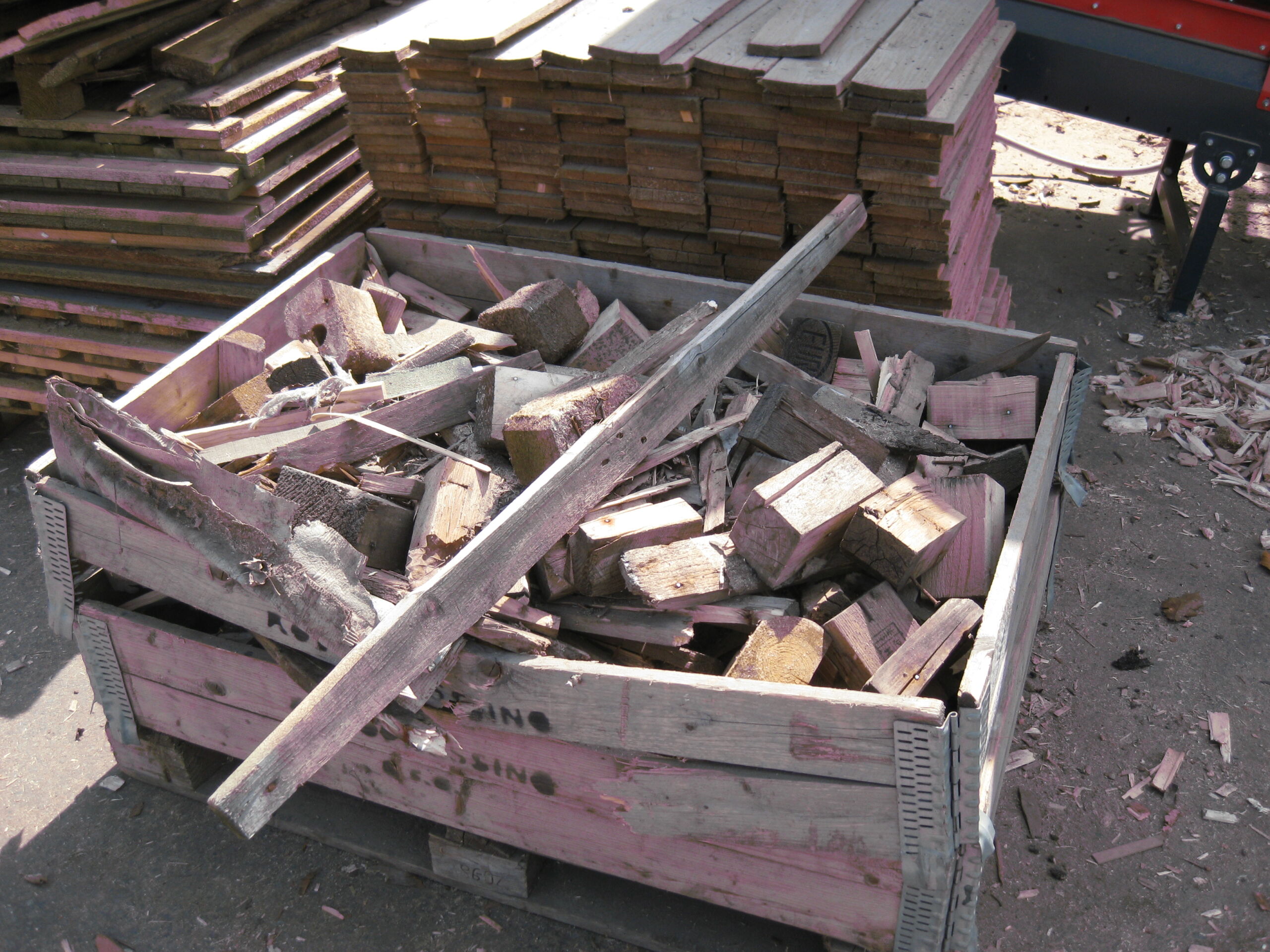
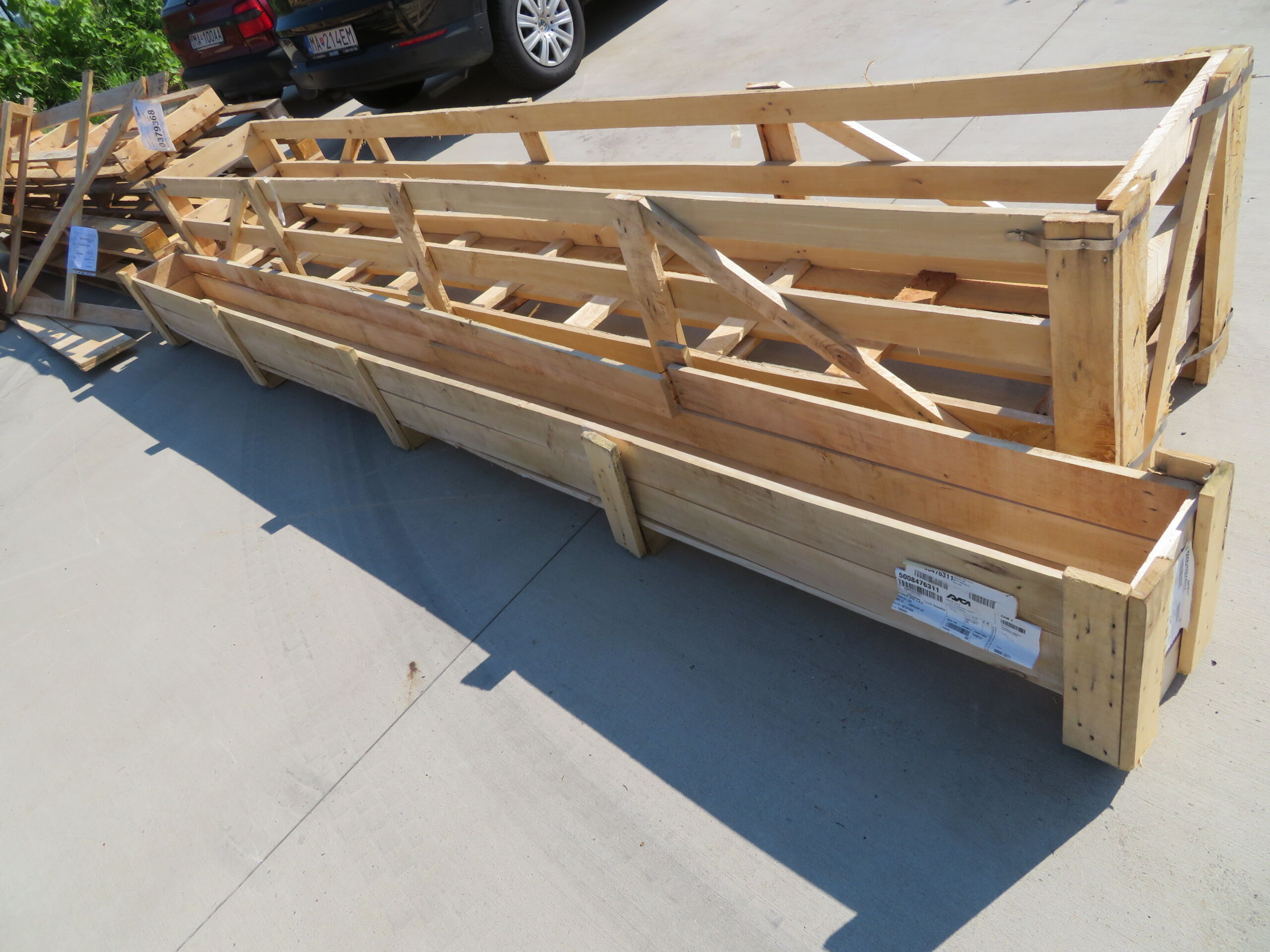
Industrial pallet shredders are not limited to one particular type or size of pallet. With the right machine, it is possible to process EUR/EPAL pallets, disposable and non-standard pallets, damaged or incomplete pallets, as well as other wooden packaging and bulky wood waste.
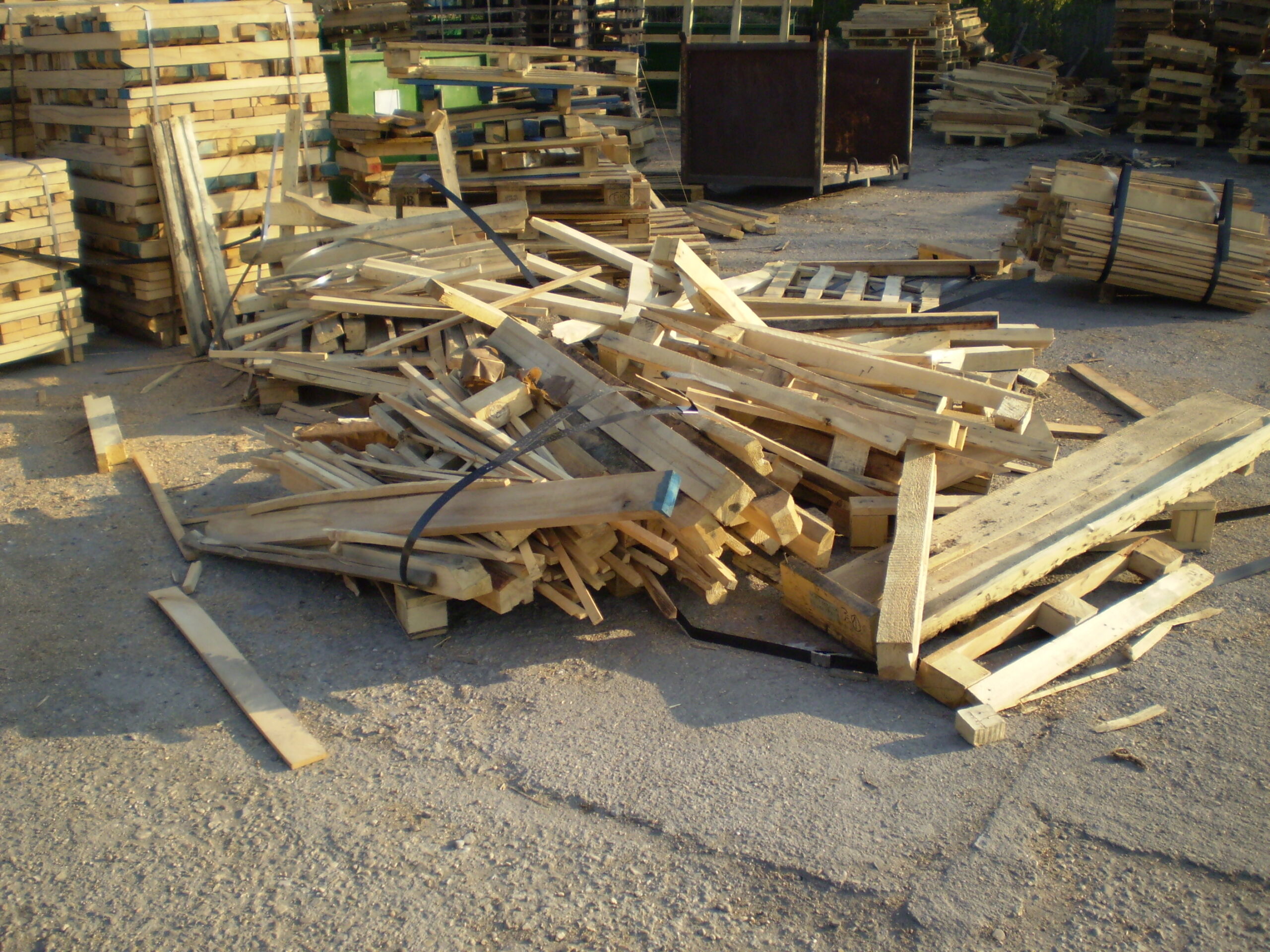
In addition to pallets, other materials can be processed, such as wooden crates, transport packaging, boards, beams, battens, offcuts and other wood waste from production. A single shredder can therefore be used to process several types of bulky wood waste within the same facility.
The type of material is not the only important factor. Its maximum dimensions, structure, feeding method and the quantity that needs to be processed within a given period must also be considered. A solution suitable for a few dozen discarded pallets per week may be very different from one designed for a facility generating hundreds of pallets every day.
We therefore design the technology around the customer’s actual material and operating conditions. These determine the hopper size, feeding method, shredder capacity and required output size.
Pallets with nails and metal components
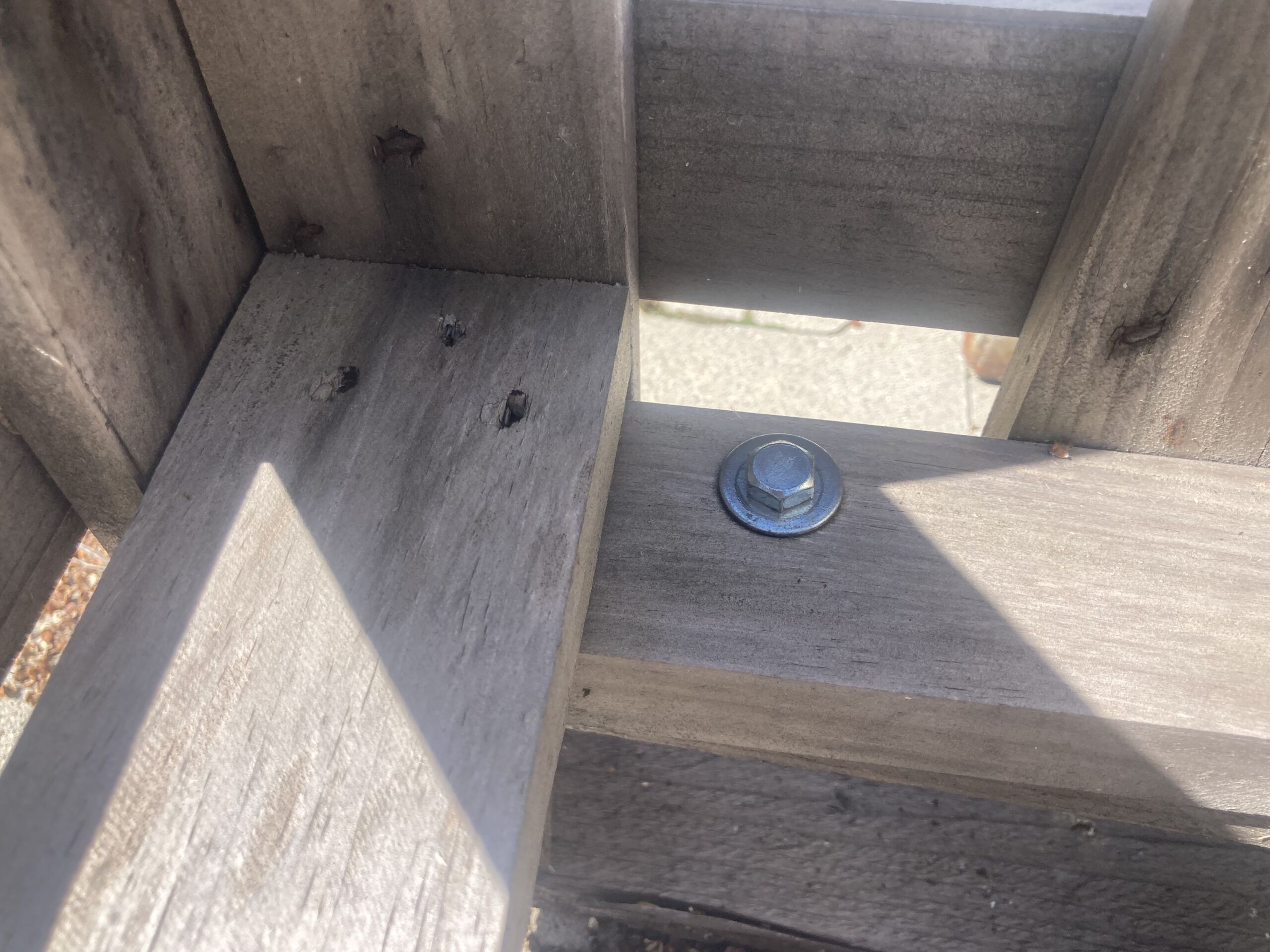
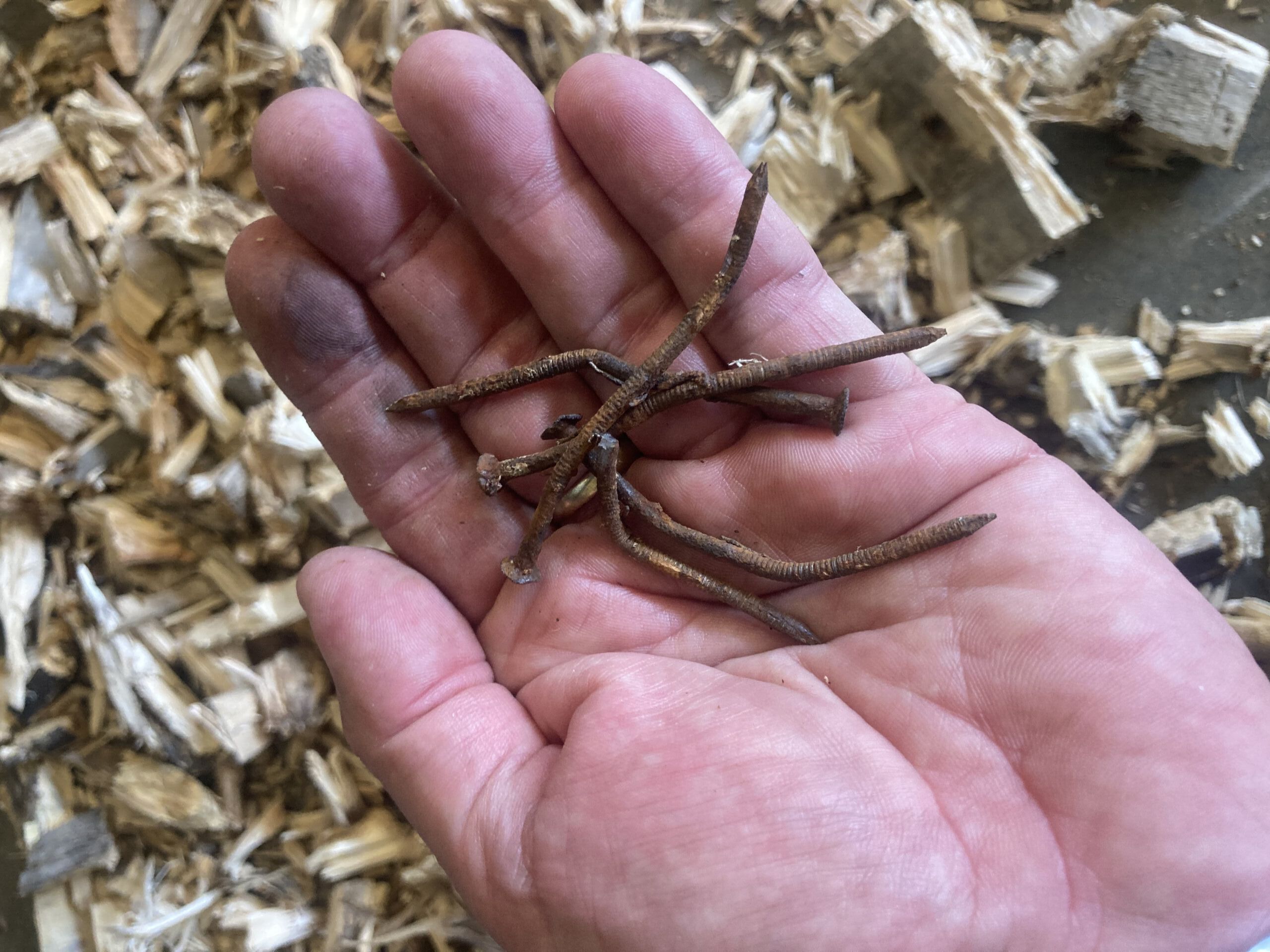
One of the most common questions when shredding wooden pallets is whether nails, screws, staples and other metal components need to be removed before processing. With a suitably selected industrial shredder, this is generally not necessary. Pallets can be shredded together with standard metal fasteners, significantly simplifying material preparation and eliminating the labour-intensive process of dismantling pallets manually.
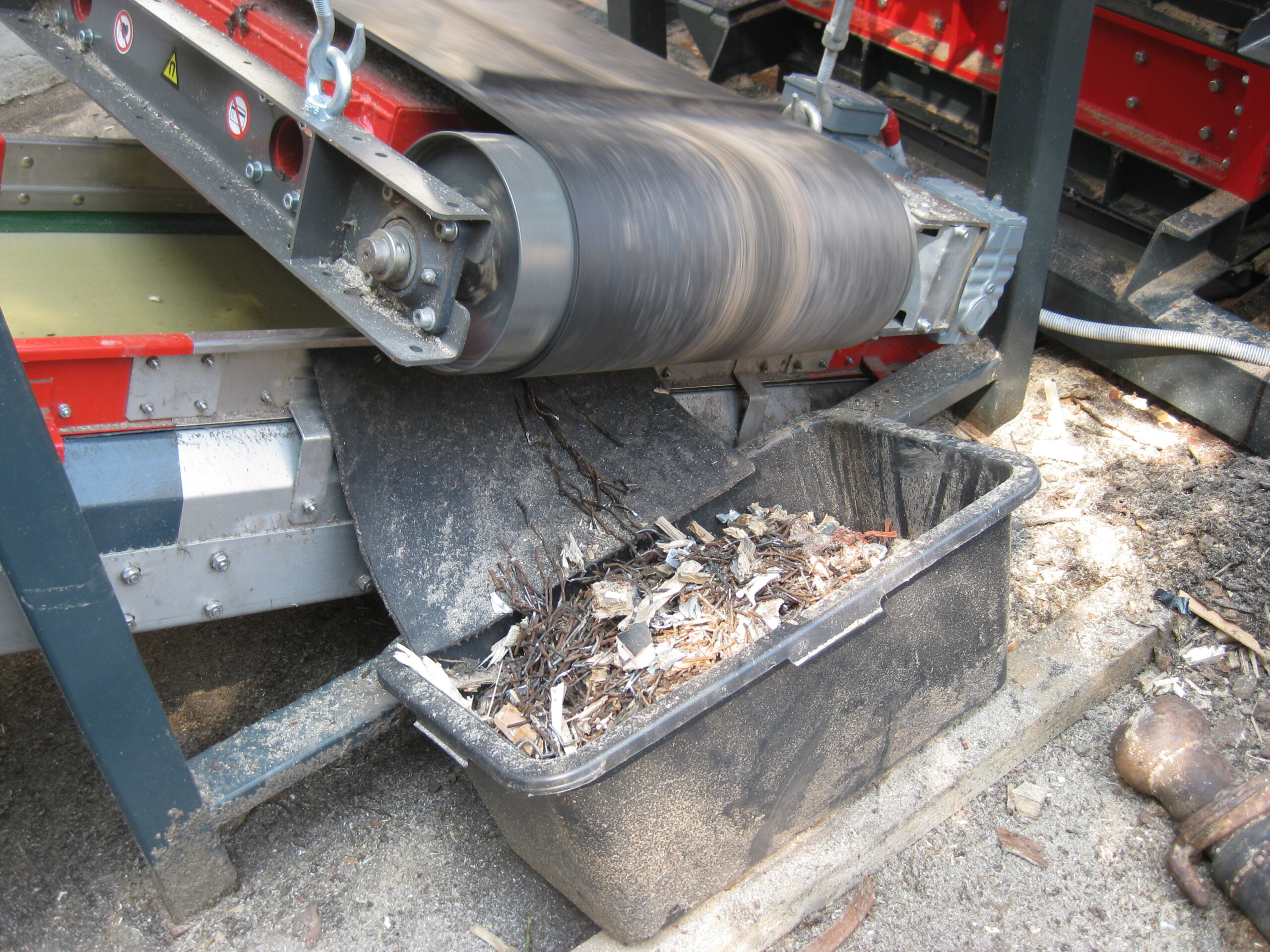
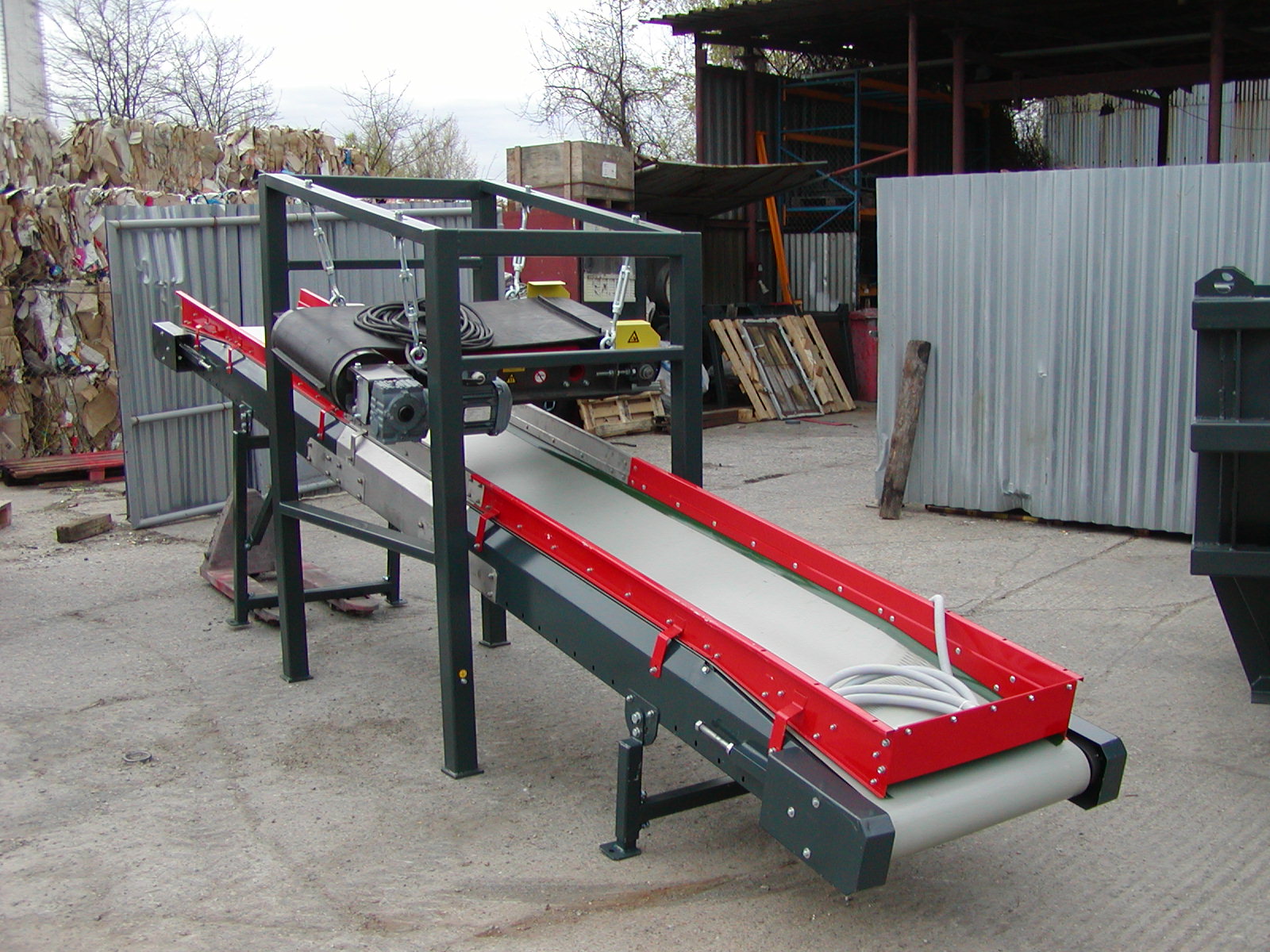
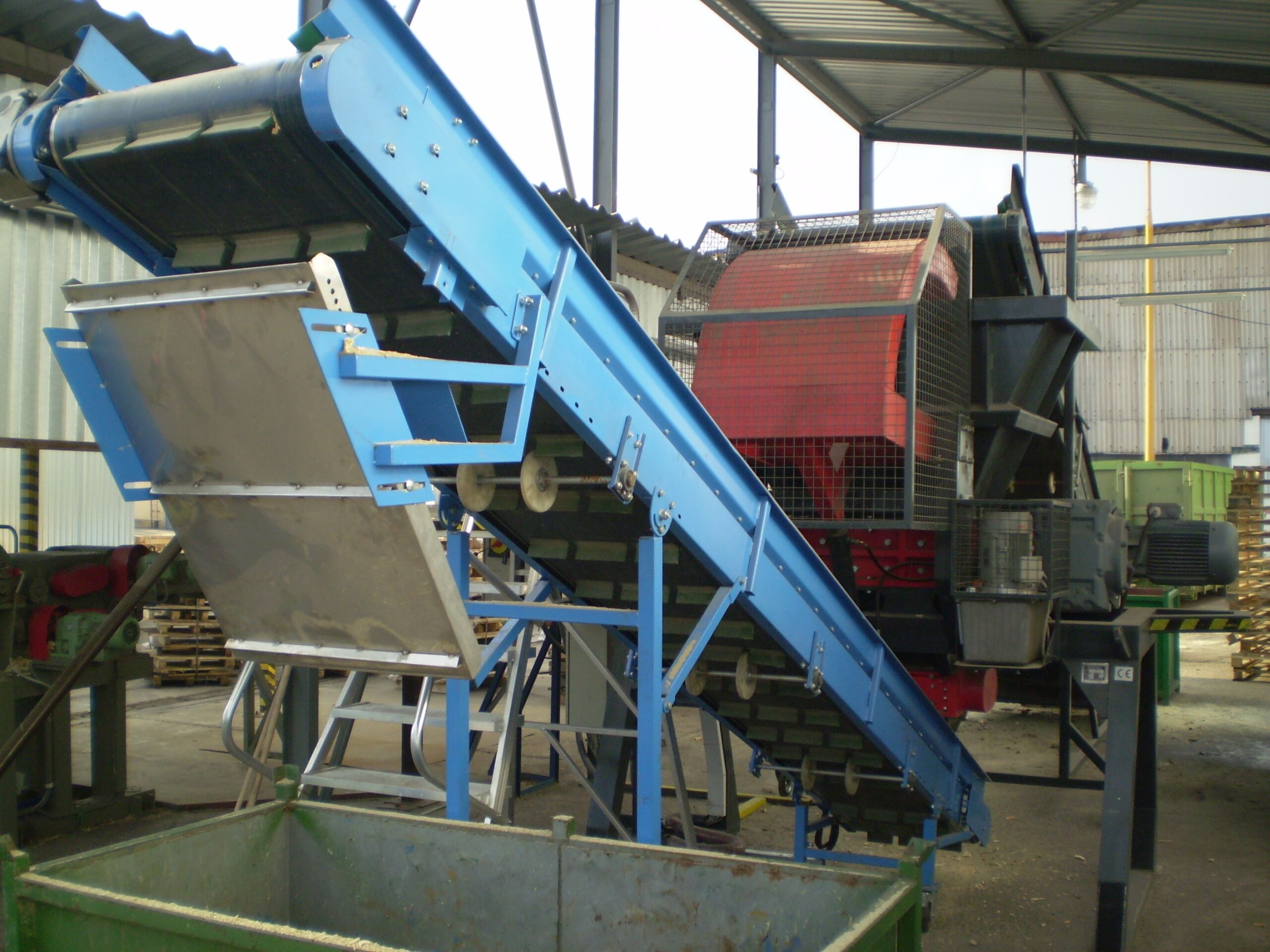
The wood and metal are processed together during shredding. If the shredded wood is intended for further material recovery or energy use, the metal components can subsequently be removed by magnetic separation. A magnetic separator can be incorporated into the downstream conveying and separation system.
However, the presence of metal must be considered when selecting the shredder. The machine design, cutting system, required output size and quantity of metal contamination all need to be taken into account. Standard pallet nails are a very different application from heavy steel components or non-ferrous metals.
For each application, we can therefore design shredding and downstream separation as an integrated process, producing a wood fraction ready for further use.
How pallet shredding works
A pallet processing system is designed according to the quantity and characteristics of the input material and, most importantly, the required output and how it will be used afterwards. The shredder itself is therefore often only one part of the overall processing system.
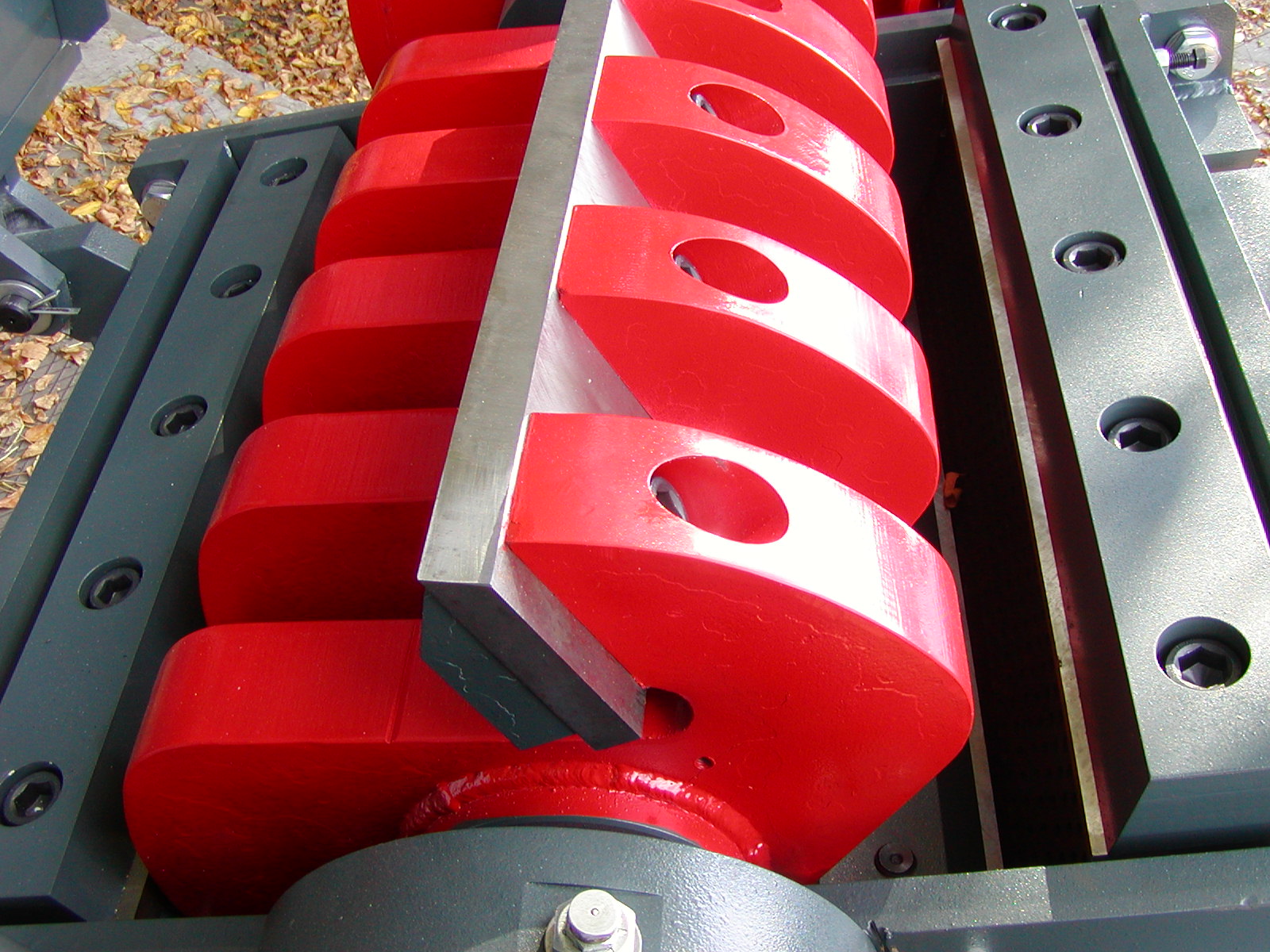
Pallets can be fed into the shredder manually, using material-handling equipment or automatically by conveyor. Inside the shredding chamber, the material is gripped, broken down and progressively reduced in size. The shredder design and shredding system are selected according to pallet dimensions, required throughput, the characteristics of the wood waste and the required output size.
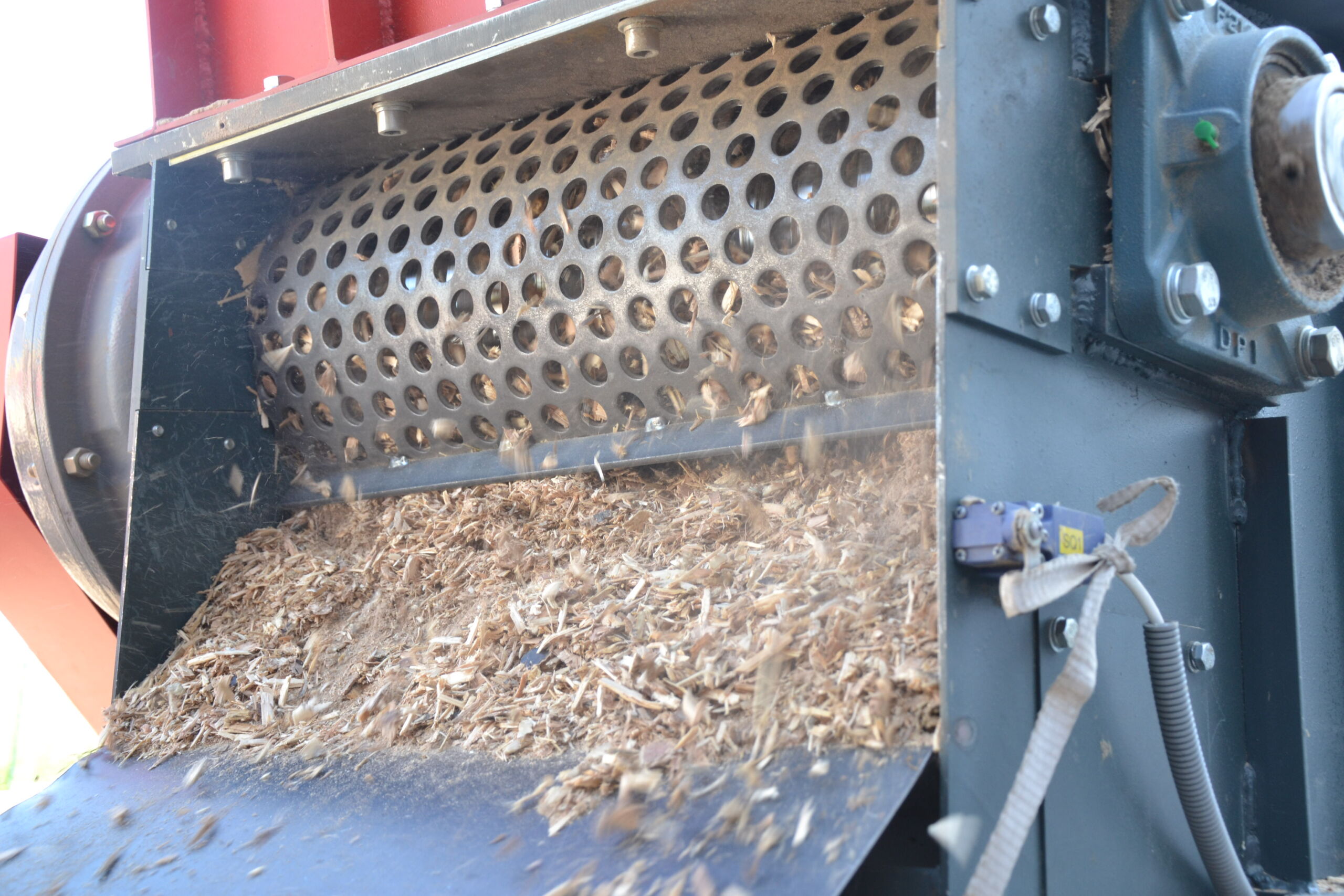
Shredding can produce a coarser fraction suitable for volume reduction and easier handling. Where a finer and more consistently sized material is required, a further shredding or milling stage using a screen can be added to control the maximum output size.
For pallets containing nails, screws or staples, magnetic metal separation can be incorporated into the processing line. Its position within the system depends on the particular configuration and the required purity of the final material.
The shredded material can then be conveyed, stored, sorted or processed further. Depending on the quality of the wood and the required result, it can be prepared for material recovery, further product manufacturing or energy recovery.
A complete processing line may therefore consist of several consecutive stages:
pallet → shredding → size reduction → metal separation → further use of the wood
Which pallet shredder should you choose?
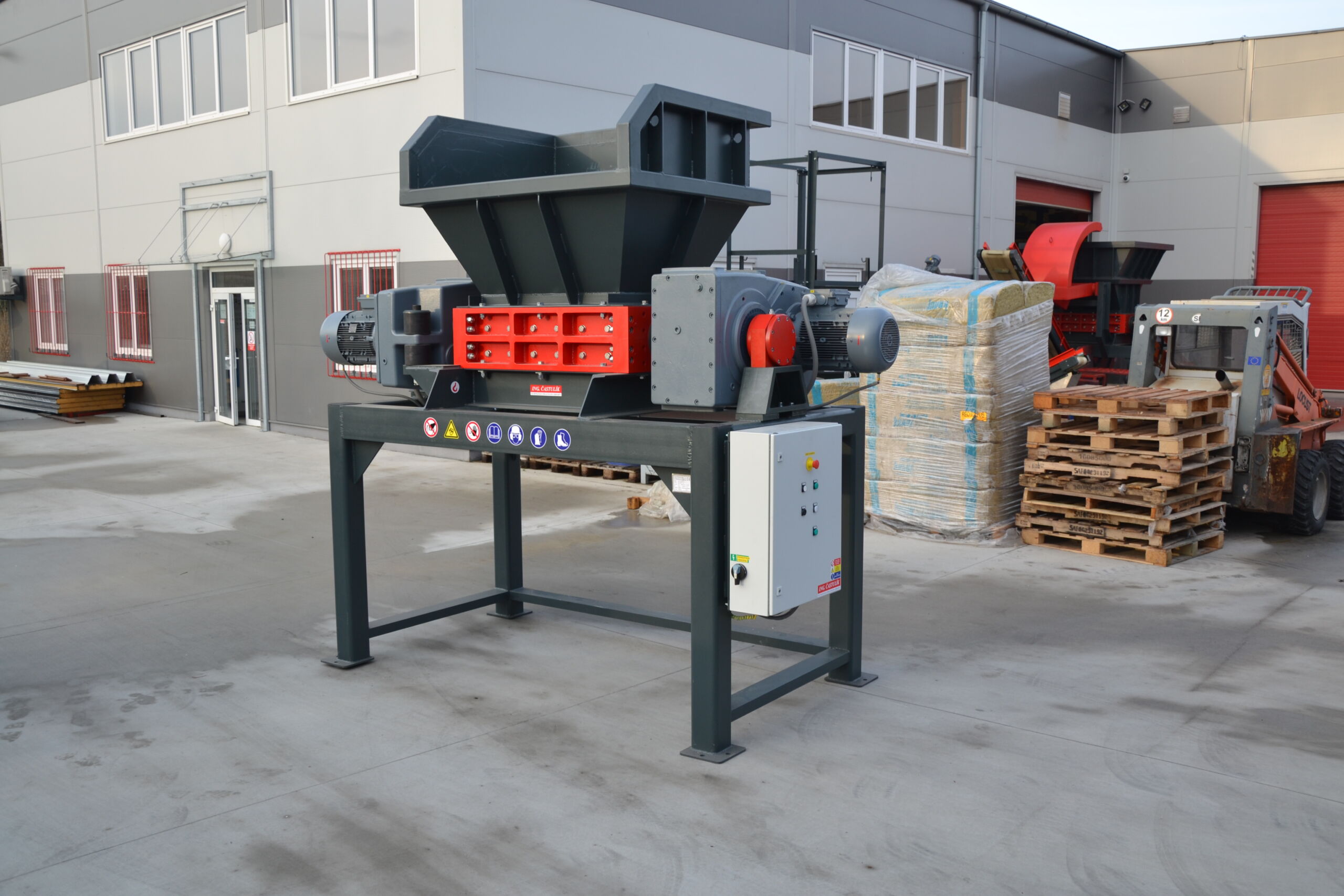
Twin-shaft shredder
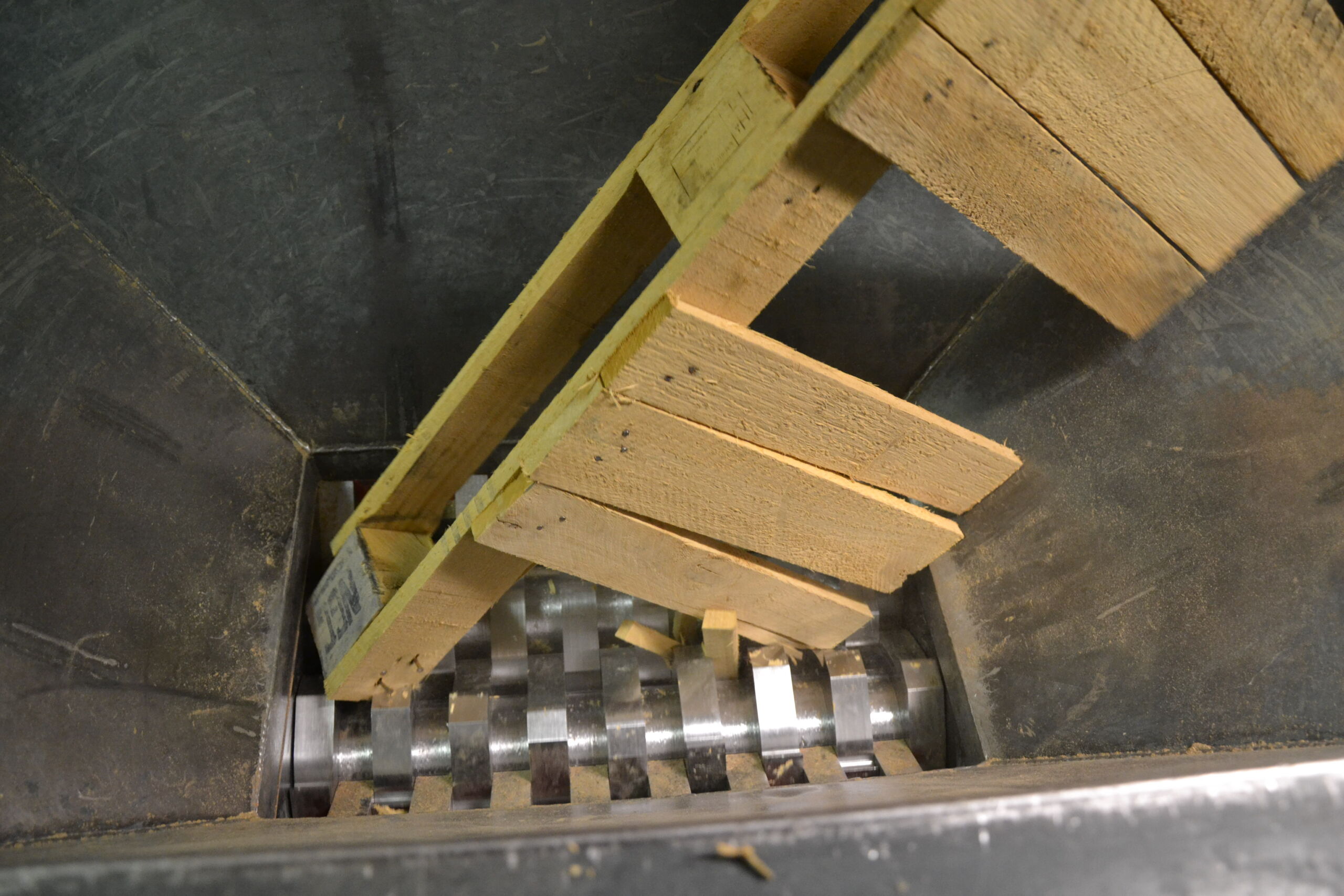
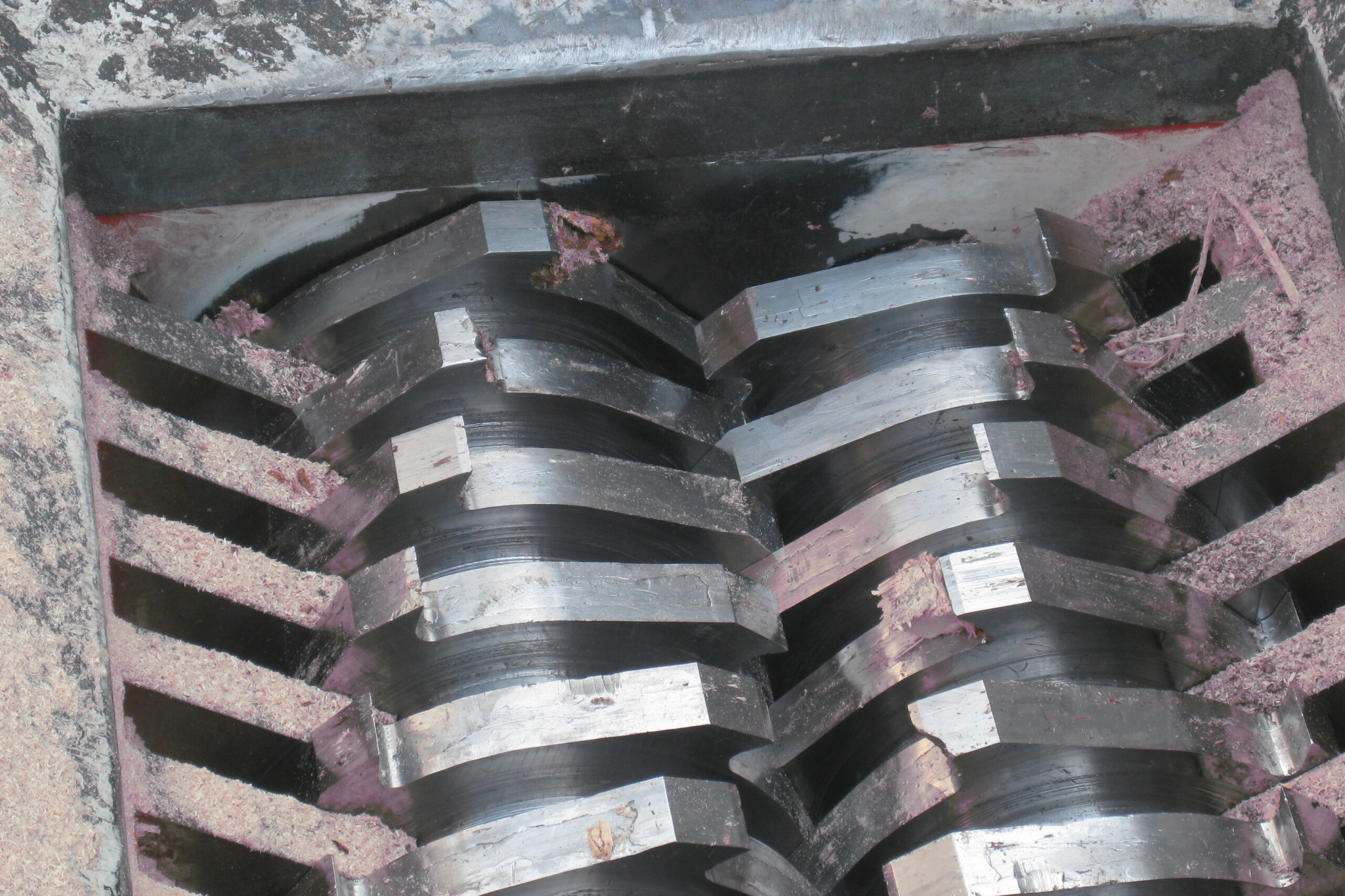
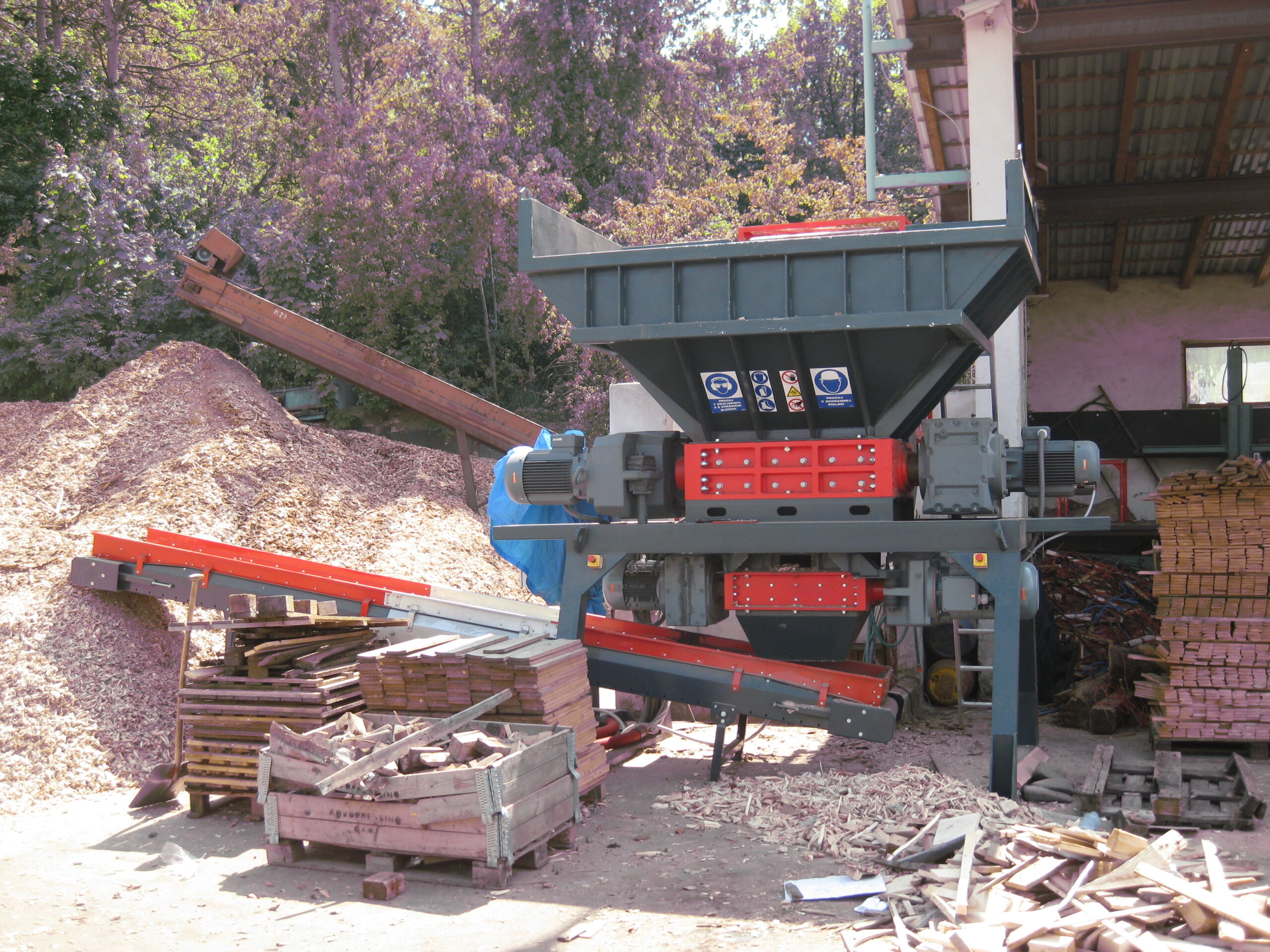
Twin-shaft shredders are particularly suitable for primary shredding of wooden pallets, including pallets containing nails. Two counter-rotating shafts fitted with cutting tools grip, pull in and tear the pallets apart. With bulky pallets, a hydraulic pusher can significantly improve the machine’s ability to draw the material into the shredding chamber.
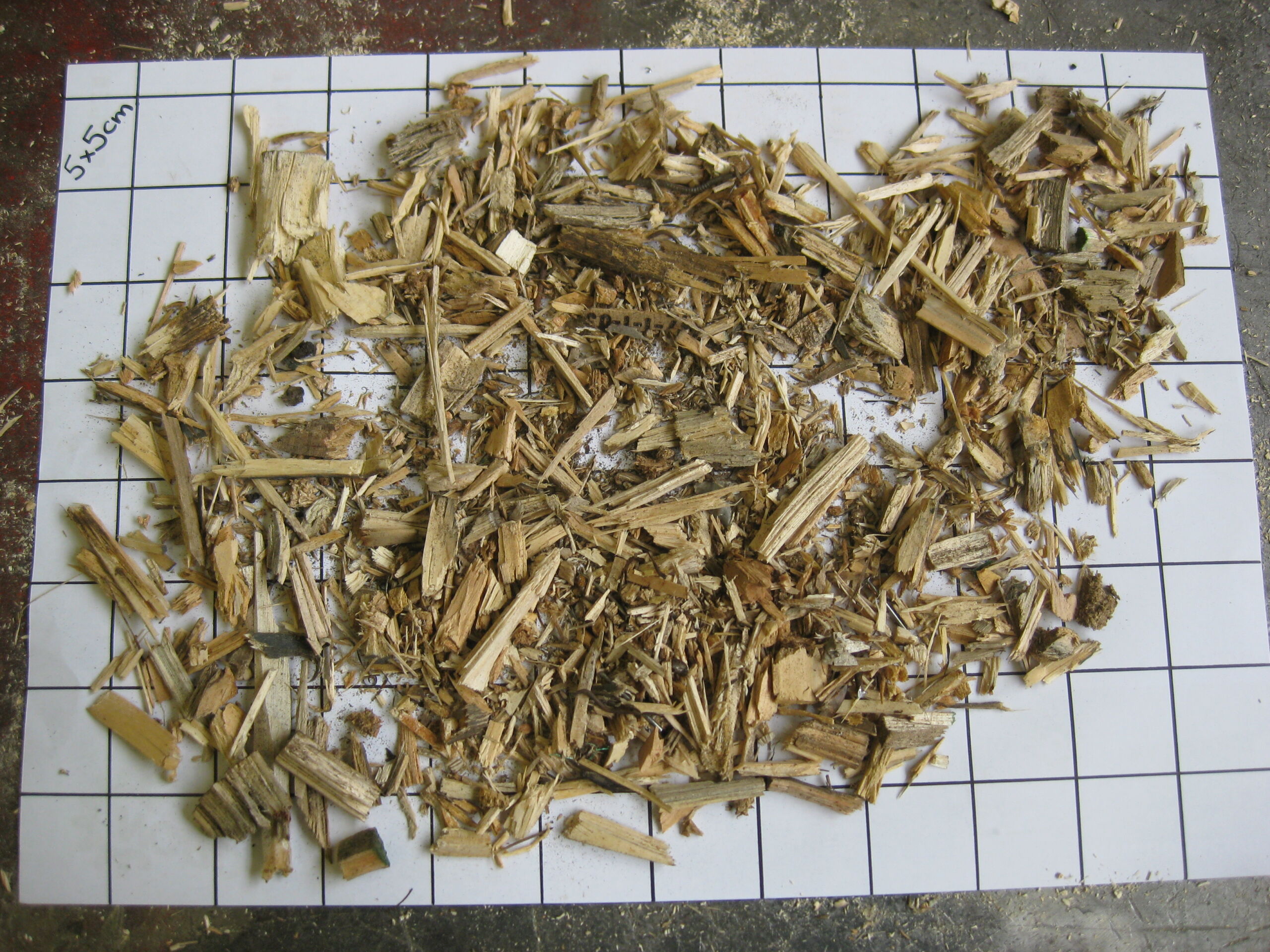
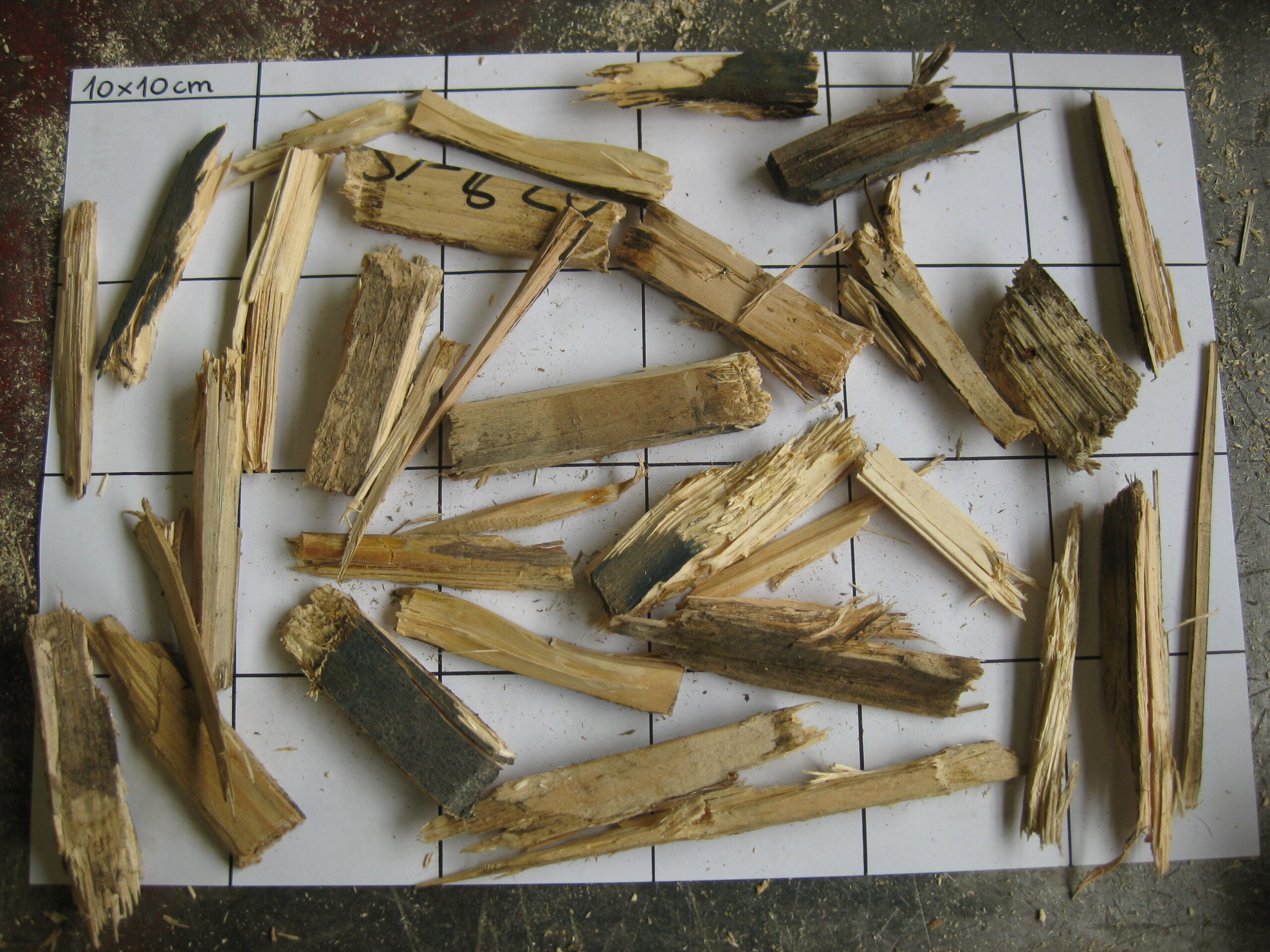
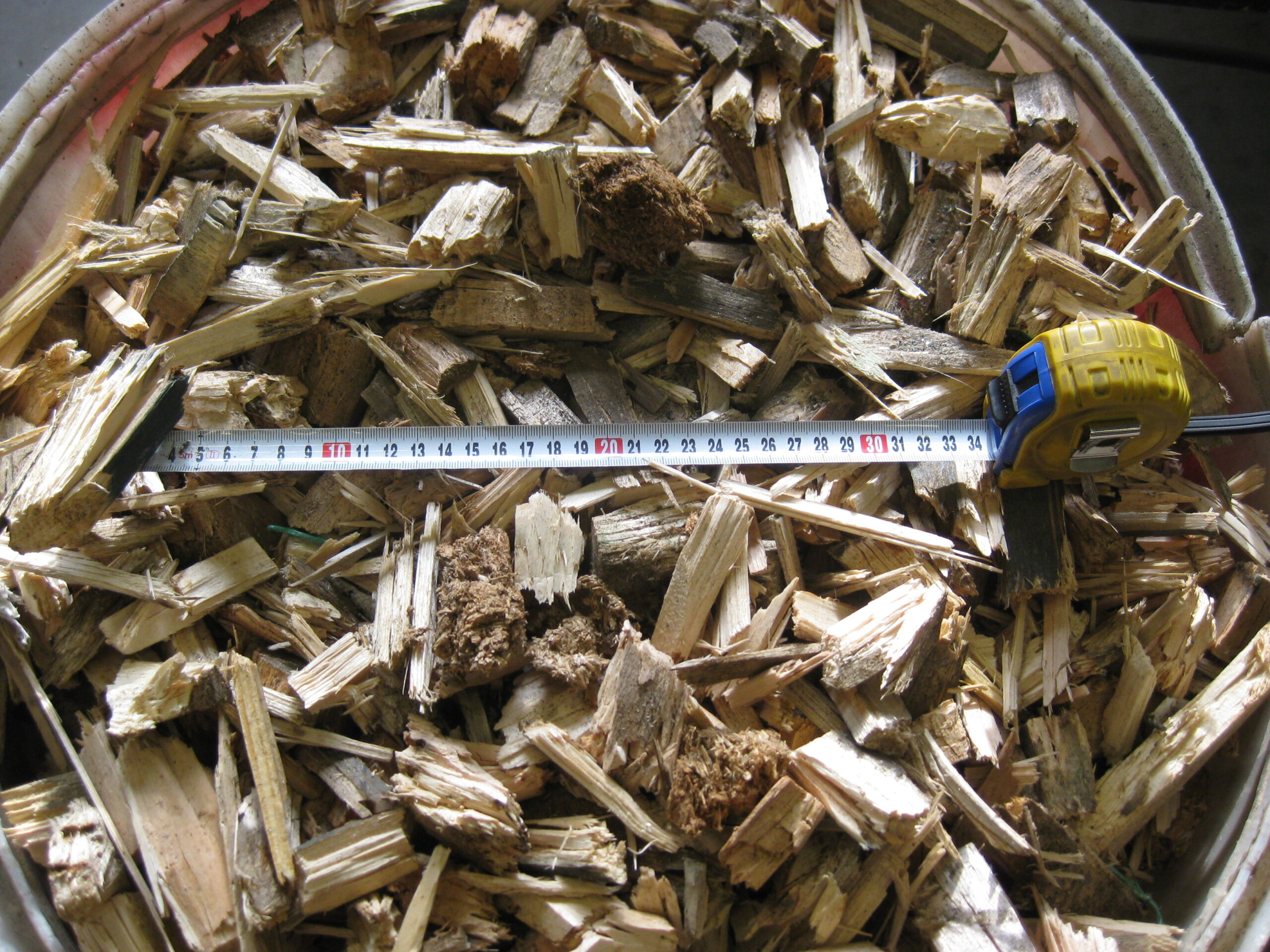
A twin-shaft pallet shredder does not use a screen and therefore does not produce a precisely defined output size. With standard cutting tools, approximately 45% by weight of the shredded material is below 50 mm, 39% is between 50-100 mm, 15% between 100-200 mm, and only 1% is above 200 mm. An output fraction entirely below 50 mm can be achieved through repeated or two-stage shredding.
When selecting a wooden pallet shredder, the dimensions of the hopper and shredding chamber, the ability of the cutting tools to grip and draw in the material, and the available torque are important considerations. Pallet width is particularly important, while pallet length is generally less restrictive.
Single-shaft shredder
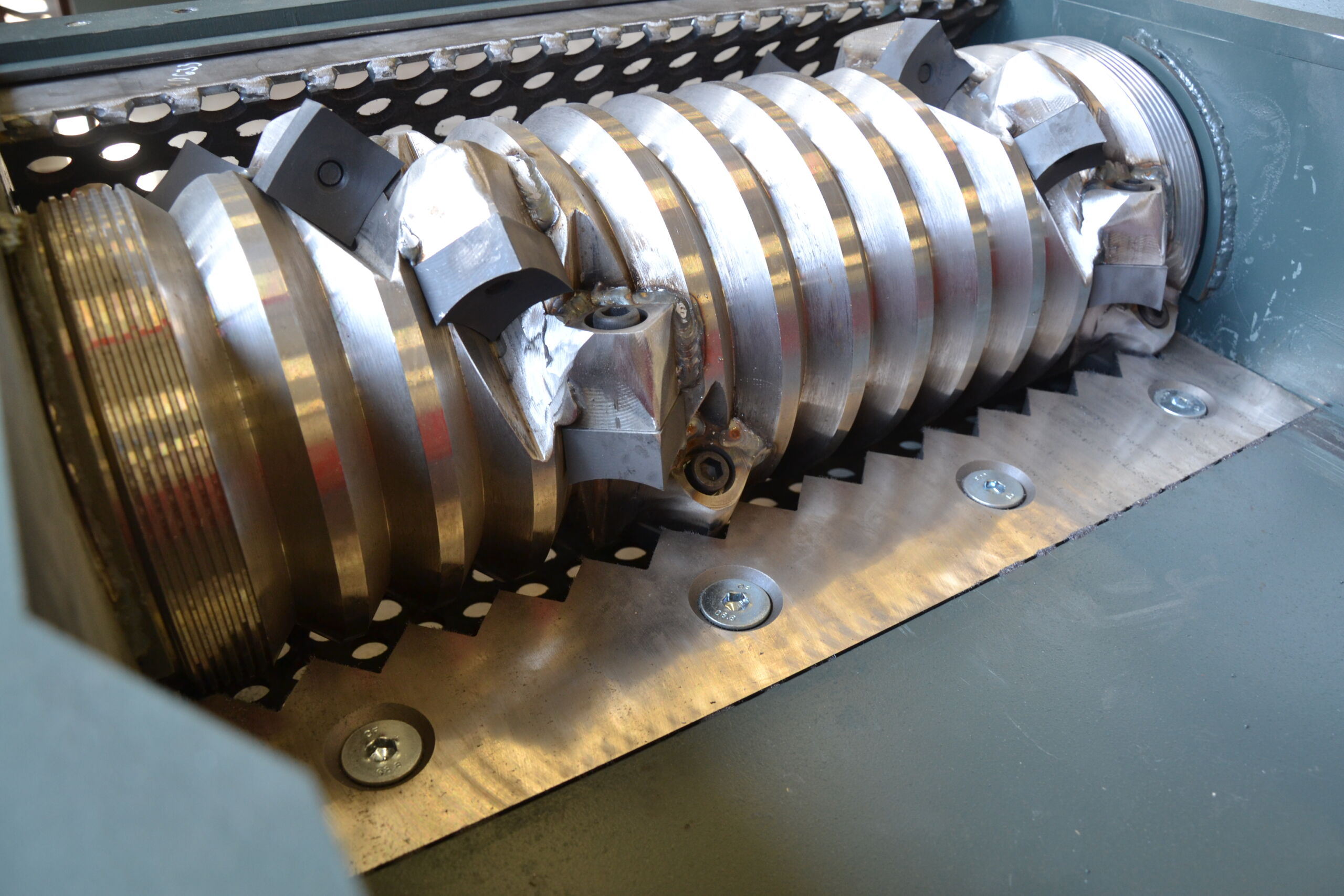
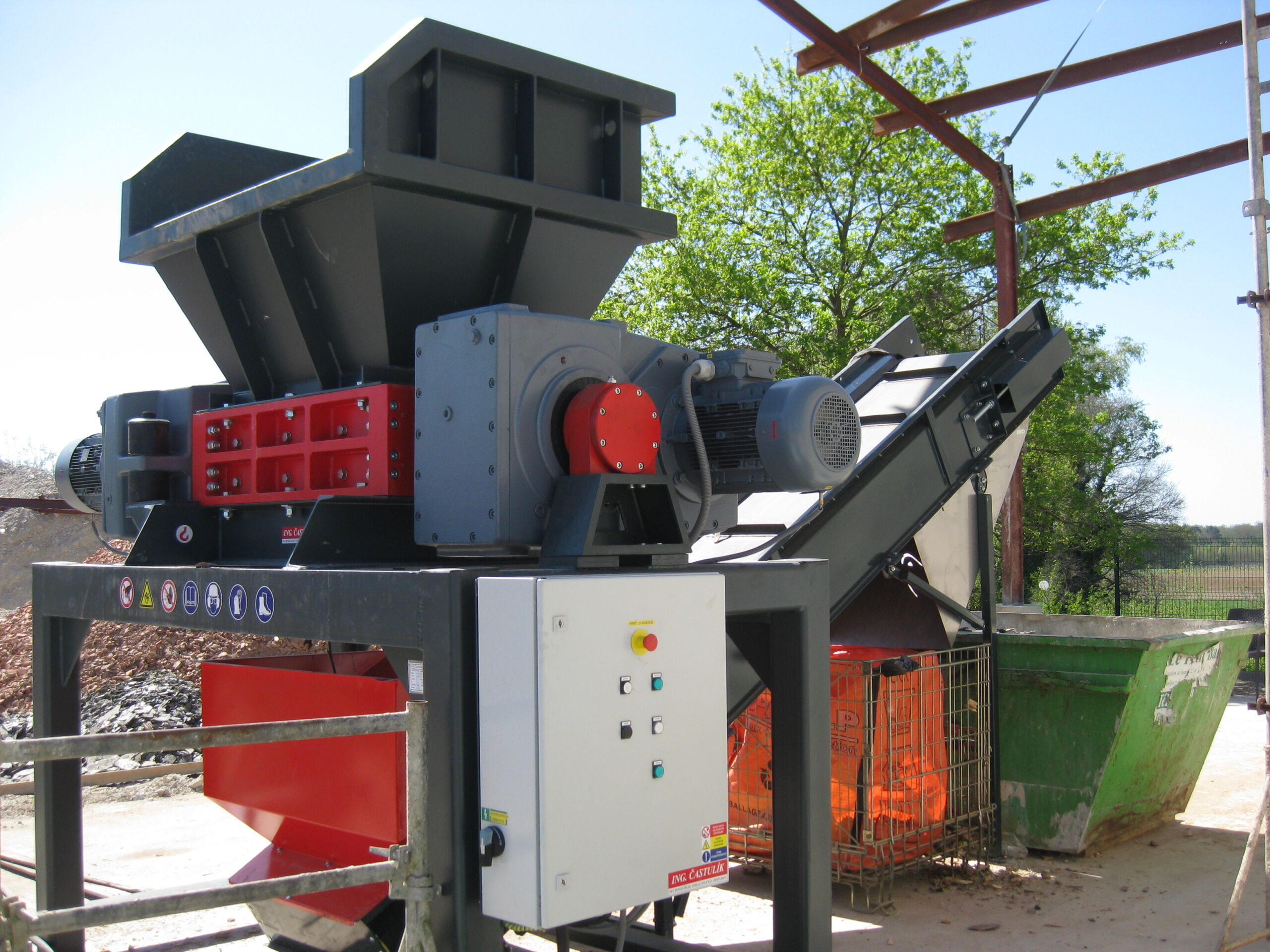
Single-shaft shredders are particularly suitable for wooden pallets where a defined output size is required. A hydraulic pusher feeds the material towards a rotor fitted with cutting tools. A screen within the shredding chamber determines the maximum particle size, with screen openings available from 12 mm upwards, depending on the required result.
Compared with a twin-shaft shredder, a single-shaft pallet shredder is less effective at gripping and drawing in complete bulky pallets. Pallet dimensions must therefore be suitable for the dimensions of the shredding chamber. For fine shredding, we recommend pre-shredding the pallets in a twin-shaft shredder before processing them in a single-shaft shredder.
The advantage is a more consistent and controlled output fraction suitable for energy recovery, briquetting or further processing. A single-shaft wooden pallet shredder can also process wood containing nails.
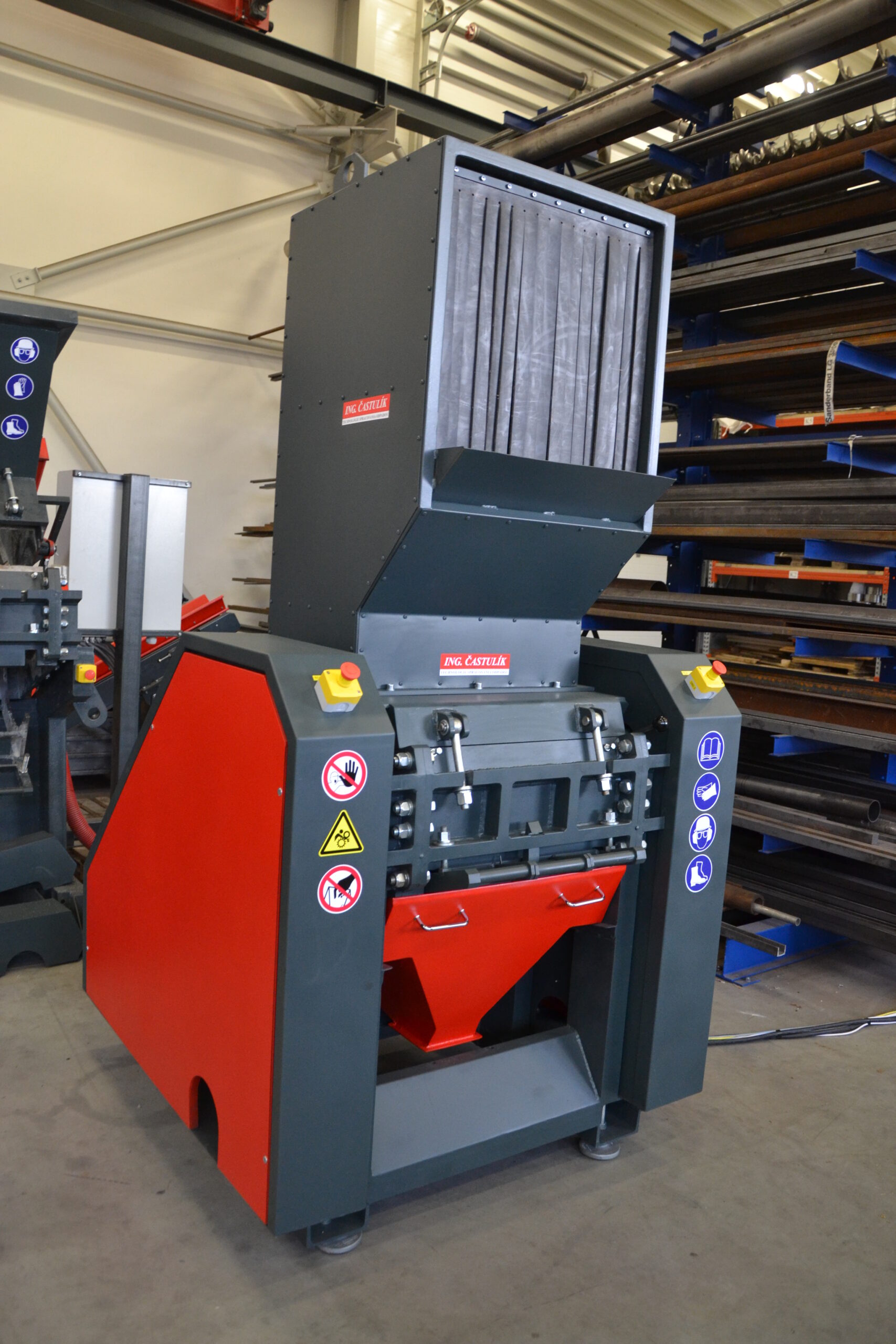
Knife mill
Knife mills are suitable for fine size reduction of wooden pallets where a smaller and defined output size is required. Rotor knives shear the material against stationary knives, while a screen in the shredding chamber determines the maximum particle size. Knife mills can use screens with openings as small as 2 mm.
A knife mill for pallets, however, operates at high speed and relatively low torque. The pieces of wood being processed should therefore be relatively small and the material must be free from metal contamination. Wooden pallets that have already been pre-shredded in a single-shaft shredder and had the metal contaminants removed can be milled to a particle size suitable for pellet production.

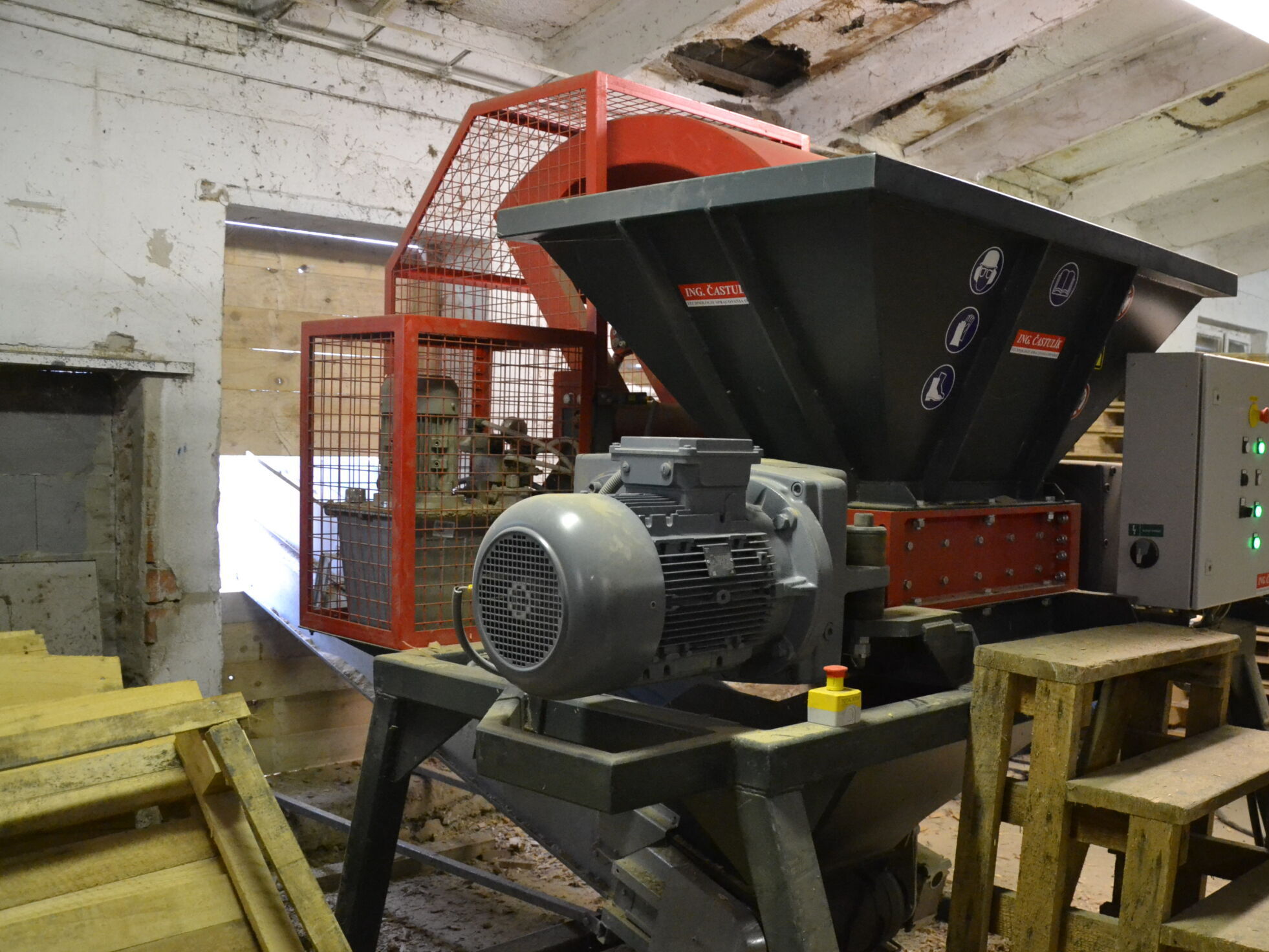
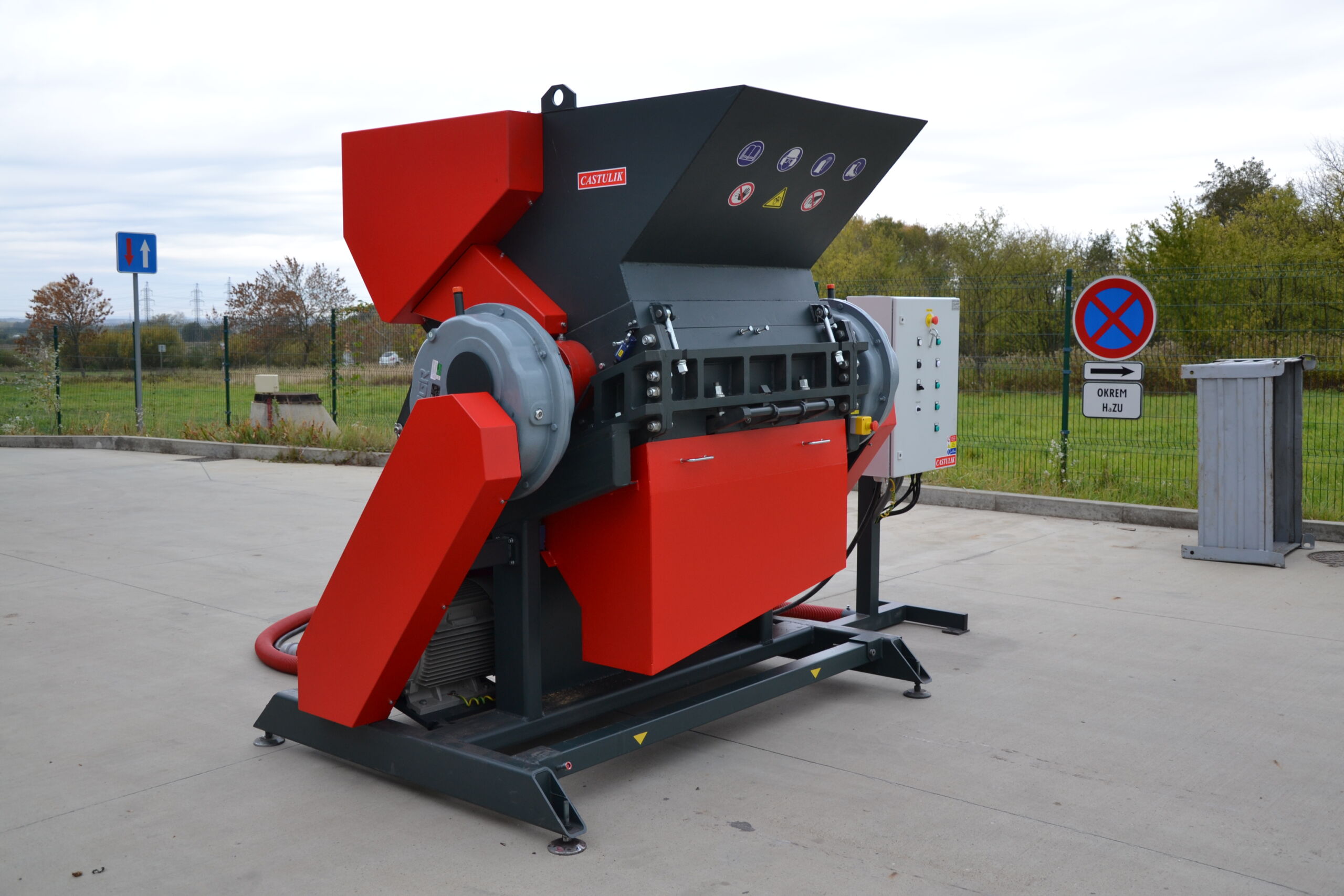
Overview of suitable CASTULIK machines



What is the output from pallet shredding?
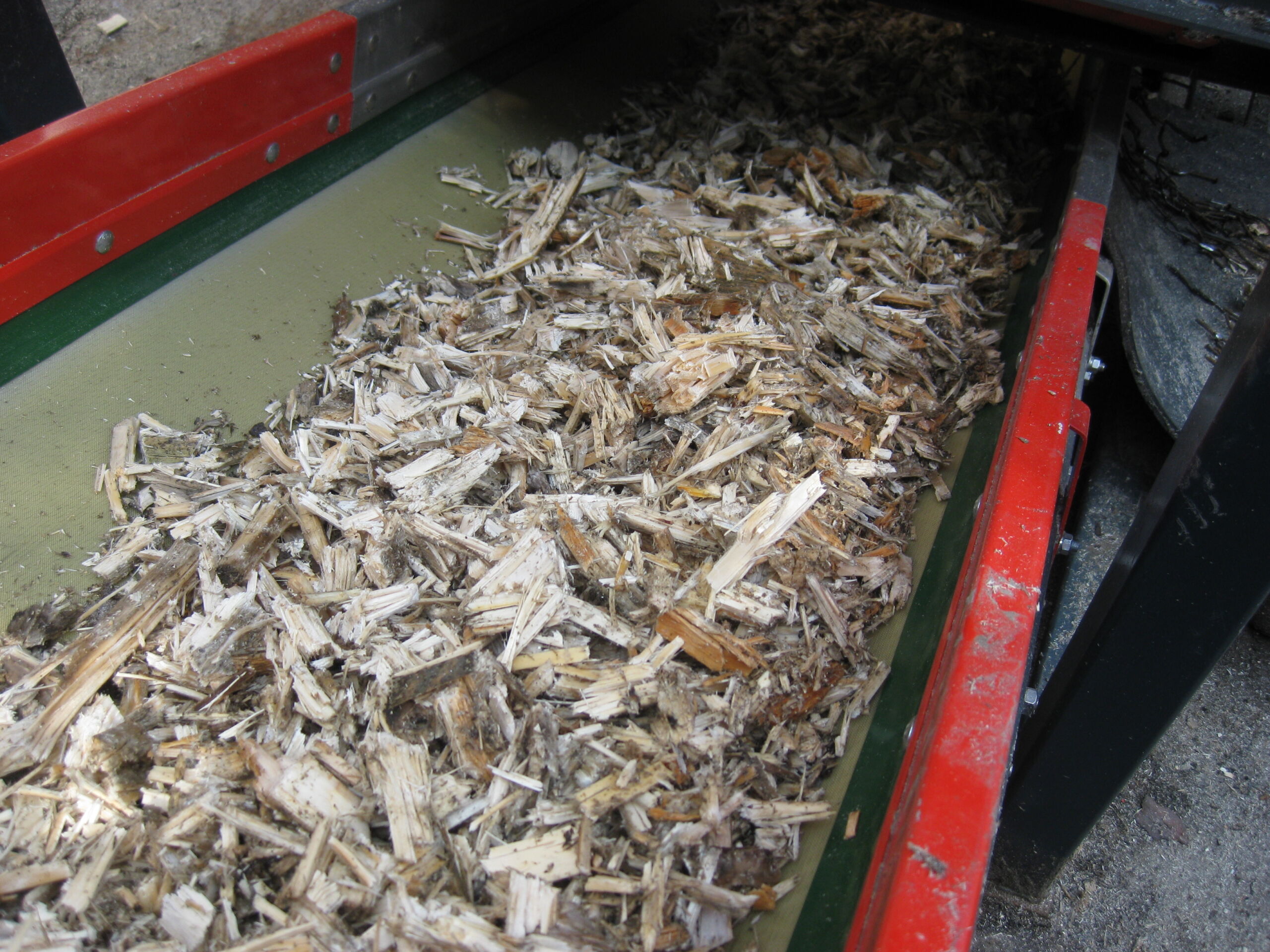
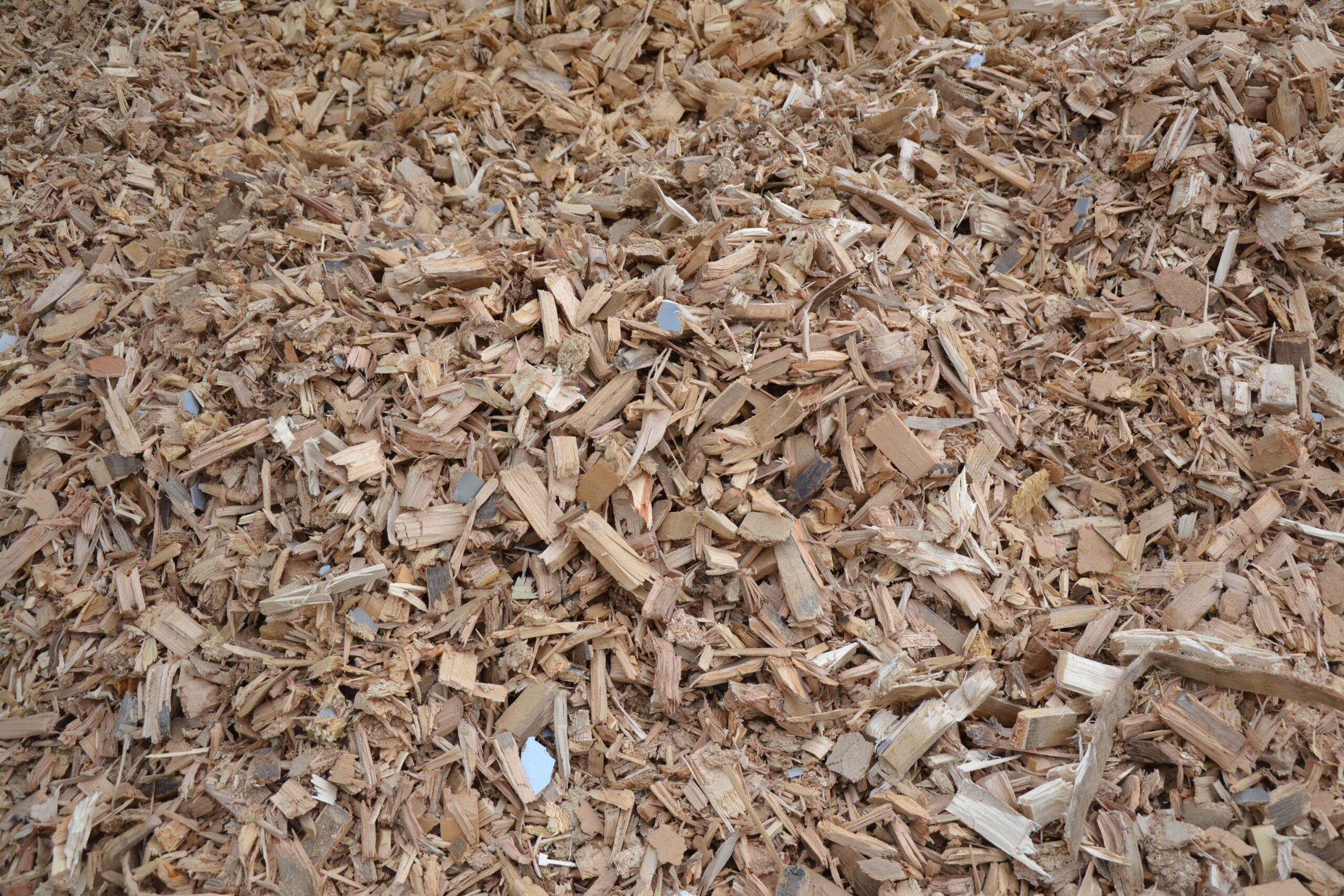
Shredding pallets produces a free-flowing wood fraction that is considerably easier to handle, store and process than complete pallets. The size and characteristics of the output depend on the type of shredder, cutting system and any subsequent processing stages.
If the main objective is volume reduction, coarse shredding is sufficient. Breaking down the pallet structure significantly reduces the empty space between individual boards and beams, meaning the material occupies less storage space and transport capacity can be used more efficiently.
For downstream processing, a finer and more consistent fraction may be required. This can be achieved through secondary shredding or milling, with the output size adapted to the requirements of the downstream technology. If the pallets contain nails or other ferromagnetic components, these can be removed from the shredded material by magnetic separation.
Depending on the origin and quality of the input wood, the resulting fraction can be recovered as a material or used for energy recovery. Possible applications include further wood processing, fuel production, briquetting or use in a suitable combustion system.
The intended use of the output should therefore be established before selecting the shredder, because it determines the output size that the processing system needs to produce.

Read more

Shredding wooden pallets | CASTULIK ARIES 240
How can wooden pallets and wood waste be processed into wood chips below 50 mm? The CASTULIK ARIES 240/900 four-shaft shredder achieves a throughput of up to 4 t/h.
VIDEOSHOWROOM
FAQ – Frequently asked questions about pallet shredding
Can the shredder process pallets containing nails?
Yes. A suitably selected industrial shredder can process wooden pallets containing standard nails, screws and staples. In most cases, the pallets therefore do not need to be manually dismantled or the metal components removed before shredding.
Can complete EUR pallets be shredded?
Yes. The shredding system can be designed to process complete EUR pallets as well as wooden pallets of other sizes. The dimensions of the input material need to be considered when selecting the shredder, hopper size and feeding method.
What is the output size after shredding?
The output size depends on the type of shredder and how the wood will be used afterwards. For volume reduction, coarse shredding may be sufficient. If a finer output is required, an additional screen-controlled shredding or milling stage can be used.
What happens to the nails after shredding?
After shredding, the metal components remain mixed with the wood fraction. Ferromagnetic metals, particularly steel nails and screws, can subsequently be removed using a magnetic separator incorporated into the processing line.
What shredder capacity do I need?
The required capacity cannot be determined solely by the number of pallets. Their size and structure, the required hourly throughput, feeding method and required output size all need to be considered.
How do I choose the right solution?
Send us photos or a video of the material, the dimensions and approximate quantity of pallets, the required throughput and information about how you intend to use the shredded wood afterwards. Based on this information, we can recommend a suitable shredder or complete processing system.
We will design a solution for your application
Every operation has different requirements in terms of the number of pallets to be processed, the required output size and how the wood will be used afterwards. Rather than offering a one-size-fits-all solution, we design a shredder or complete processing system for your specific application.
Send us photos or a short video of the pallets and any other material you need to process. Include the dimensions, approximate quantity, required throughput and your target output size. If you already know how you intend to use the shredded wood afterwards, please include this information as well.
Based on these details, we will assess the material and recommend the appropriate shredding method, machine type and any necessary downstream equipment.
