
Plastic shredders
Do you need to reduce the volume of plastic waste or prepare shredded material for further processing? We design plastic shredders for both manufacturing waste and used plastic products – from injection moulding runners, films and profiles to drums, IBC containers and large, solid lumps of plastic.
Depending on the material, the dimensions of the input pieces and the required output particle size, we can recommend a granulator, single-shaft shredder, twin-shaft shredder or a combination of machines. The solution can also include material conveying, metal separation and dust extraction. We can verify the most suitable approach by carrying out shredding trials with your material.
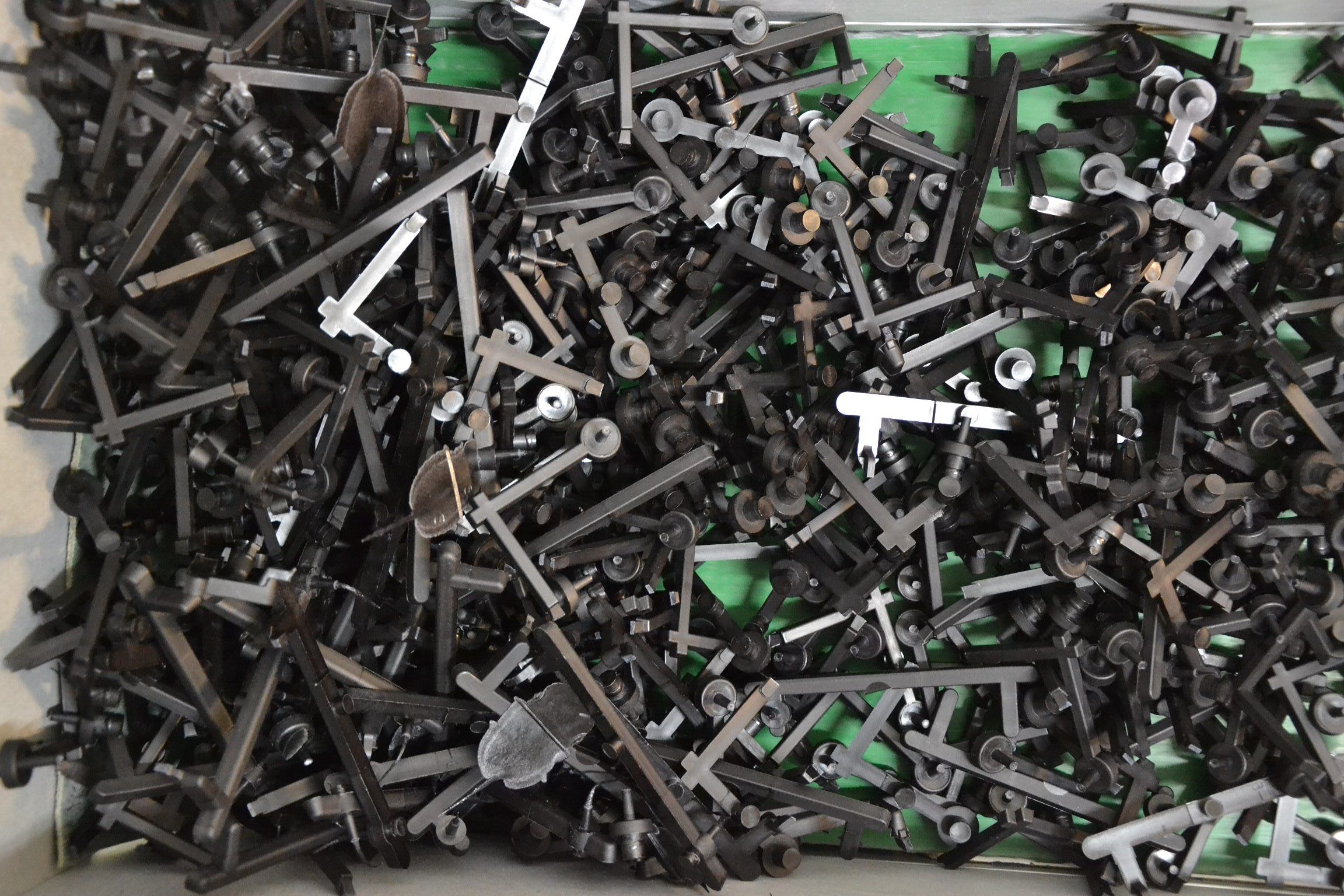
Injection moulding runner waste
What types of plastic can be shredded?
A wide range of plastic products can be shredded. When selecting a suitable shredder, it is important to consider not only the type of plastic but also the wall thickness, dimensions and shape of the products. We also need to understand how the material will be fed into the shredder.
Injection moulding runners
Runners and rejected parts from injection moulding machines can be shredded into material suitable for further processing. When designing the solution, we consider their dimensions, thickness and required output particle size.
Plastic lumps and purgings
Plastic lumps and purgings generated during extruder cleaning or material changeovers are often large and irregularly shaped, with considerable variation in size. The most important factors when selecting a shredder are the dimensions of the pieces, their thickness and the type of plastic.
Thin and flexible materials
This category includes plastic films, woven plastic materials and fibres, as well as thin-walled bottles and cups. When choosing the shredding technology, it is important to consider how the material behaves during feeding and whether it could wrap around the machine’s moving parts.
Thin-walled, rigid plastic products
We shred products such as crates, boxes, bumpers, covers, jerrycans, drums and IBC containers. For larger items, the dimensions of the feed opening and the feeding method must be considered. Where necessary, larger items can be reduced in size before shredding or processed in multiple stages.
Extruded plastic products
Plastic profiles and sheets vary in length, cross-section and wall thickness. These dimensions determine how the material can be fed into the machine and whether direct granulation or coarse pre-shredding is more suitable.
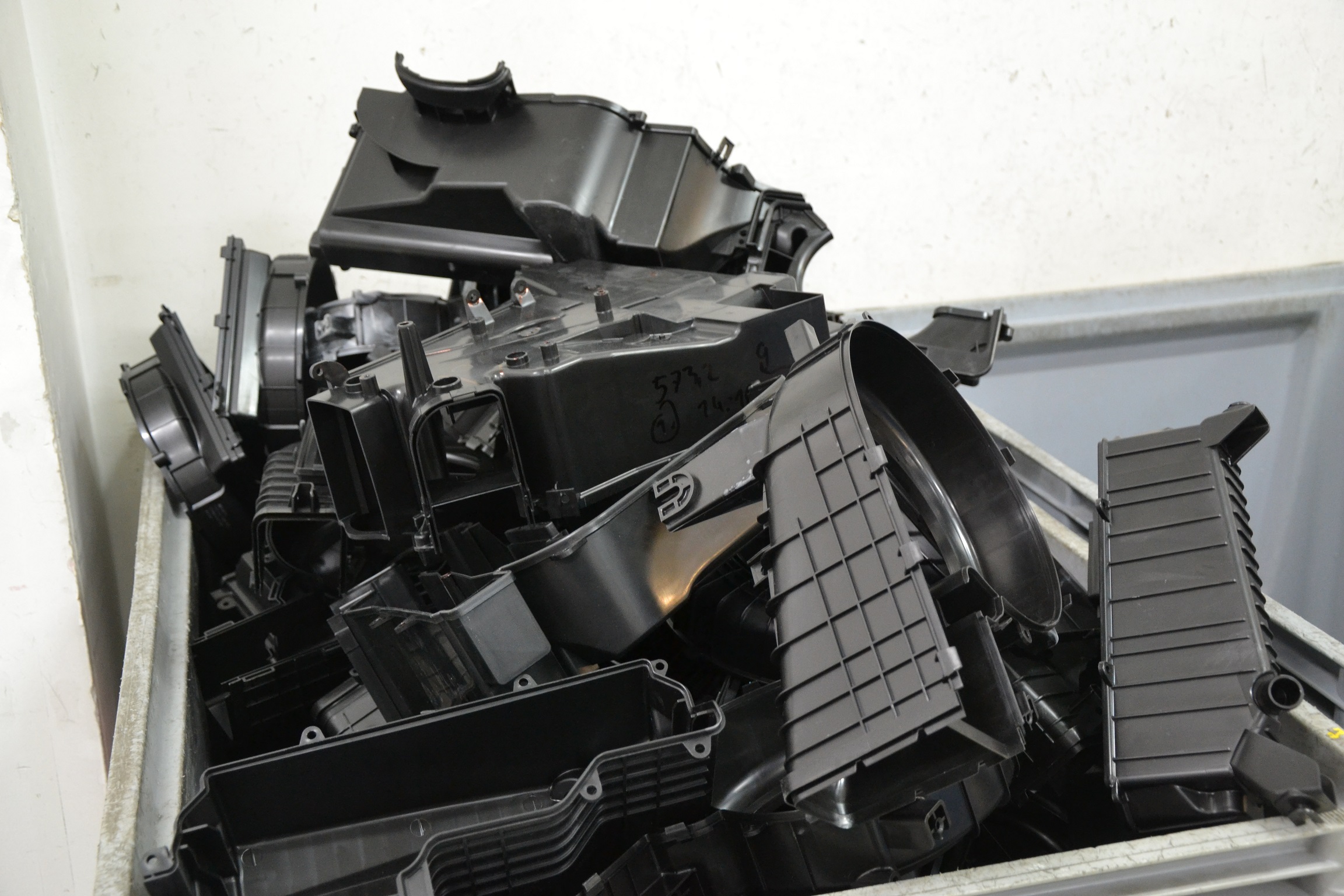
Rejected ABS products

Coarsely shredded HDPE crates

PMMA car headlights granulated in a granulator
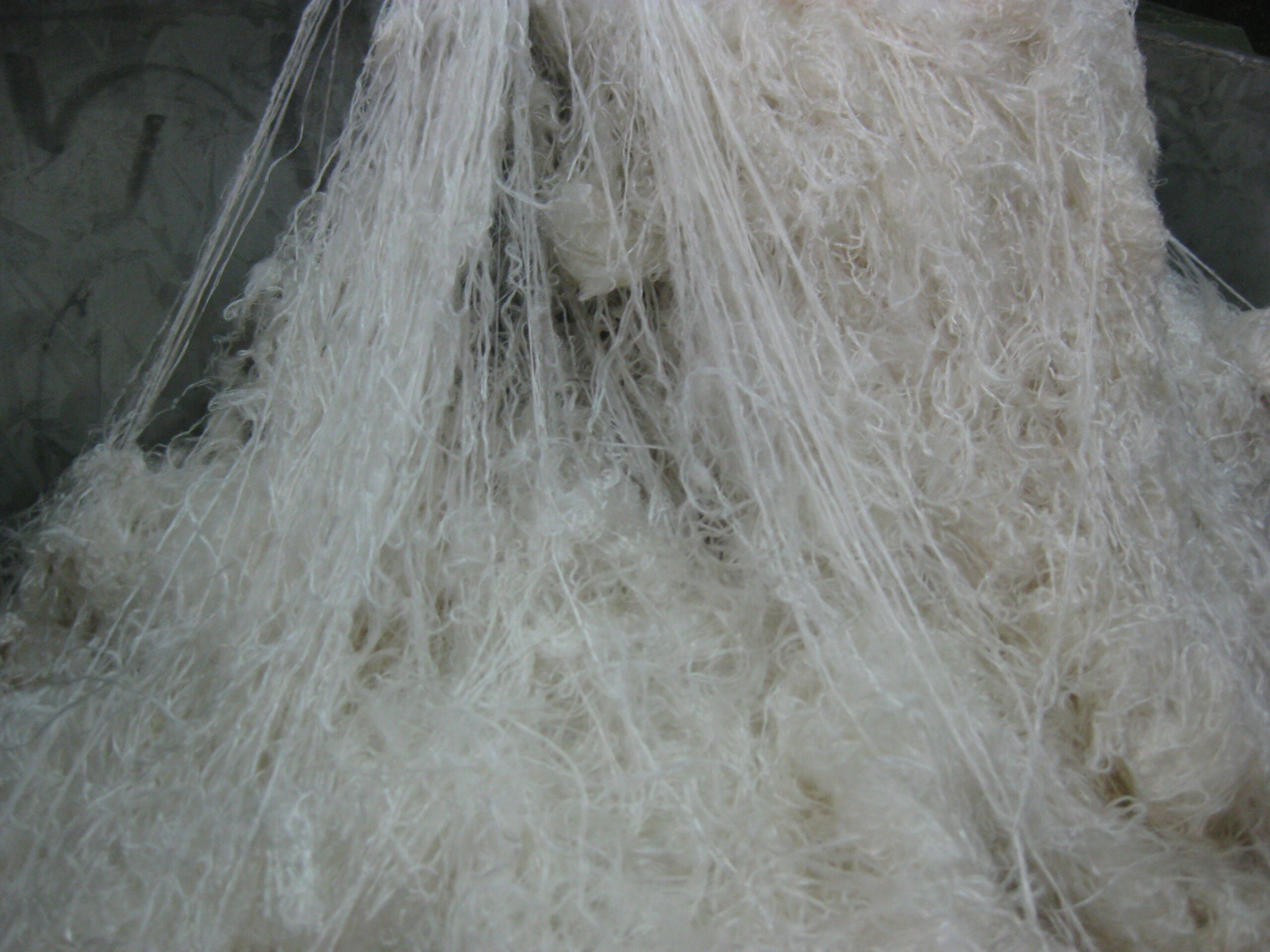
PA fibres
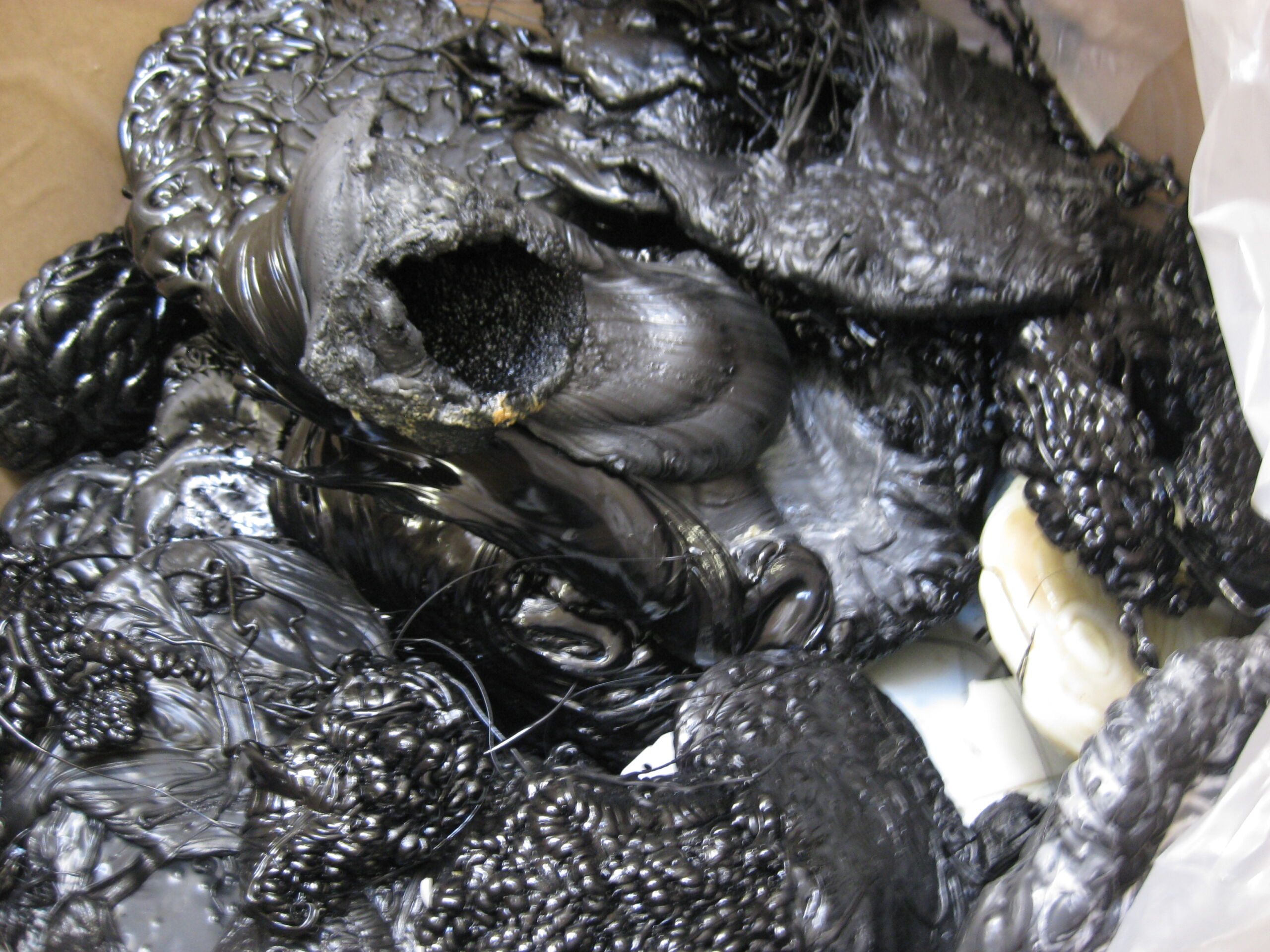
PES lumps
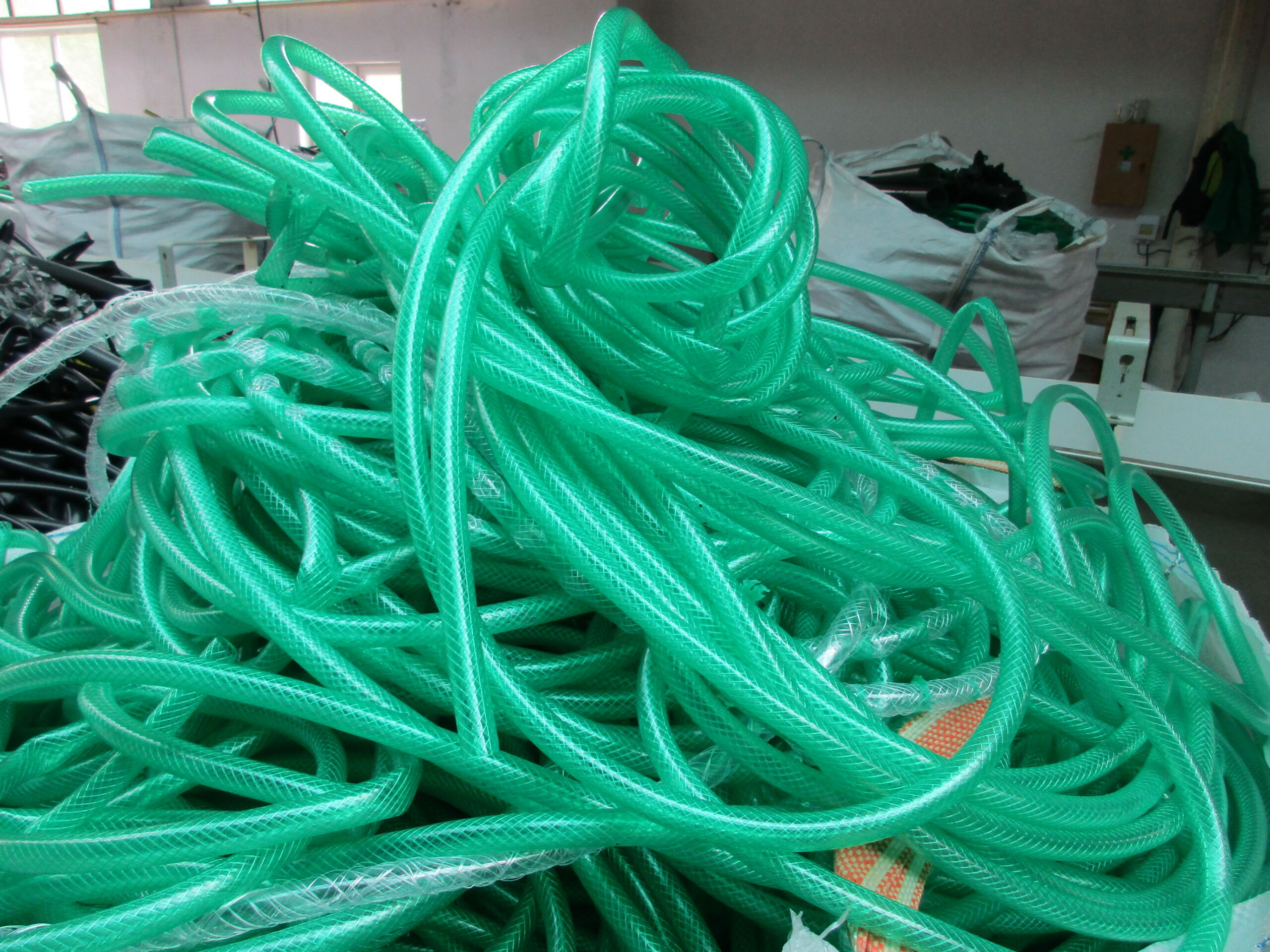
PVC hoses
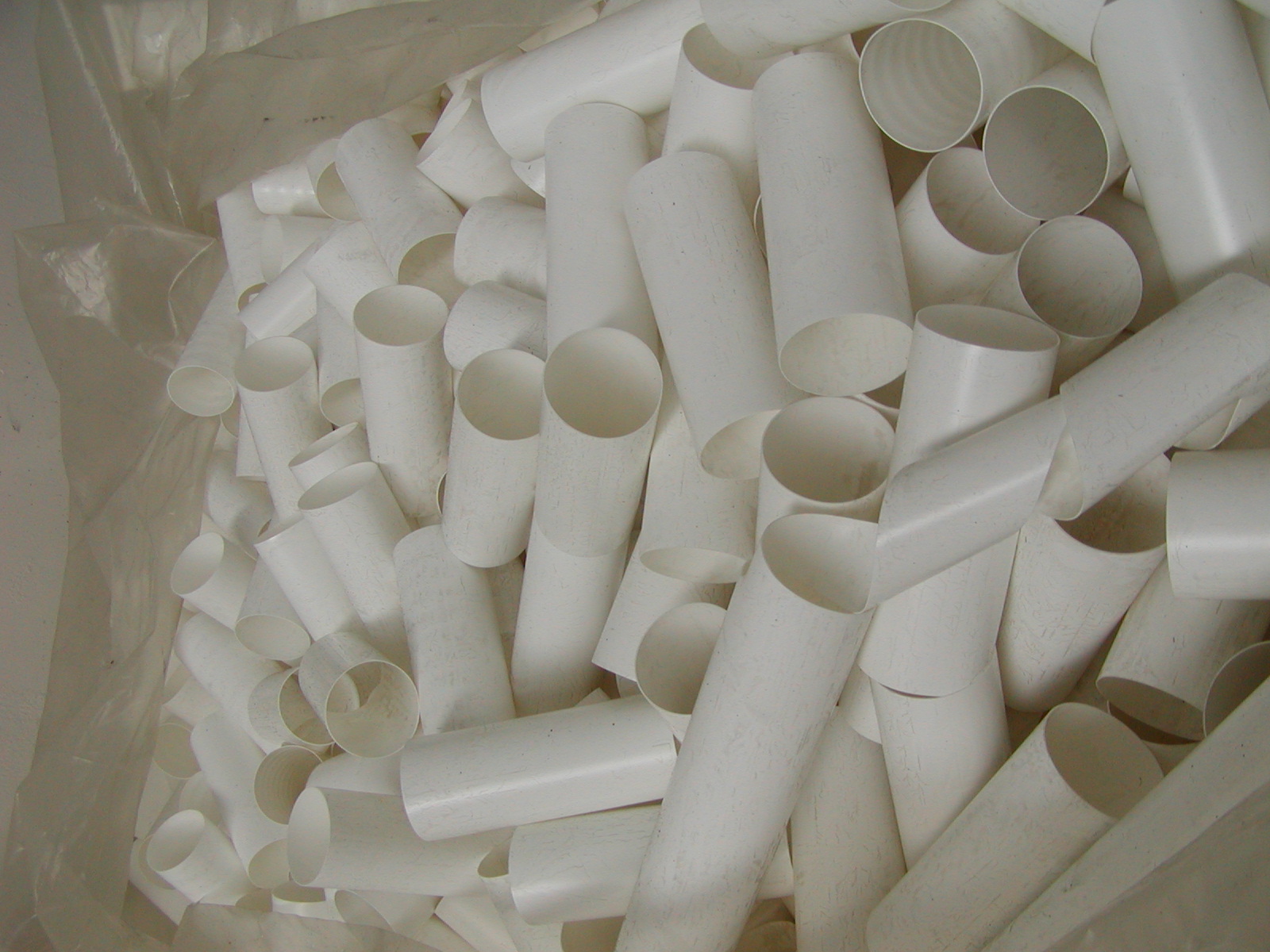
PP tubes
Why shred plastic?
Shredding prepares plastic waste for further processing. Large or irregularly shaped products are reduced to smaller pieces that are easier to handle, store and transport. For bulky plastics, reducing the volume can also make better use of storage space and vehicle capacity.
What happens next depends on the type of plastic, its cleanliness and the requirements of the downstream process:
- Reprocessing in manufacturing: Clean, single-material production waste, such as runners and rejected mouldings, can be shredded and returned to production, provided the requirements of the finished product allow it.
- Mechanical recycling: Sorted plastic waste is shredded and, where necessary, further cleaned and processed into raw material for new products. These may have the same or a different application from the original products.
- Chemical recycling: For certain types of plastic, the next stage may involve depolymerisation – breaking down the polymer into substances that can be used to manufacture new material. Shredding prepares the feedstock for this process.
- Energy recovery: Plastic waste that is unsuitable for recycling can, after appropriate processing, be used as a component of fuel, such as refuse-derived fuel (RDF). The required particle size depends on how the fuel will subsequently be used.
Companies that purchase plastic waste and prepare it for other processors also play an important role. They inspect and sort the material according to plastic type and cleanliness, then shred it to the particle size required by their customers – often below 10 mm. The resulting shredded material is then sold for further processing.
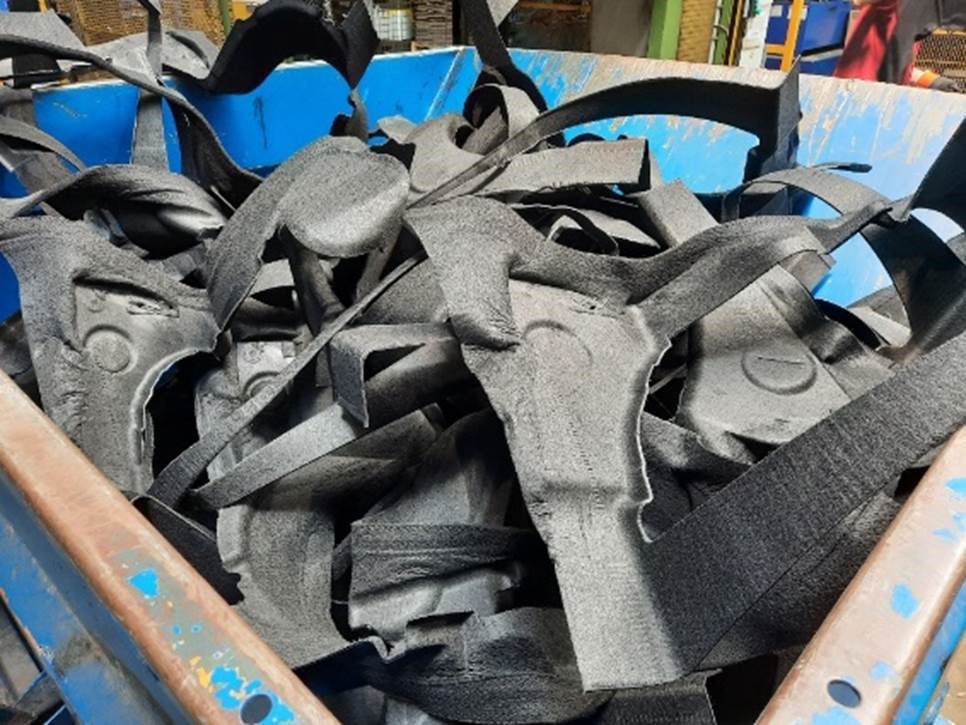
PP/GF composite fabric offcuts from thermoforming
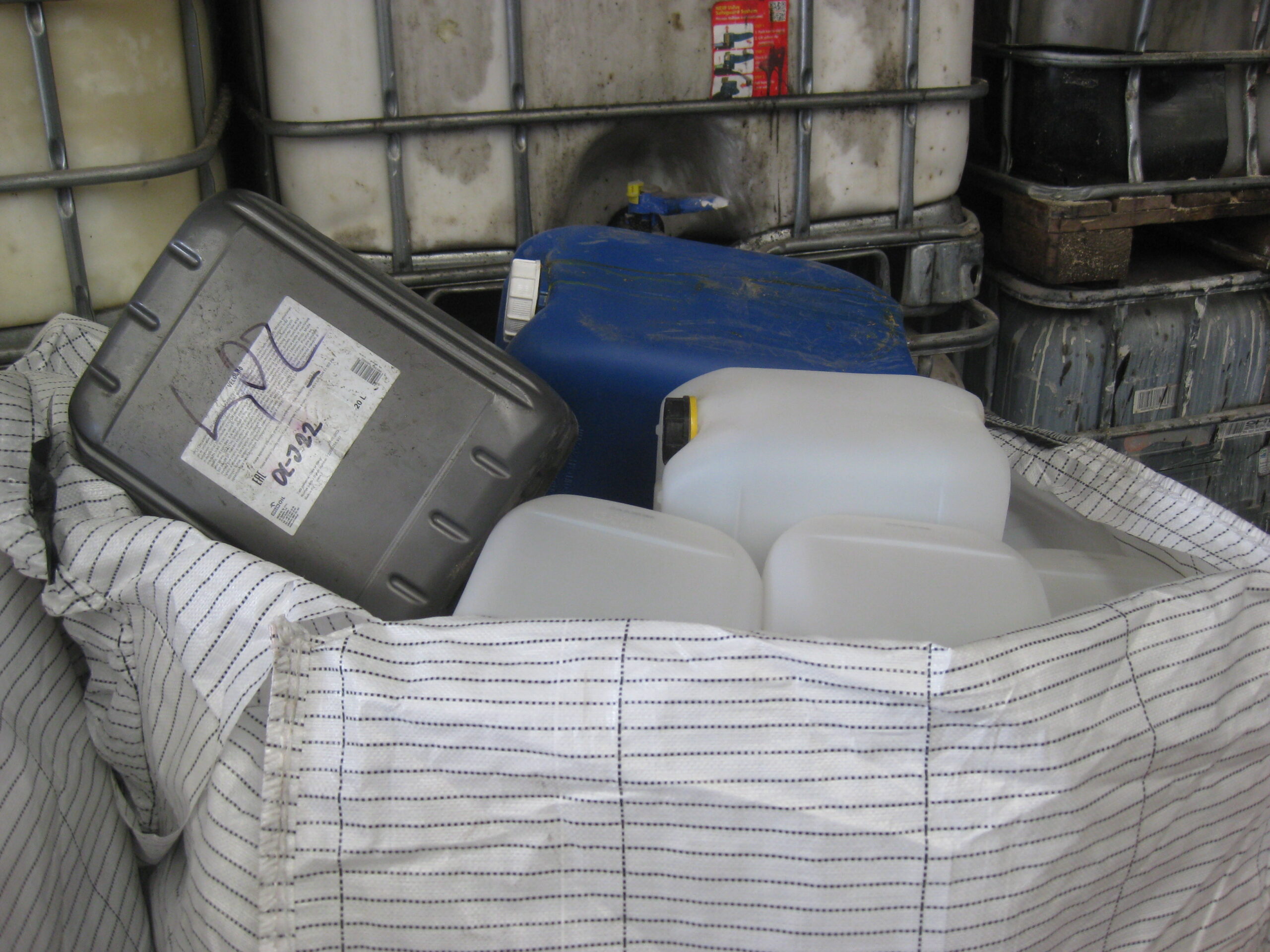
Plastic jerrycans
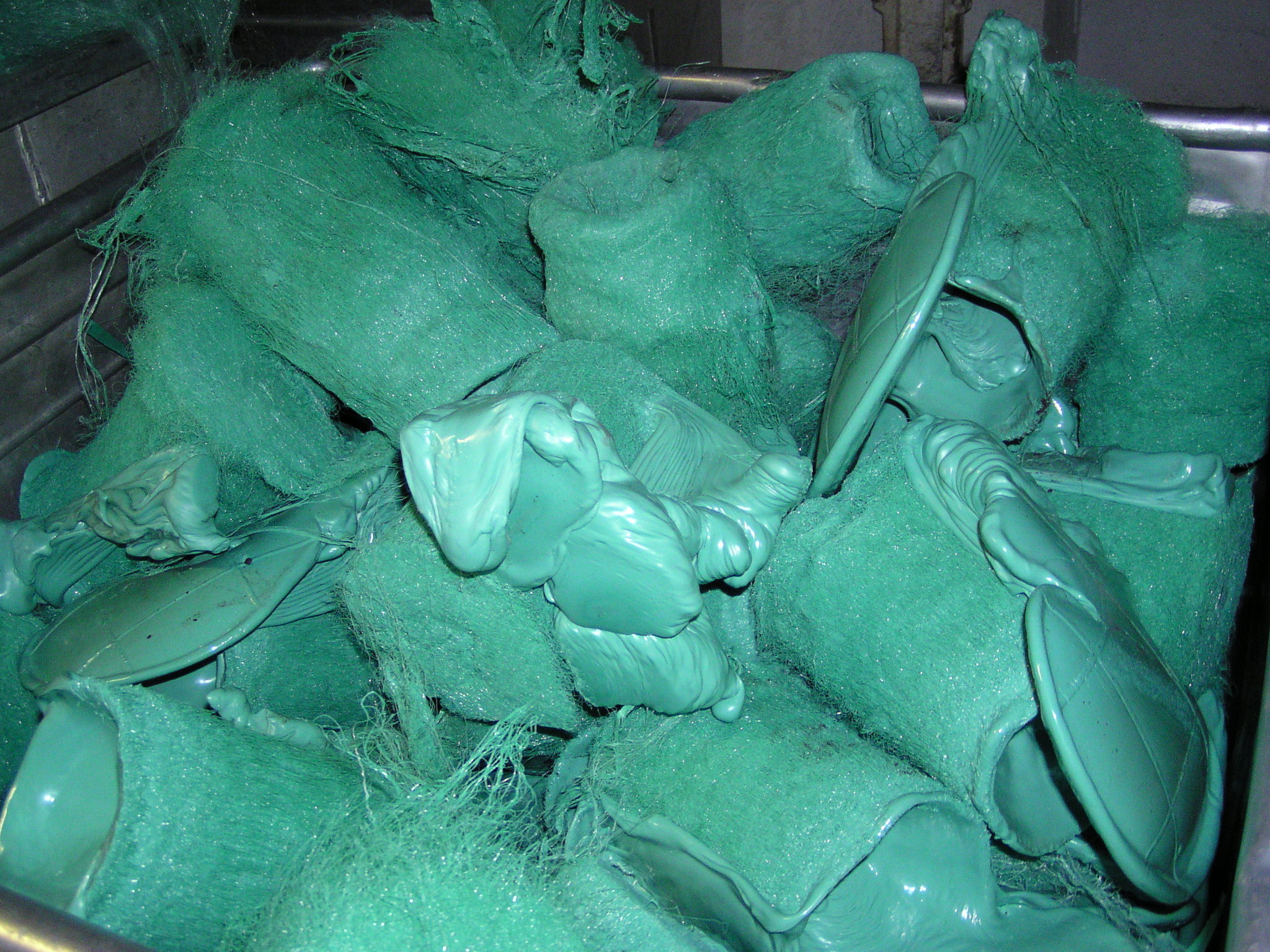
Plastic lumps and purgings
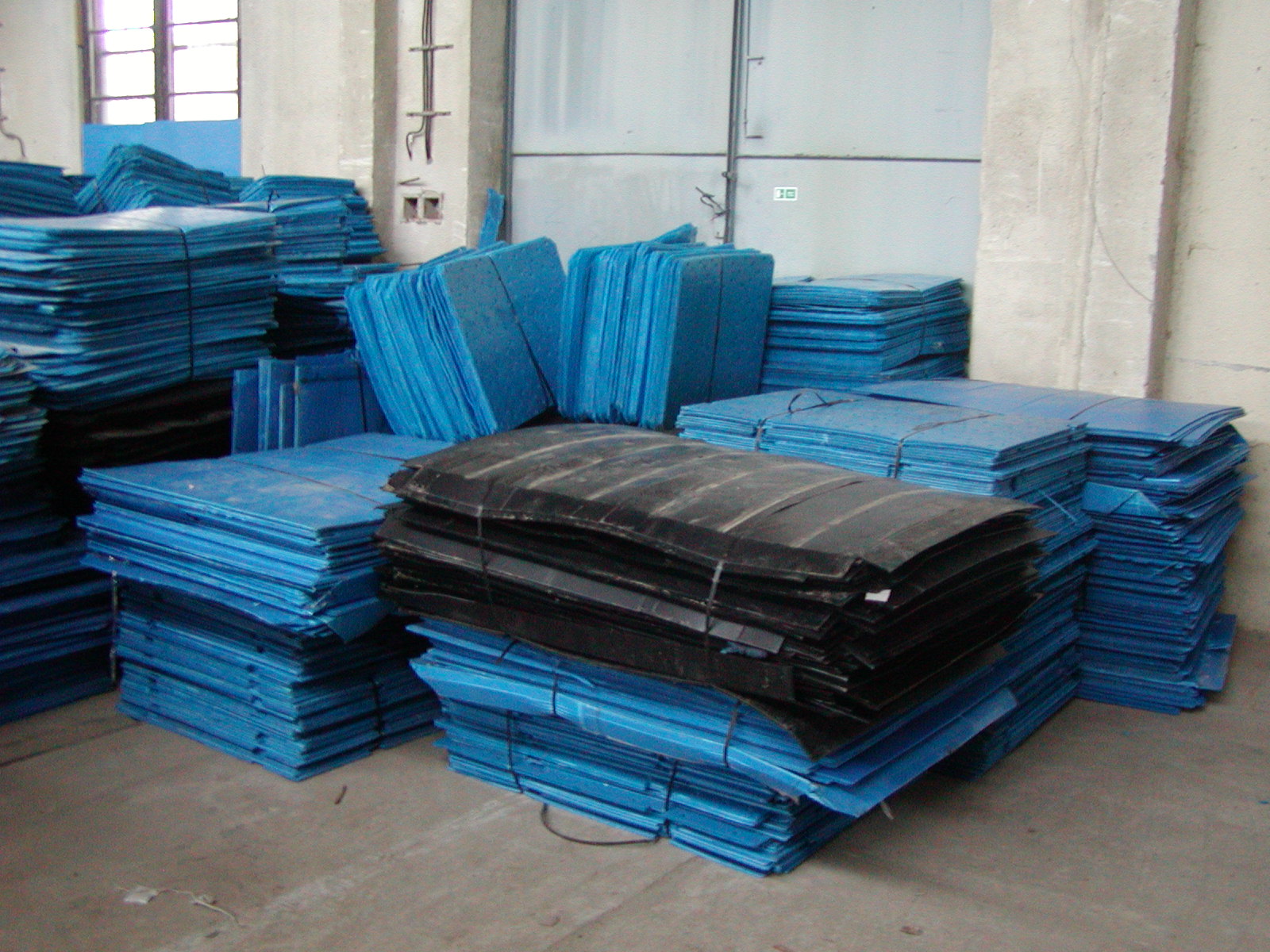
PP corrugated plastic sheets
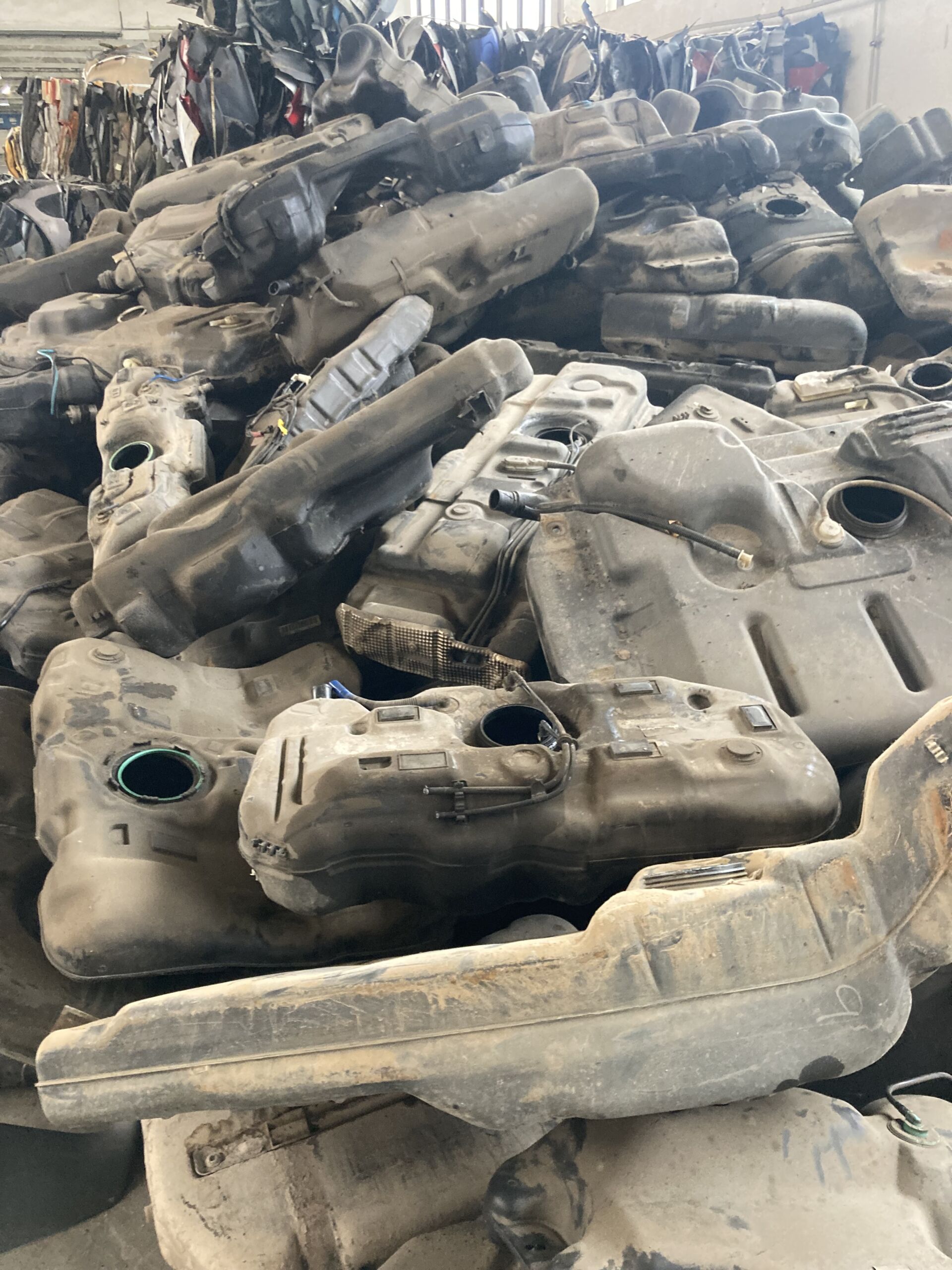
HDPE automotive fuel tanks
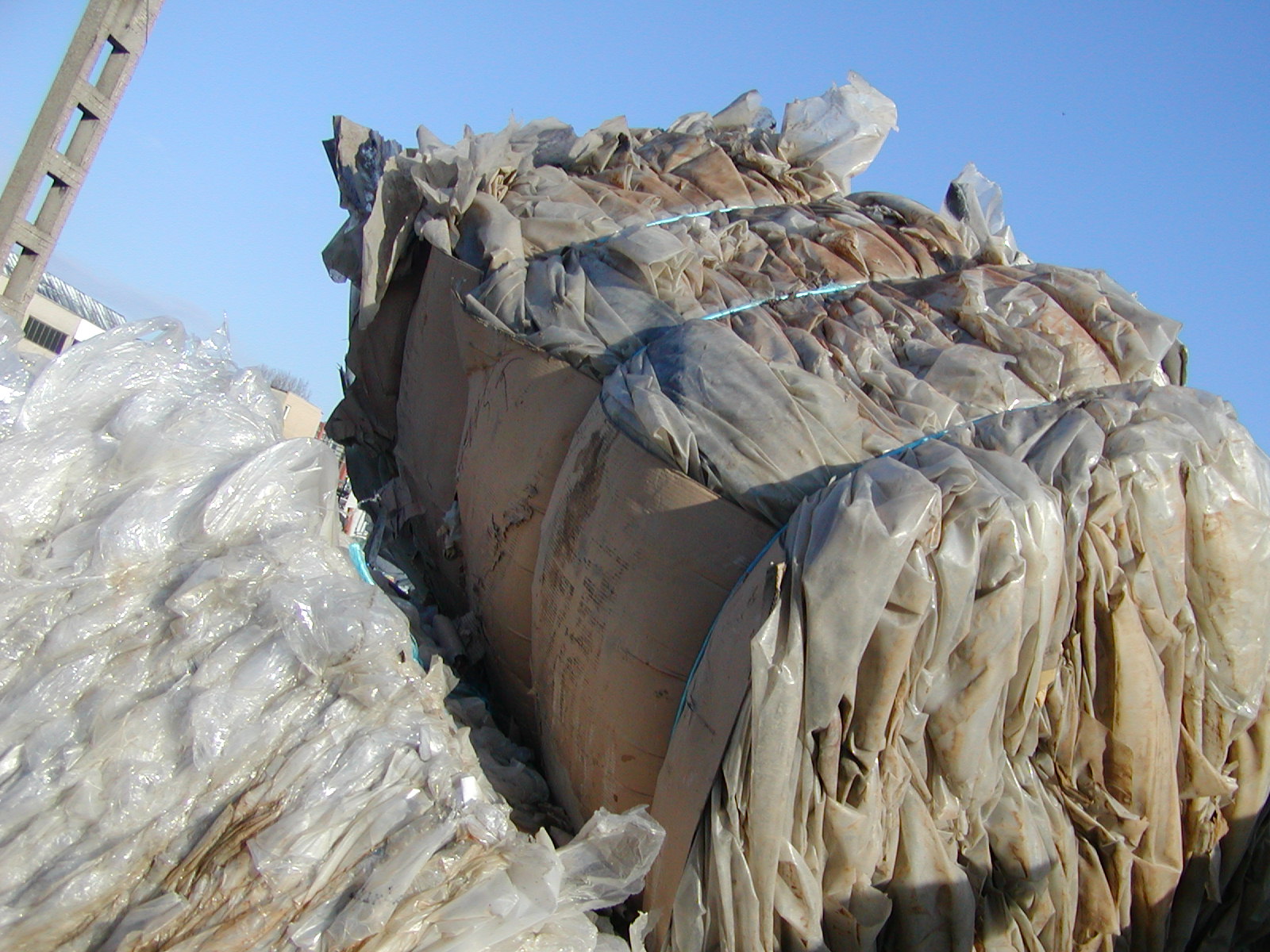
Baled LDPE film
How plastic shredding works
Granulators are most commonly used to produce plastic regrind of a required particle size. High-speed rotating knives cut the material against fixed stator knives. A screen is positioned beneath the rotor, and the material remains in the shredding chamber until it is small enough to pass through the screen openings. The size of these openings therefore determines the output particle size, although not the exact shape of every particle.
Accurate adjustment of the cutting clearance between the rotor and stator knives is essential. Sharp knives and the correct clearance ensure a clean cut and help minimise the generation of fine dust. This affects both the quality of the regrind and workplace cleanliness.
If the input material is clean and consists of a single type of plastic, the regrind produced by a granulator may be suitable for further processing in an injection moulding machine or extruder. However, its suitability depends on the requirements of the specific manufacturing process. Granulated film is often agglomerated afterwards to make it easier to feed into the next processing stage.
What happens to the regrind after granulation?
The regrind needs to be reliably conveyed from the granulator into bags, big bags, octabins or downstream equipment. Pneumatic conveying systems are often used for this purpose, typically incorporating a fan, pipework and cyclone. Depending on the system design, a rotary valve and air filtration may also be included.
A properly designed conveying system affects both the throughput of the entire processing line and dust levels in the workplace. Downstream equipment may also include regrind dedusting and metal separation. These stages are selected according to the type of plastic, the required cleanliness of the regrind and its intended use.
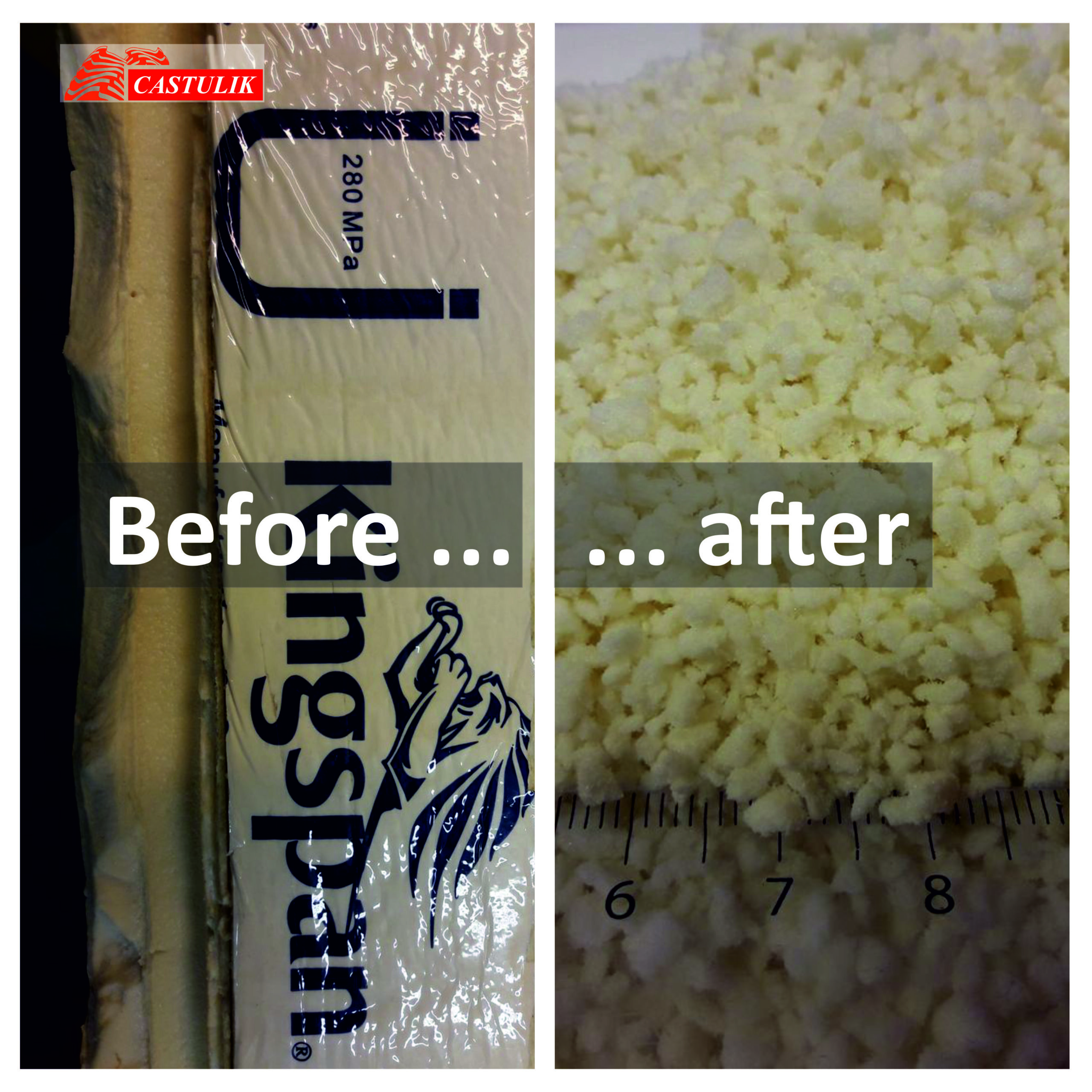
PU foam granulated in a granulator
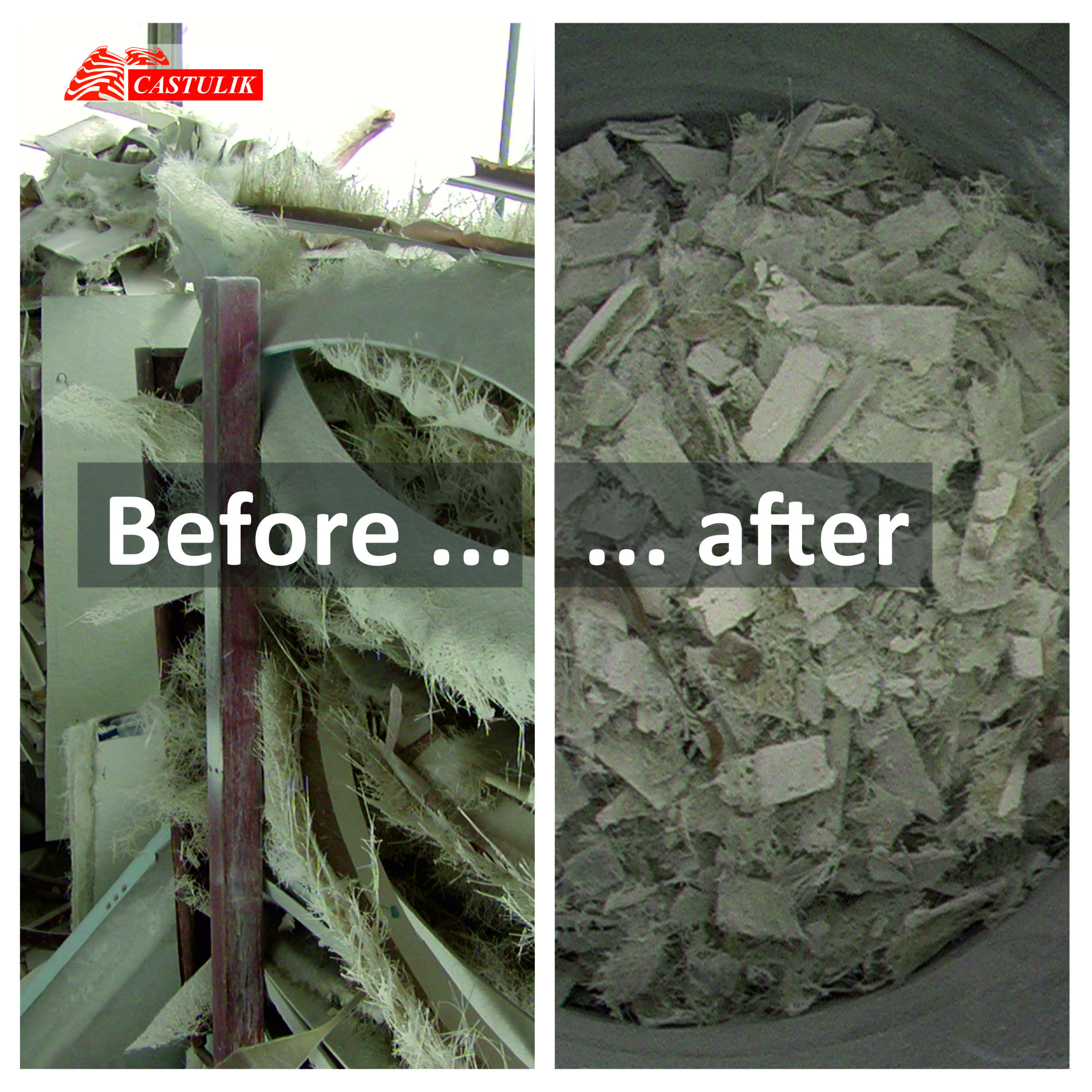
Fibreglass offcuts shredded in a twin-shaft shredder
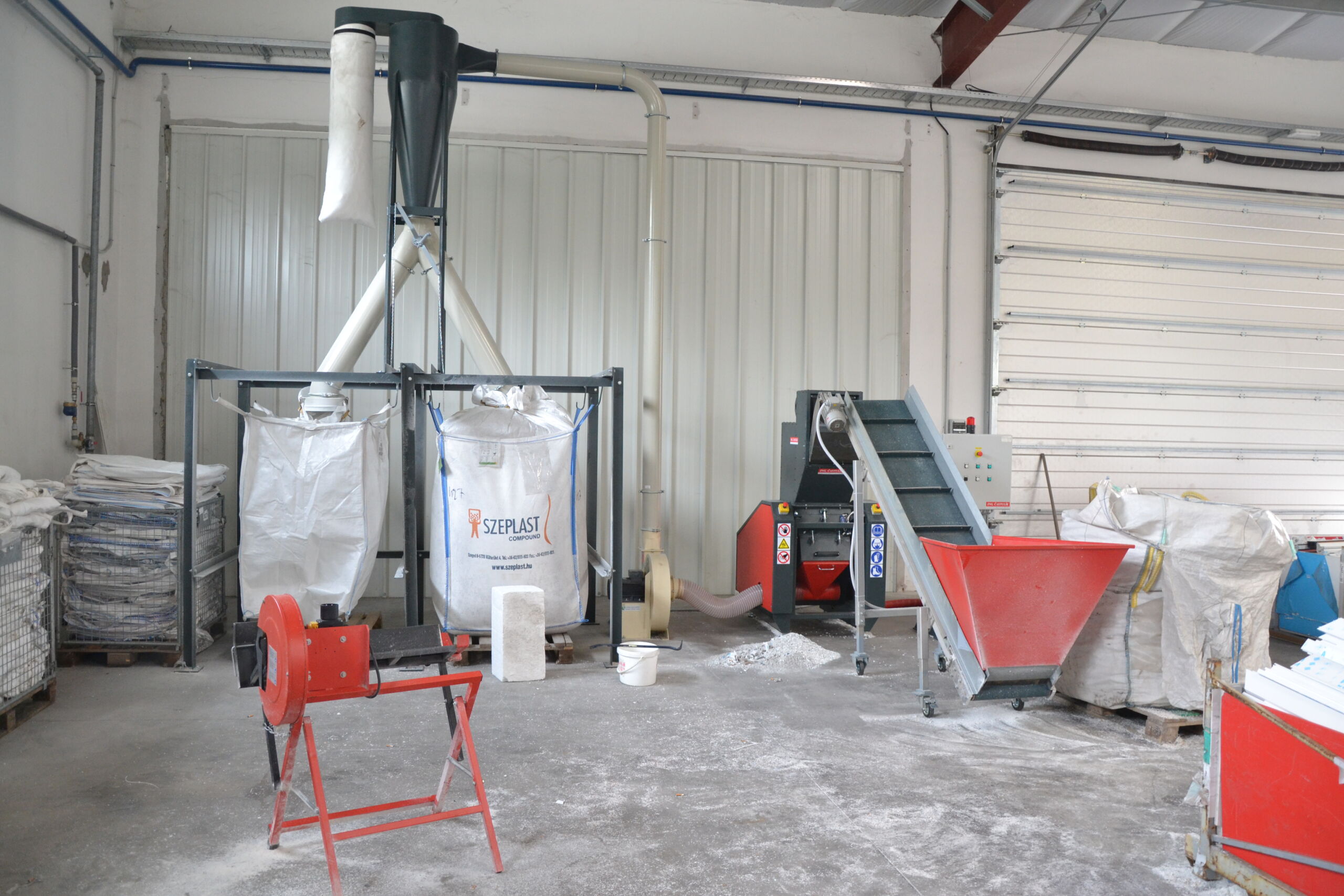
MN300 granulator processing PVC window profile offcuts
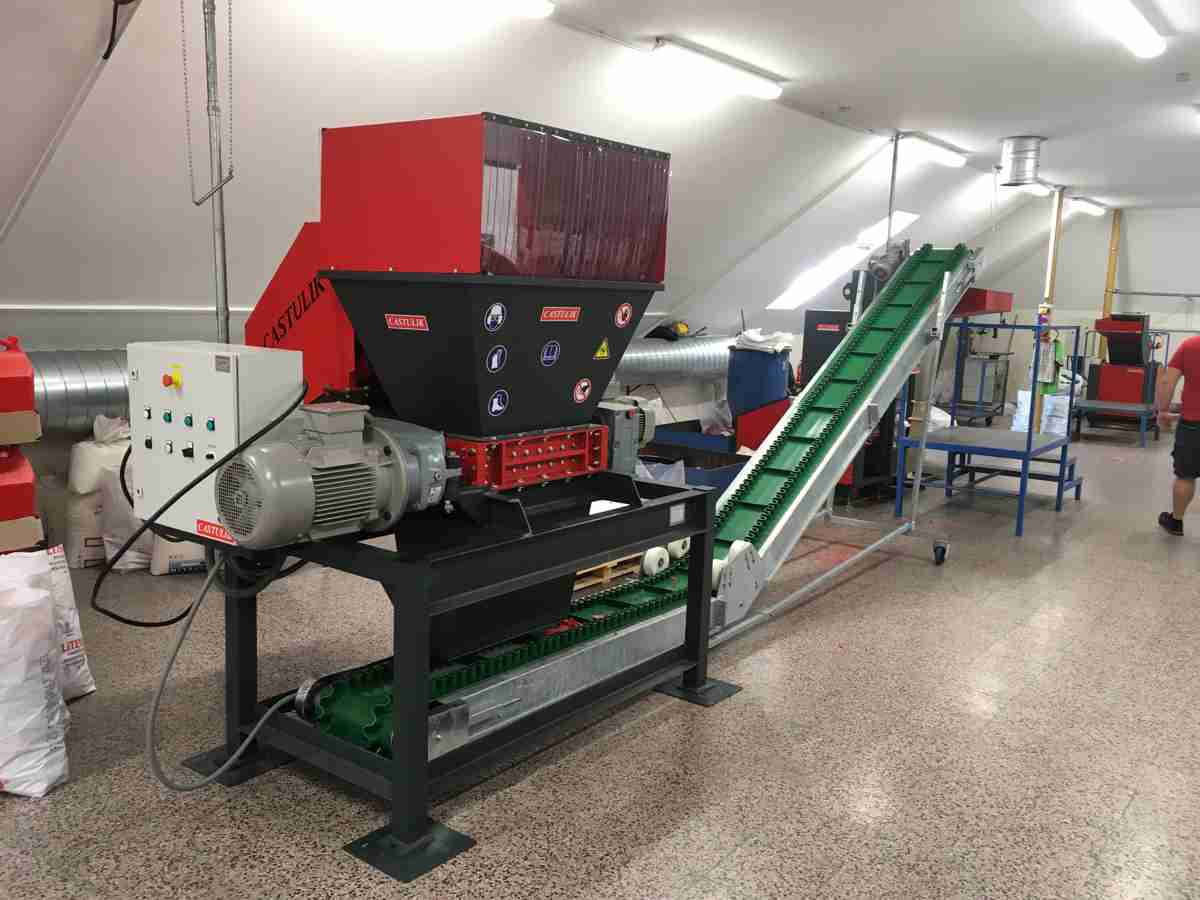
DX160 twin-shaft shredder used for pre-shredding plastic jerrycans
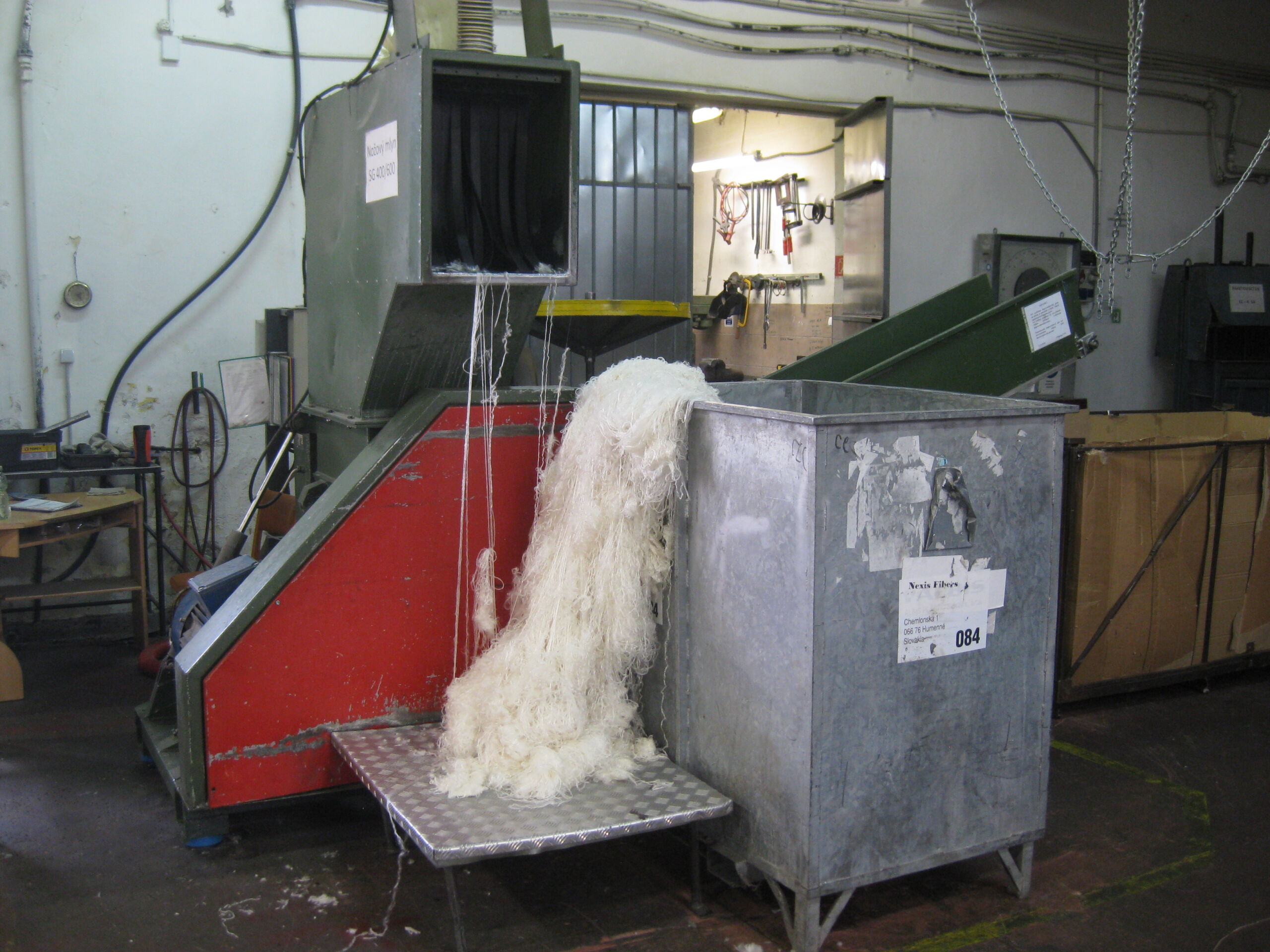
SG400 granulator processing PA fibres
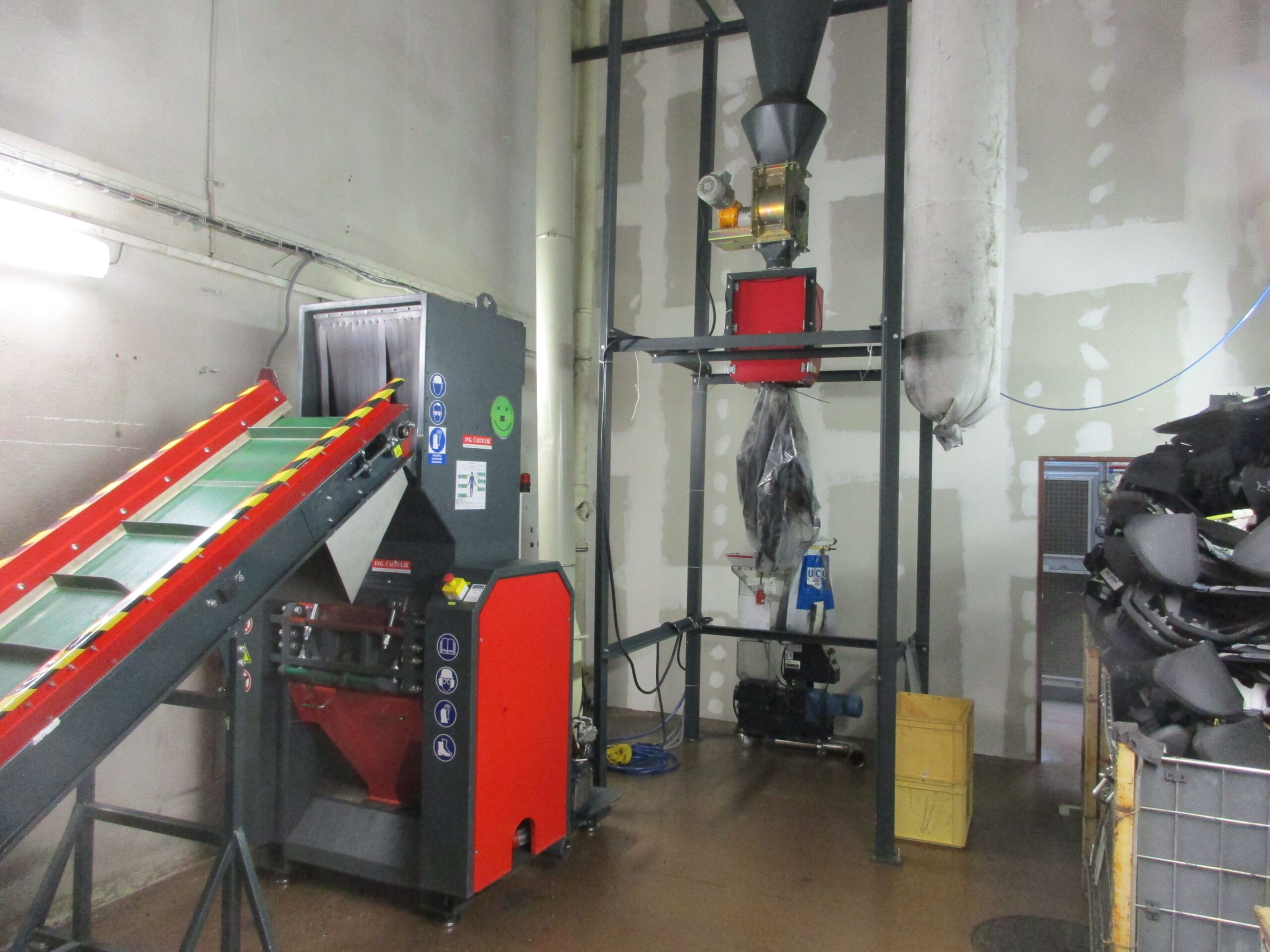
SG400 granulator fed by conveyor | dedusting unit | all-metal separator
Which plastic shredder should you choose?
The first question is whether the material can be processed directly in a granulator or needs to be pre-shredded.
When a granulator is sufficient
Single-stage granulation is suitable when the material contains no metal contaminants, its shape and dimensions allow it to be fed safely into the granulator, and the knives can reliably cut through its walls. The required output particle size and throughput in kilograms per hour then become the main selection criteria.
Granulators differ in shredding chamber width, rotor diameter, the number and arrangement of knives, motor power and torque. When comparing machines, it is also important to consider access to the knives, knife adjustment, screen replacement, noise reduction and maintenance requirements. The same motor power does not necessarily mean the same throughput when processing a particular type of plastic.
When a pre-shredder is required
Pre-shredding is necessary when the pieces are too large for the granulator, the knives cannot reliably grip them or the material is too thick for direct granulation. In such cases, a slow-speed shredder is installed before the granulator to reduce the material to smaller pieces.
Twin-shaft shredders are suitable for large items of varying dimensions, including plastic sheets, crates, drums, IBC containers, jerrycans, bumpers, corrugated plastic sheets and large offcuts of woven plastic materials.
Single-shaft shredders equipped with screens are particularly suitable for large, solid plastic lumps and purgings. They can also be used to pre-shred plastics containing small metal components, such as screws, nails or pieces of sheet metal. During pre-shredding, these metal parts are released from the plastic, allowing ferromagnetic contaminants to be removed by a magnetic separator before the material enters the granulator. This reduces the risk of damage to the granulator knives.
A single-shaft shredder has an interchangeable screen, with openings typically ranging from 12 mm upwards, depending on the material and required output size. In some applications, it can also operate independently, without subsequent granulation.

Twin-shaft shredder shredding chamber

Single-shaft shredder shredding chamber
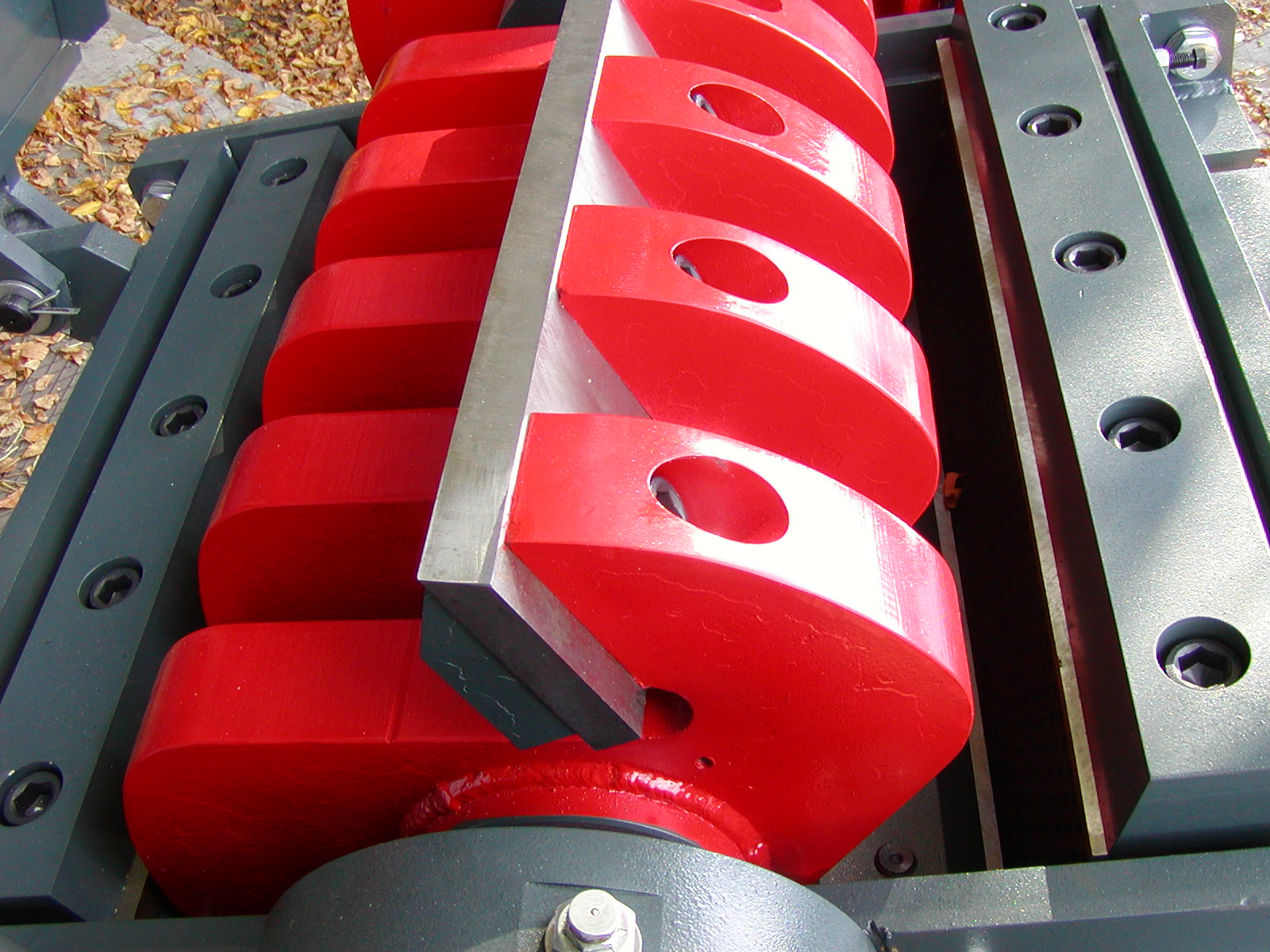
Granulator shredding chamber
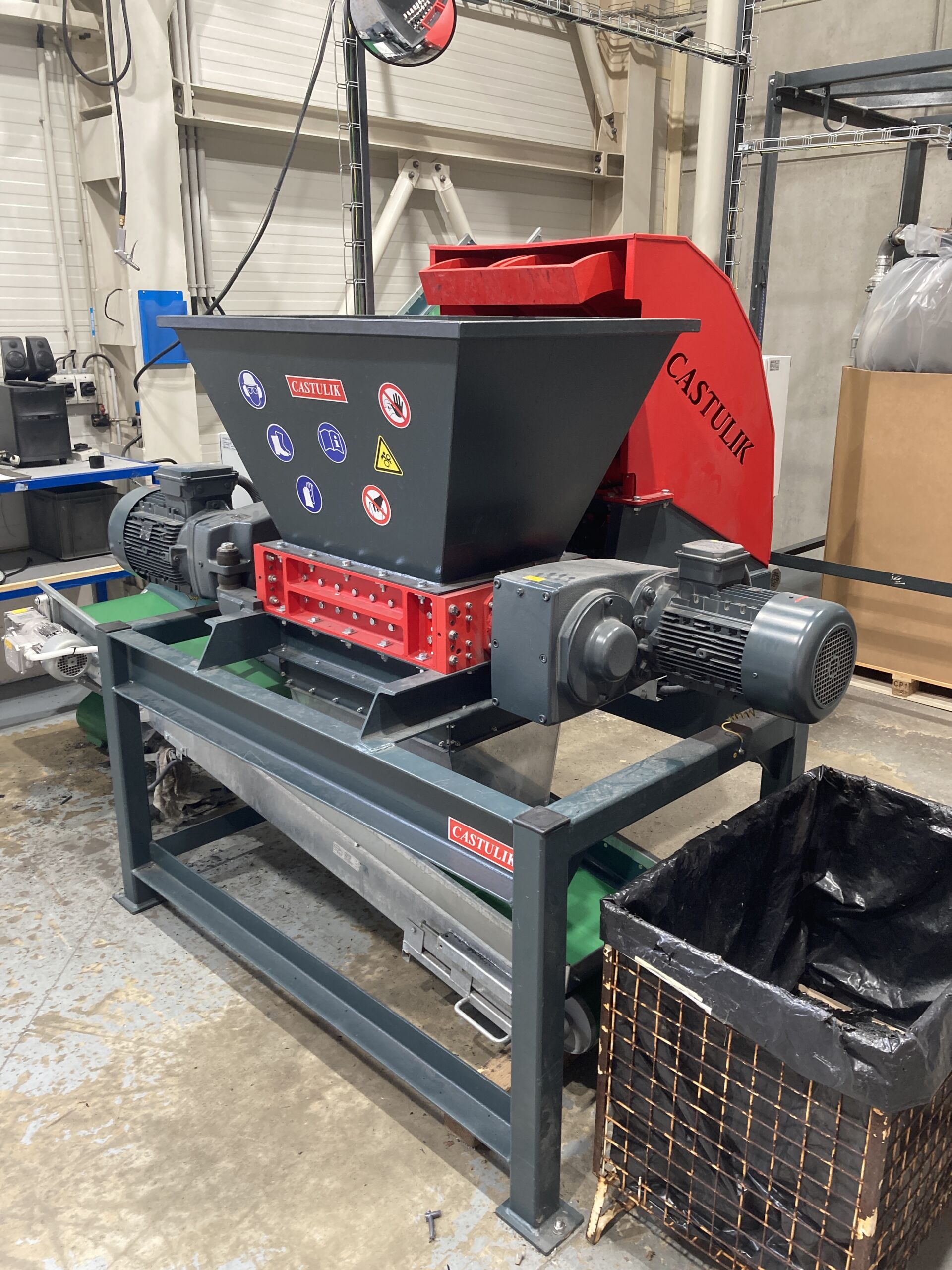
DX160 twin-shaft shredder used for pre-shredding plastic ski boot shells
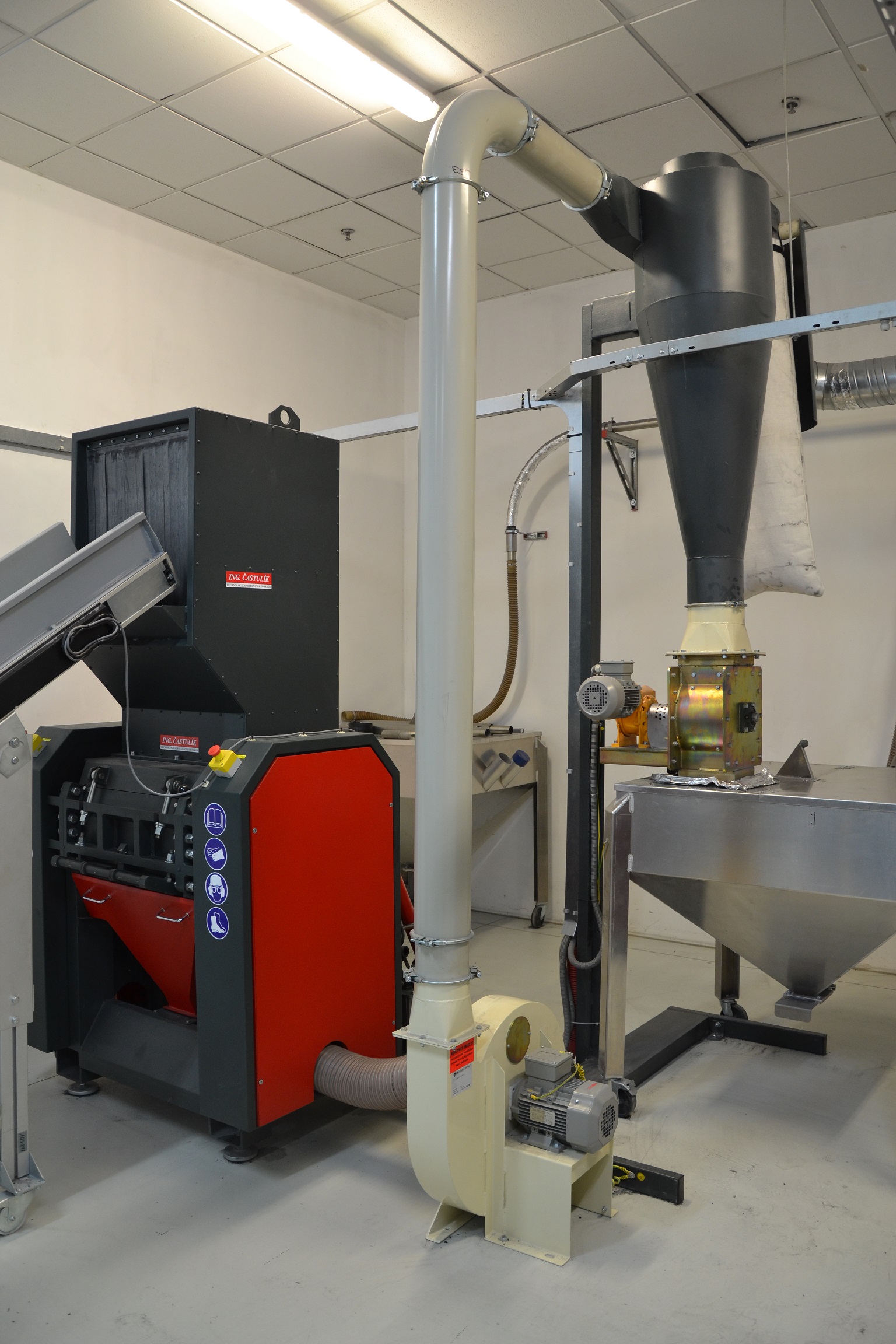
SG400 granulator | conveying fan | pipework | cyclone with fabric filter | rotary valve
OLYMPUS DIGITAL CAMERA
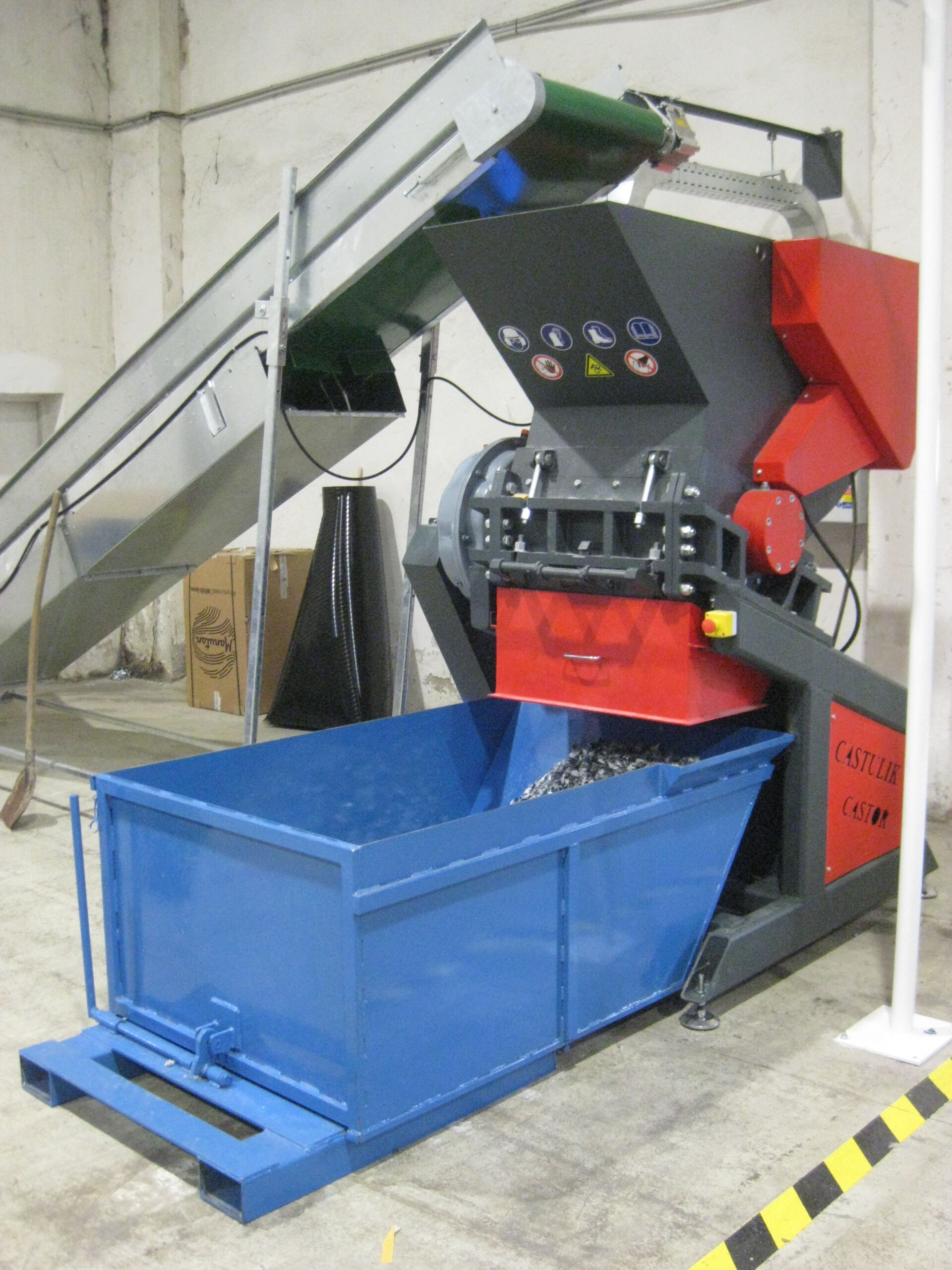
CASTOR single-shaft shredder processing conveyor belt offcuts
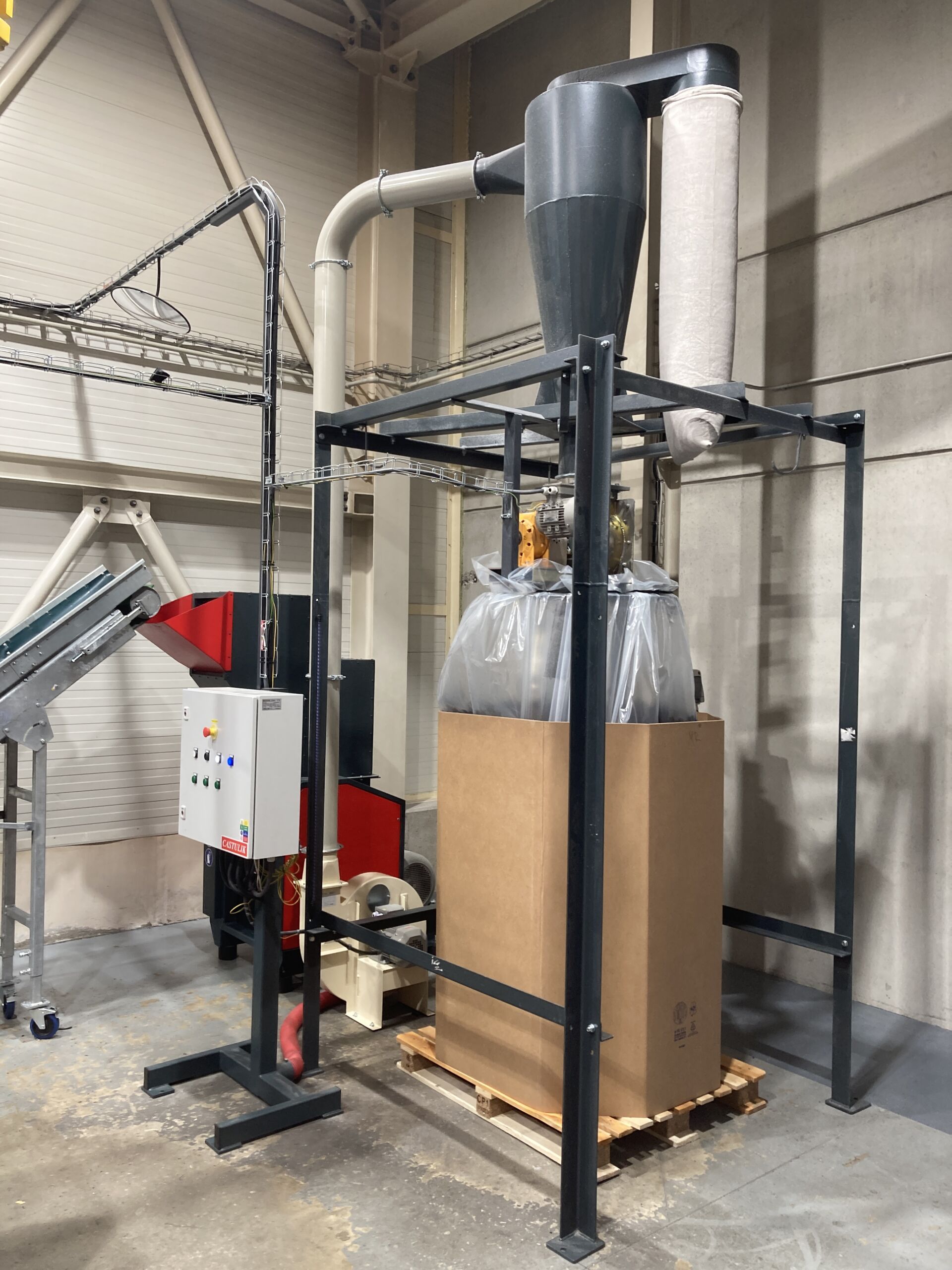
MN300 granulator | belt conveyor feeding system | conveying fan | cyclone on a stand with fabric filter | rotary valve
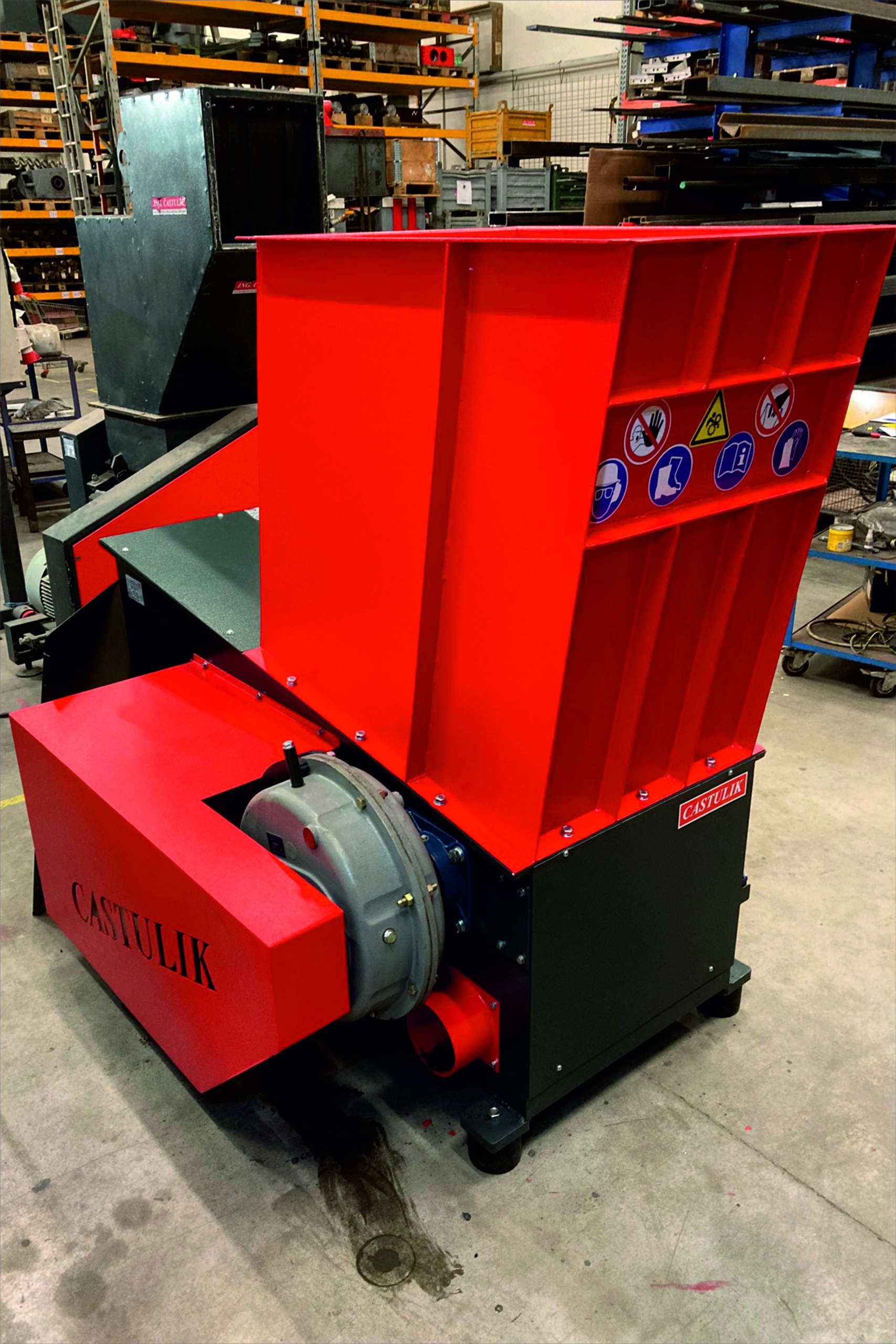
Granulators – selection for plastic processing
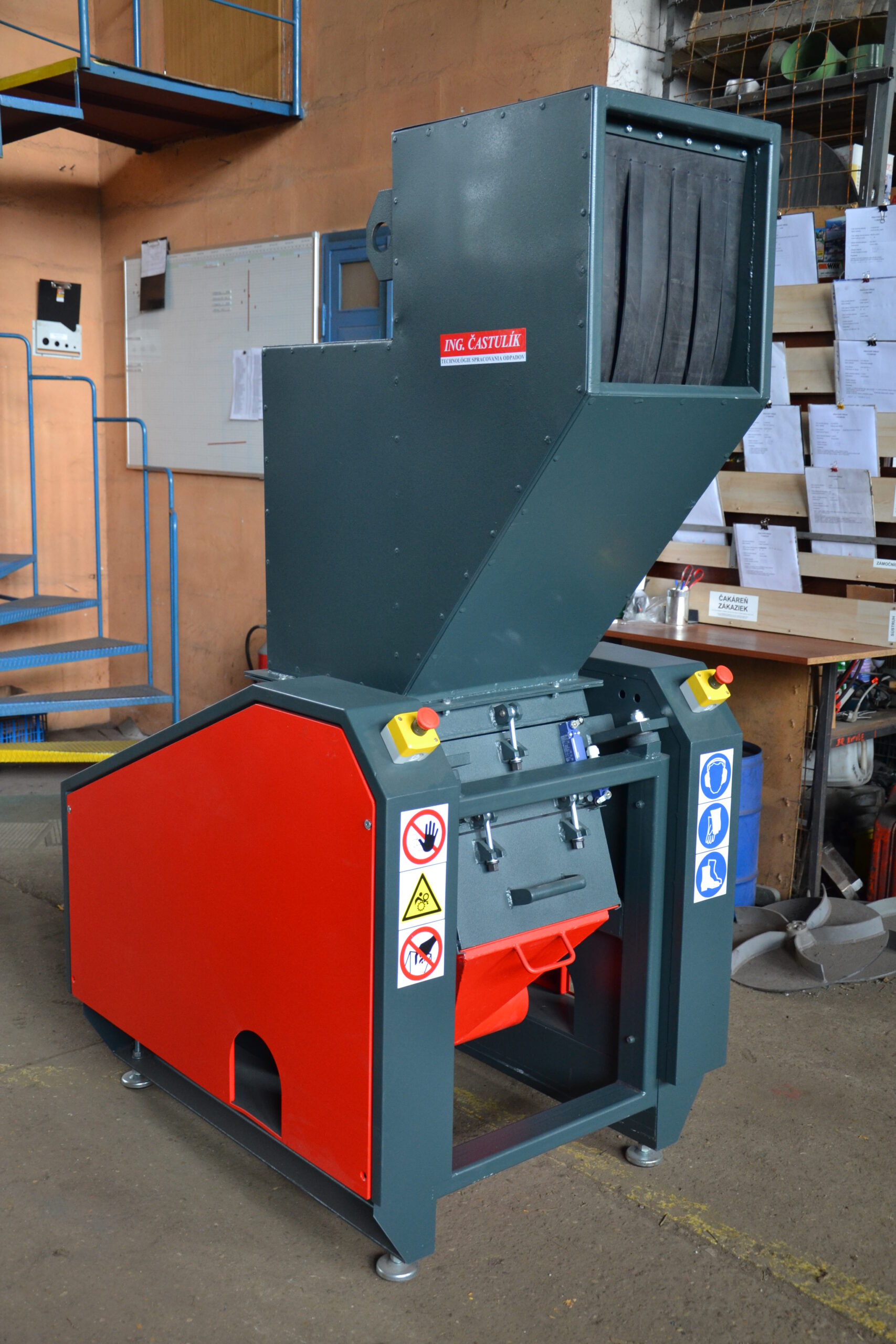

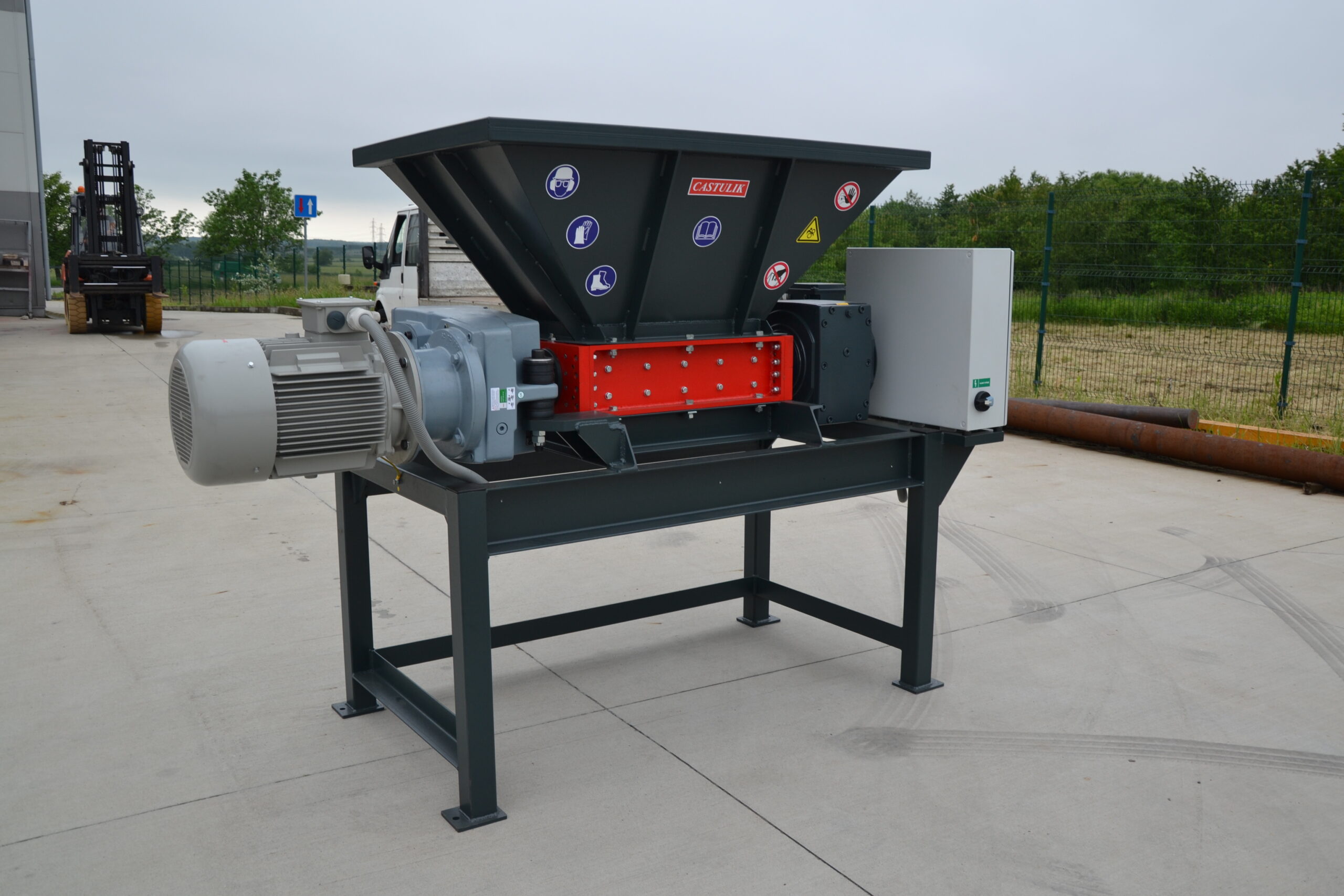
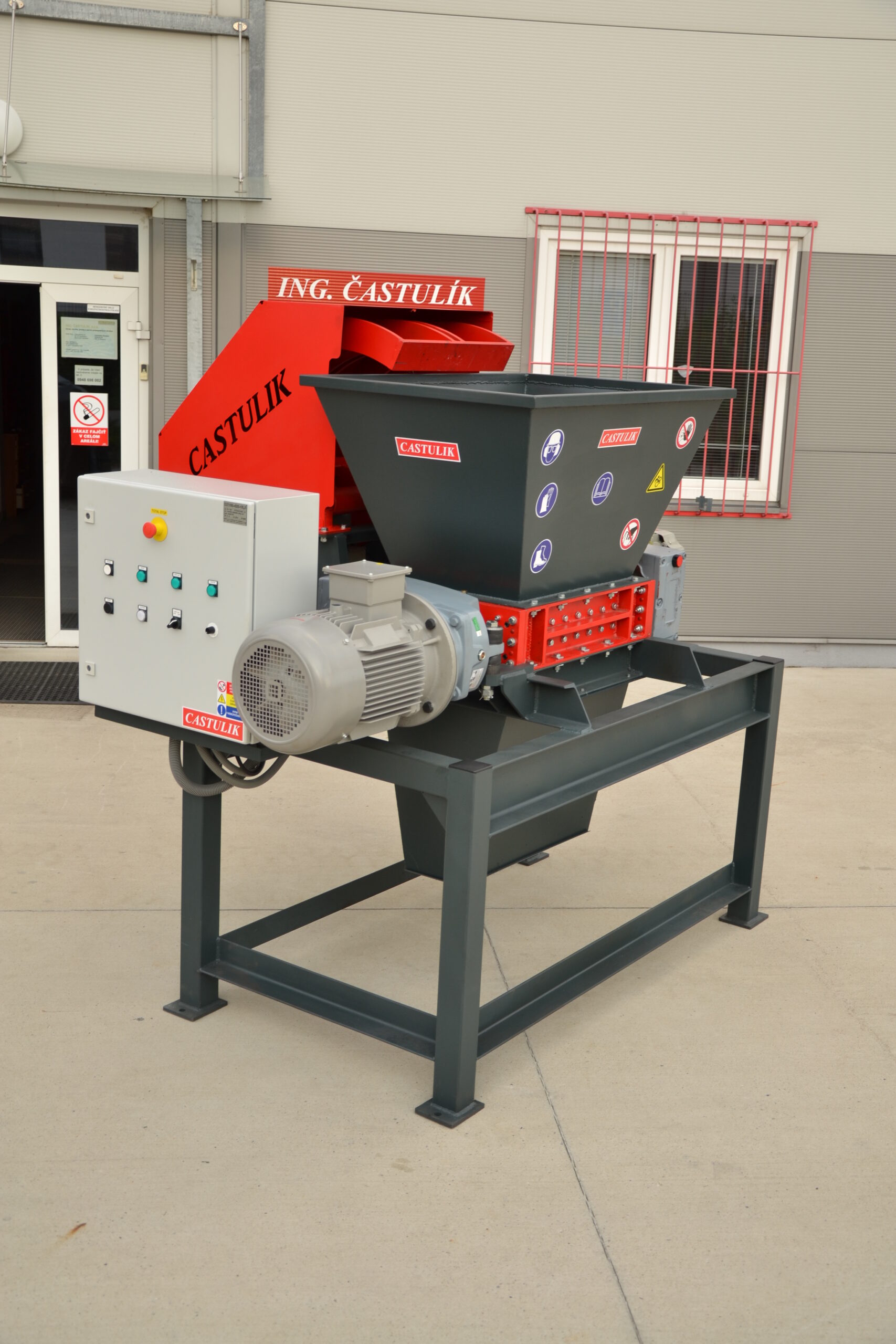
Twin-shaft shredders – selection for plastic processing

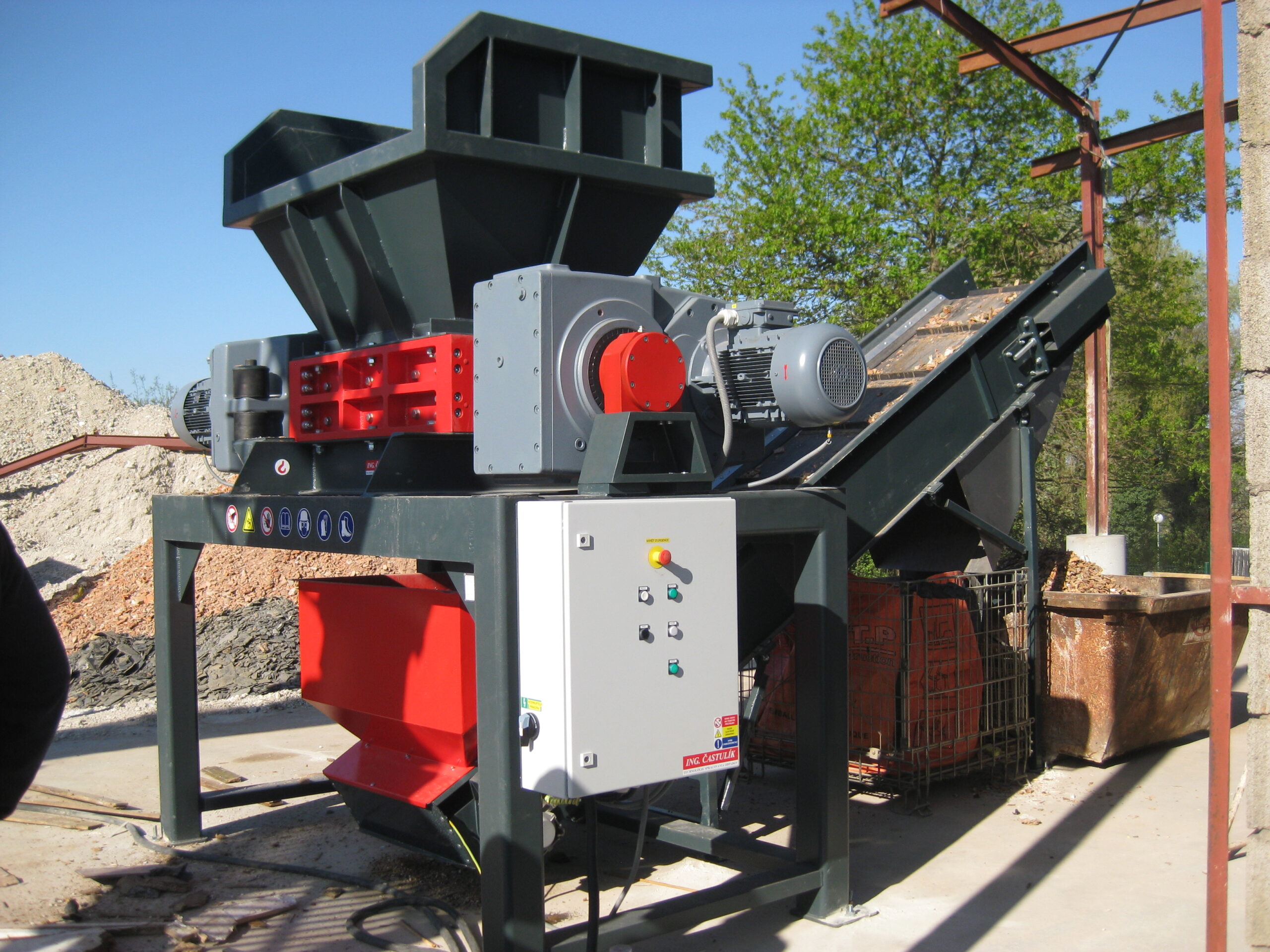
Single-shaft shredders – selection for plastic processing

What does plastic shredding produce?
Shredding produces plastic regrind – loose material with a particle size suited to the next processing stage. Injection moulding machines, extruders and compounding lines often require regrind with a particle size of approximately 8 mm or less. However, the exact requirement depends on the material and how it will be fed into the equipment.
When processing plastic film, the result is lightweight flakes. A larger particle size may be suitable in these applications, for example when using a screen with openings of around 20 mm. Granulated film is often subsequently agglomerated, converting the lightweight flakes into a form that is easier to feed into an extruder.
Dust and metal contaminants in plastic regrind
The granulation process can produce fine plastic dust alongside the required regrind. The amount of dust generated depends on the properties of the plastic, the condition of the knives and the granulator settings. In some applications, this dust needs to be removed from the regrind. For example, when processing clear PMMA, fine plastic dust may behave differently from larger pieces of regrind during subsequent thermal processing, potentially contributing to discolouration or defects in the finished product. A dedusting unit can therefore be incorporated into the processing line.
If the original products contain metal components, suitable separation equipment should be installed after pre-shredding. Magnetic separators remove ferromagnetic metals. Where non-magnetic metals may also be present, an additional detection and separation method is required. The aim is to protect downstream equipment and achieve the regrind purity required by the customer.
How should plastic regrind be stored?
Finished regrind can be collected in bags, big bags or cardboard octabins. The type of container and filling method depend on the quantity of material, the downstream conveying arrangements and cleanliness requirements. During storage, the regrind should be protected from foreign contaminants and, in the case of moisture-sensitive materials, from moisture absorption.
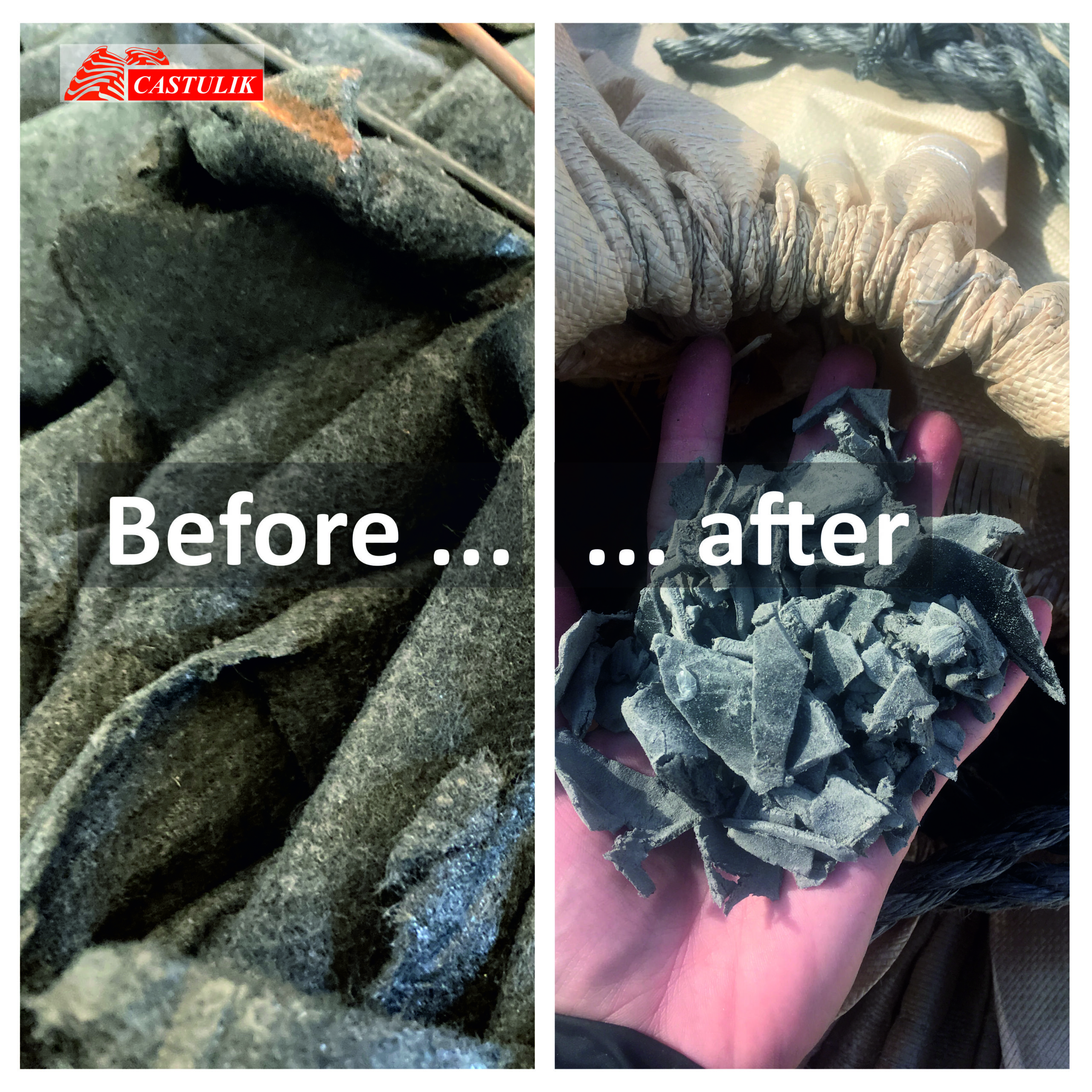
Coarsely shredded PP/GF composite fabric
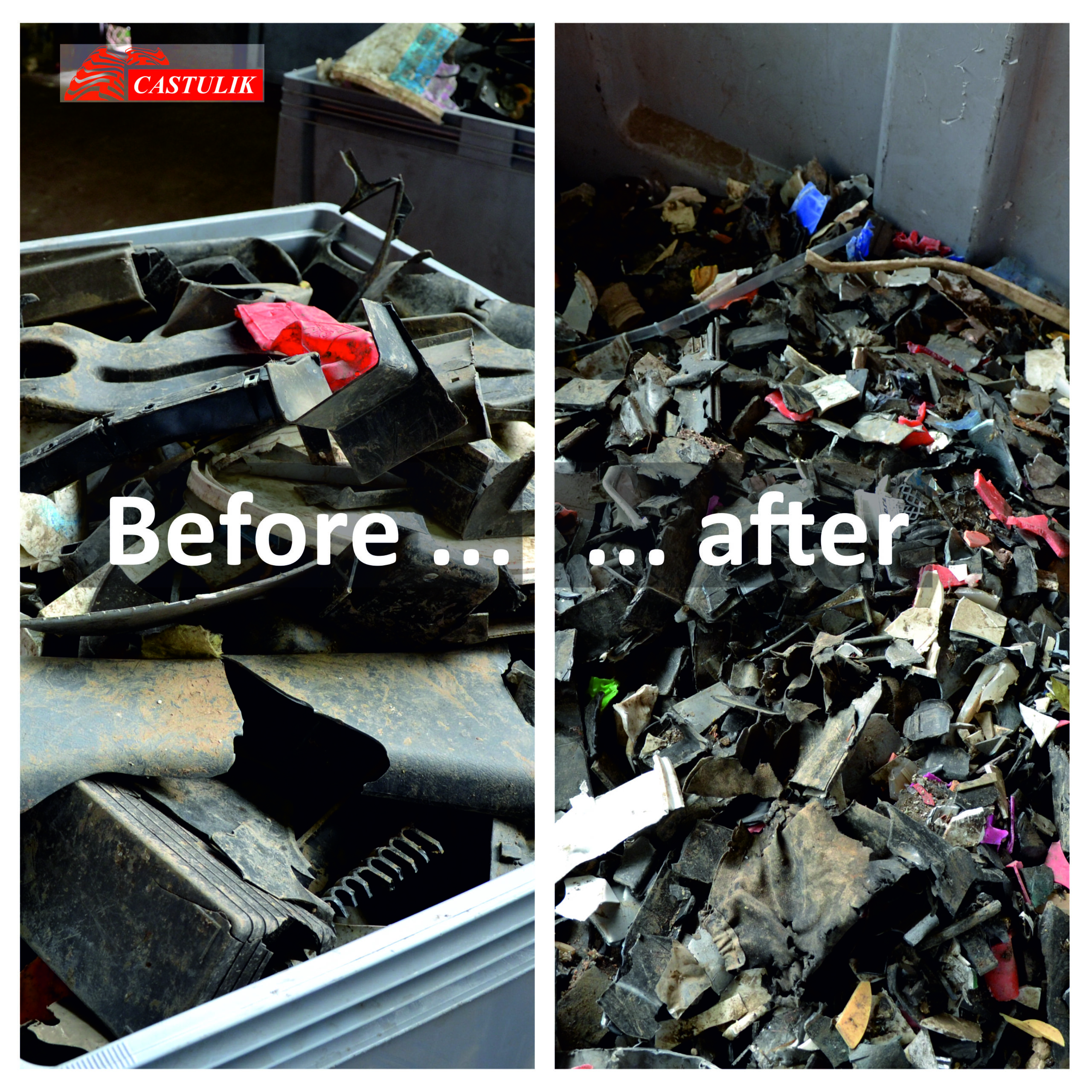
Coarsely shredded PE/PP mixture before separation
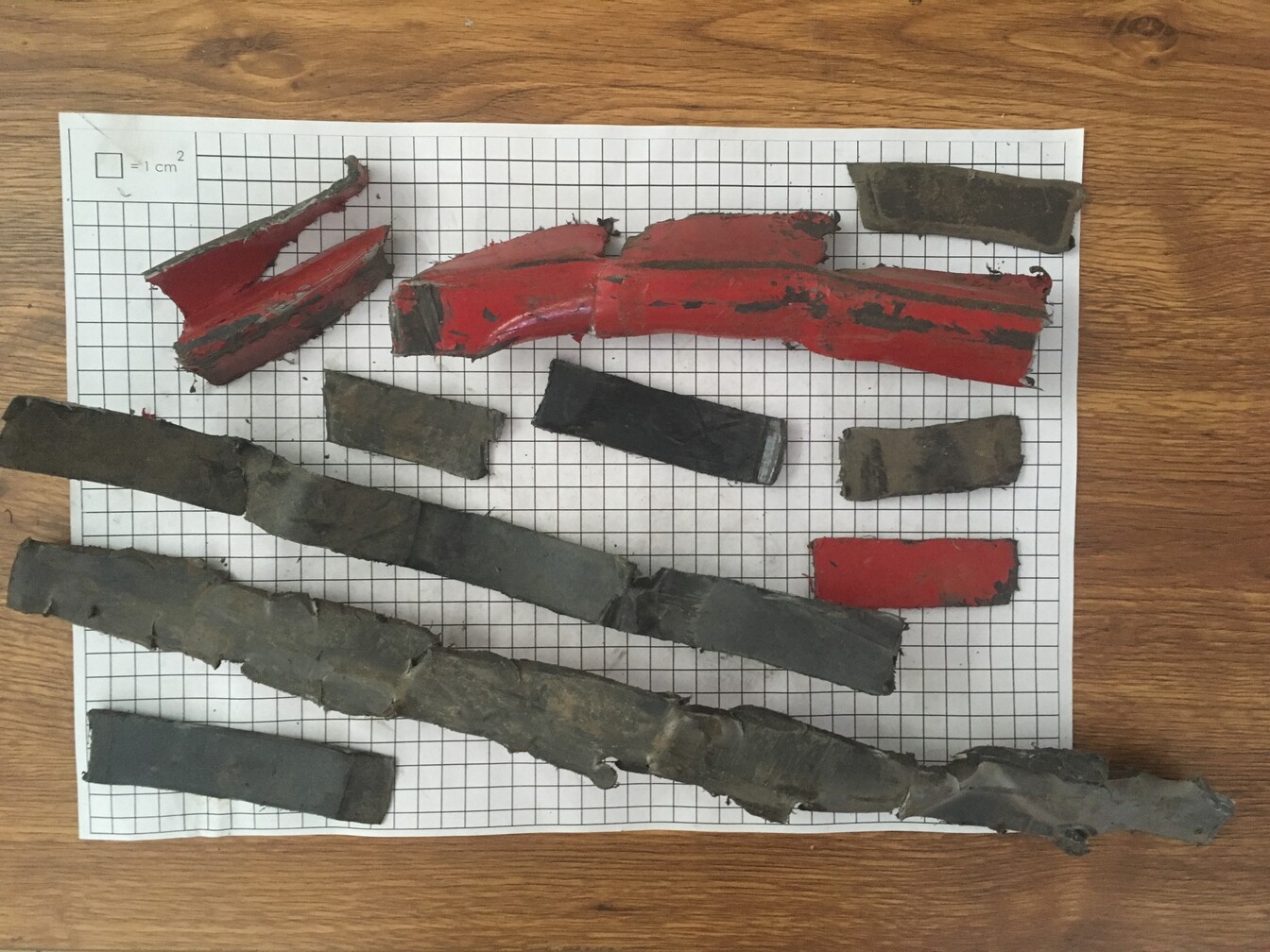
Plastic lumps after shredding in a single-shaft shredder
Plastic bumpers after shredding in a twin-shaft shredder
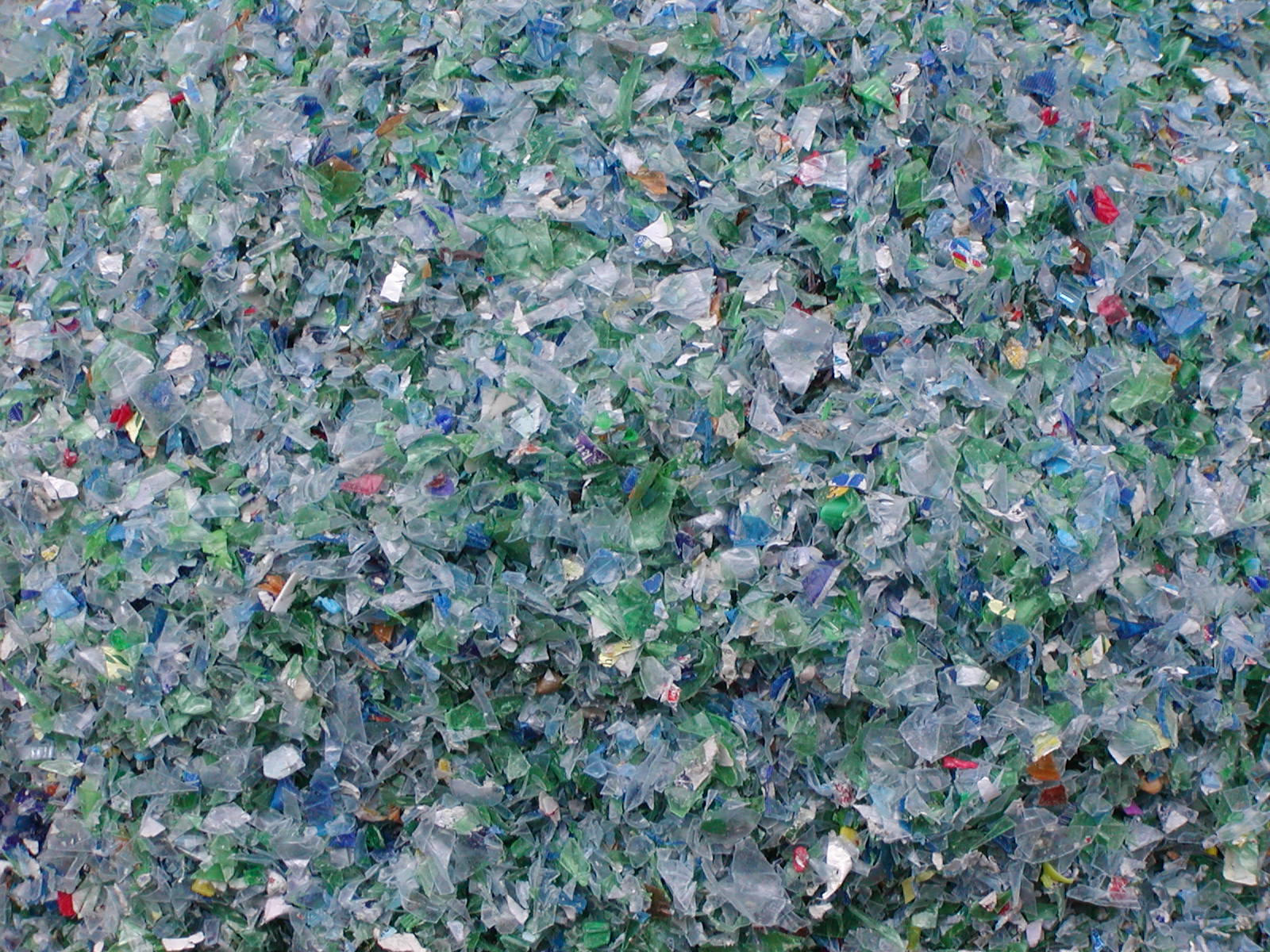
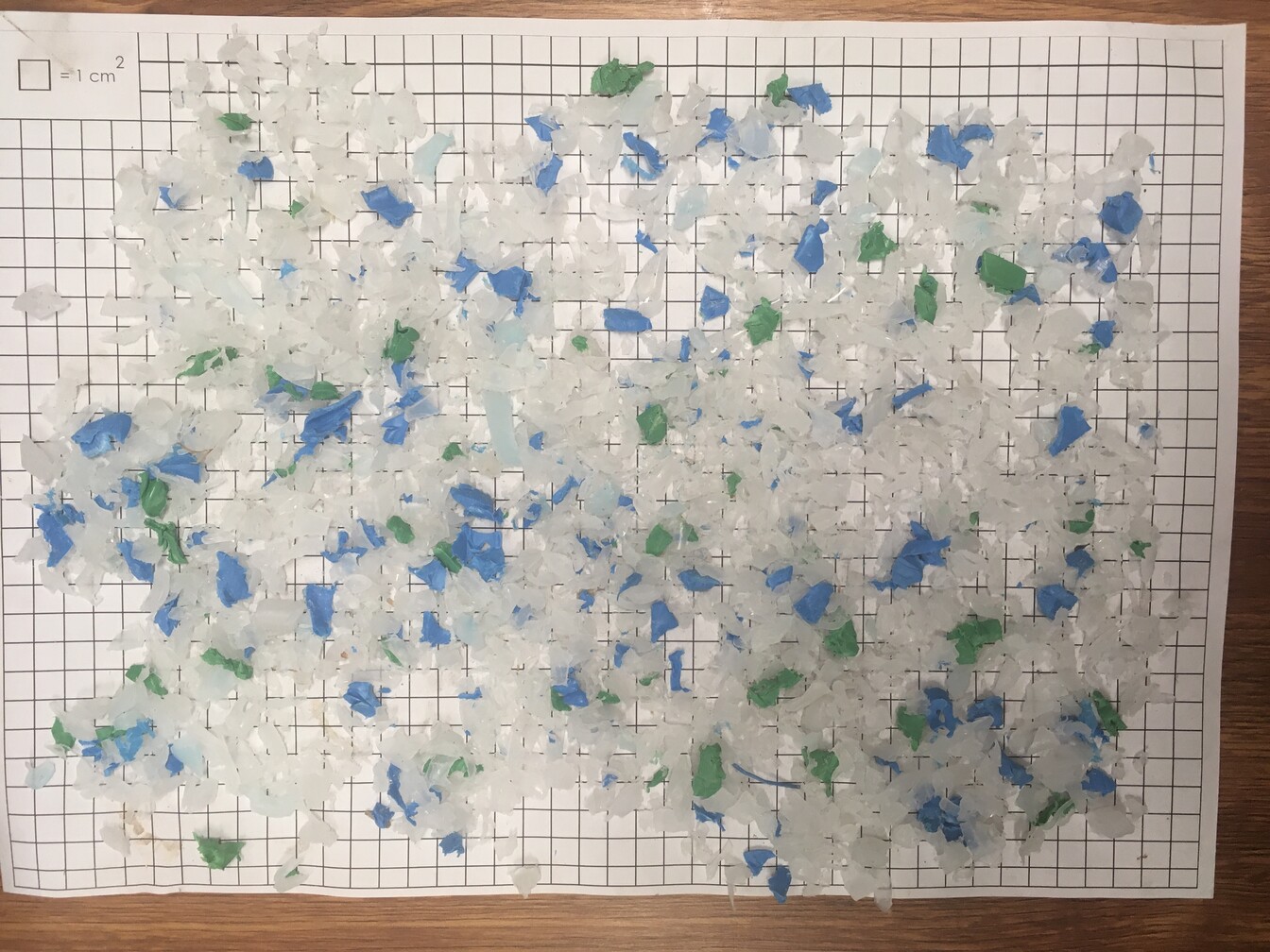
Unwashed PET flakes after granulation
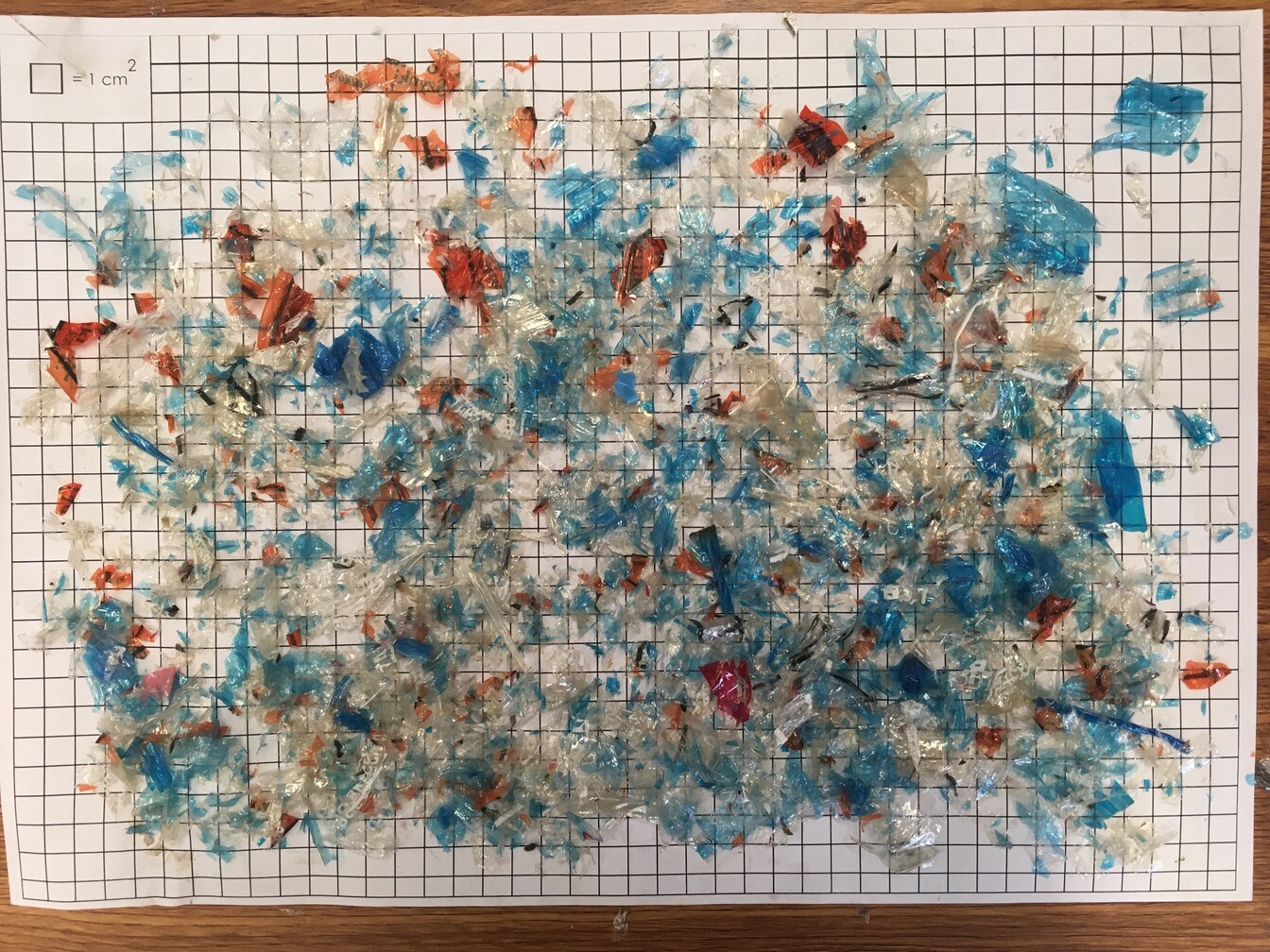
Plastic film after shredding in a single-shaft shredder
Read more
Nothing Found
VIDEOSHOWROOM
FAQ – frequently asked questions about plastic shredding
What is the difference between a slow-speed plastic shredder and a granulator?
A slow-speed shredder reduces large or solid pieces of plastic to smaller pieces. A granulator processes material into finer regrind, with the output particle size primarily controlled by a screen. Depending on the input material and required output, the machines can operate independently or in sequence.
Can plastic be processed directly in a granulator?
Yes, provided the dimensions and shape of the pieces allow safe feeding, the granulator has sufficient shredding capacity to process them, and the material contains no metal contaminants that could damage the knives. Large, thick-walled or difficult-to-grip pieces are often better pre-shredded first.
What output particle size can be achieved?
The required particle size depends on the subsequent processing stage. Injection moulding, extrusion and compounding often require finer regrind, for example 8 mm or less. For plastic films, a larger particle size may be used before subsequent agglomeration. The actual result depends on the material, screen and shredding method.
Can plastic lumps and purgings also be shredded?
Yes. However, plastic lumps and purgings can be large, solid and irregularly shaped. To select a suitable machine, we need to know their maximum dimensions, thickness, plastic type and required output particle size. A single-shaft shredder can be used for pre-shredding these materials.
What if the plastic products contain metal components?
The processing system must be designed so that metal components can be separated after pre-shredding, before the plastic enters the granulator. Ferromagnetic metals can be removed using a magnetic separator, while non-magnetic metals require a different solution. The available separation methods depend on the size of the metal contaminants and how they are attached to the plastic.
How is plastic regrind conveyed and collected?
Regrind is often conveyed pneumatically from the granulator into bags, big bags or octabins. Depending on the required material cleanliness, the processing line can also include dedusting and contaminant separation equipment. We design the conveying and collection system alongside the shredder to ensure that all parts of the process work together.
Can we test our material before choosing a machine?
Yes. Shredding trials allow us to assess how the material behaves in the machine, the achievable output particle size and the approximate throughput. The results help determine whether a single machine is sufficient or a multi-stage process is required.
We will design a shredder for your plastic waste
Different types of plastic waste present different shredding challenges. The most important factors include the type of material, the dimensions and thickness of the pieces, the presence of contaminants, the required throughput and what you intend to do with the shredded material afterwards.
Send us photographs of your material, the dimensions of the largest pieces, the approximate quantity per hour or month and the required output particle size. If you have a sample, we can carry out shredding trials. Based on the results, we will recommend a suitable machine or complete processing line, including material feeding, conveying, separation and dedusting.
Have plastic waste that needs shredding? Contact us and we will assess your material together.
